
Rolls-Royce Takes the Lead on Europe's Hybrid-Electric Push While Expanding Its German Footprint
Published on 09/22/2026 at 03:41 | Editorial boerse-global.de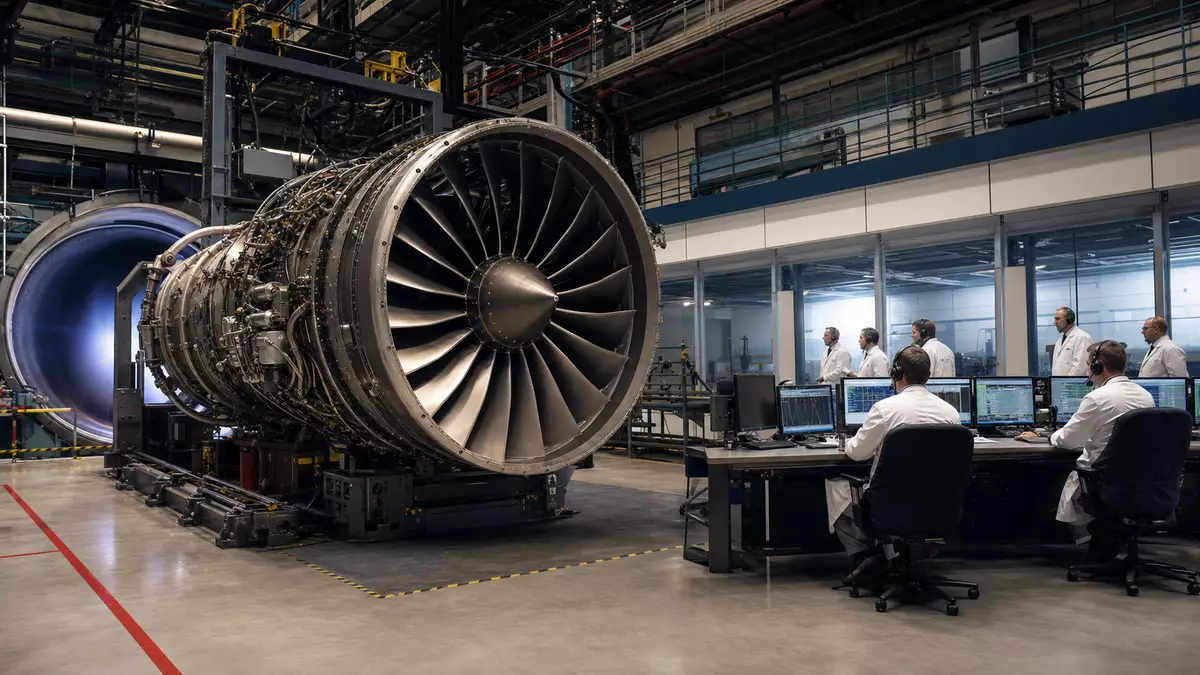
Rolls-Royce Deutschland has been handed the reins of ELEVATED, a consortium operating under the European Union's Clean Aviation programme, tasked with developing and integrating a hybrid-electric propulsion system for the next generation of short- and medium-haul aircraft. The assignment, confirmed late last week, lands at a moment when the British engine maker is simultaneously deepening its industrial base in Germany and steering through a sweeping corporate overhaul.
The EU is channelling as much as EUR 290 million into a bundle of 19 projects, with total investment across the group — private capital included — reaching EUR 664 million. Partners and research bodies from Germany, France and the United Kingdom make up the ELEVATED consortium. At the technical heart of the effort sits a hybrid-electric sub-system that will be fitted into an existing gas turbine and put through its paces under conditions close to real flight operations. The programme's headline environmental target: cutting carbon dioxide emissions at aircraft level by at least 20 percent.
Alan Newby, Director Research & Technology at Rolls-Royce, said the findings will feed directly into modelling work, technology selection and the eventual certification process. The company is also laying groundwork for its UltraFan 30 engine architecture, with initial ground tests pencilled in for 2028. That powerplant is designed to run entirely on sustainable aviation fuels.
Berlin-Brandenburg Site Gets a Boost
Alongside the research drive, Rolls-Royce is putting money into its existing manufacturing and maintenance network. At Dahlewitz, near Berlin, the company marked the topping-out of a new production hall. The build forms part of a GBP 55 million site programme spanning Germany and the UK, with roughly EUR 30 million earmarked for the Brandenburg expansion. More than 100 positions have already been created as a result.
The added floor space is chiefly intended to bolster maintenance, repair and overhaul work on the Trent 1000 engine that powers Boeing's 787. Looking further ahead, Dahlewitz is slated to handle assembly and testing of the Trent XWB-84 for the Airbus A350. Across the group, shop visits for large engines have climbed 50 percent over the past three years — a trend that makes extra service capacity a necessity rather than a luxury.
Should investors sell immediately? Or is it worth buying Rolls-Royce?
Order Book Momentum and the Profit Target That Matters
Demand for the installed fleet of Rolls-Royce-powered aircraft is projected to grow 7 to 9 percent annually through the end of the decade. On that foundation, management is guiding toward an adjusted operating profit of GBP 4.7 billion to GBP 4.9 billion for full-year 2026 — a range lifted at the end of July.
The strategic pivot has already left its mark on profitability. Chief Executive Tufan Erginbilgiç told an industry conference in early September that the transformation has strengthened margins and opened up additional growth avenues. First-half 2026 adjusted operating profit jumped 46 percent to GBP 2.5 billion.
A second high-margin pillar is taking shape in the Power Systems division, which Erginbilgiç is deliberately steering toward the surging energy needs of data centres. He has set a target of 25 percent average annual growth for that business through 2030. If delivered, it would give Rolls-Royce a lucrative counterpart to its traditional civil aerospace franchise.
Buybacks Keep a Floor Under the Share Price
Management is also supporting the stock through the capital markets. Under an ongoing GBP 2.3 billion repurchase programme, the company bought back a further 6.77 million ordinary shares between 8 and 14 September, all destined for cancellation. Since the programme began, cumulative purchases have reached almost 124 million shares.
The equity has responded. The stock added 4.4 percent on Monday, following a 3.9 percent rise to EUR 17.53 earlier in the week. Year-to-date, the shares are up 34 percent — a rally that already prices in a hefty dose of optimism.
What Could Derail the Story
Not everything favours the bulls. Large-scale undertakings such as the hybrid-electric work under Clean Aviation swallow substantial development resources and tie up management attention for years before generating meaningful returns. Certification delays or technical setbacks could push back the expected payback timeline.
The heavy bet on data centres introduces a different vulnerability: a slowdown in global infrastructure spending would immediately threaten the 25 percent annual growth ambition in Power Systems. And any external shock to global aviation would hit the classic aftermarket and engine business hard.
For traders, the scorecard is fairly clear. As long as adjusted operating profit stays within the GBP 4.7 billion to GBP 4.9 billion corridor and buybacks keep mopping up supply, the optimists retain the upper hand. A weakening in Power Systems demand, or rising research costs squeezing second-half margins, would force a rethink. The next major checkpoint is confirmation of margin stability when the full-year figures land. Until then, progress reports on the Clean Aviation initiative and the weekly buyback disclosures are likely to set the pace.
Ad
Rolls-Royce Stock: New Analysis - 22 September
Fresh Rolls-Royce information released. What's the impact for investors? Our latest independent report examines recent figures and market trends.


