
RWE Lifts Guidance as Grid Bet and Offshore Wind Reshape Its Earnings Base
Published on 09/17/2026 at 11:10 | Editorial boerse-global.de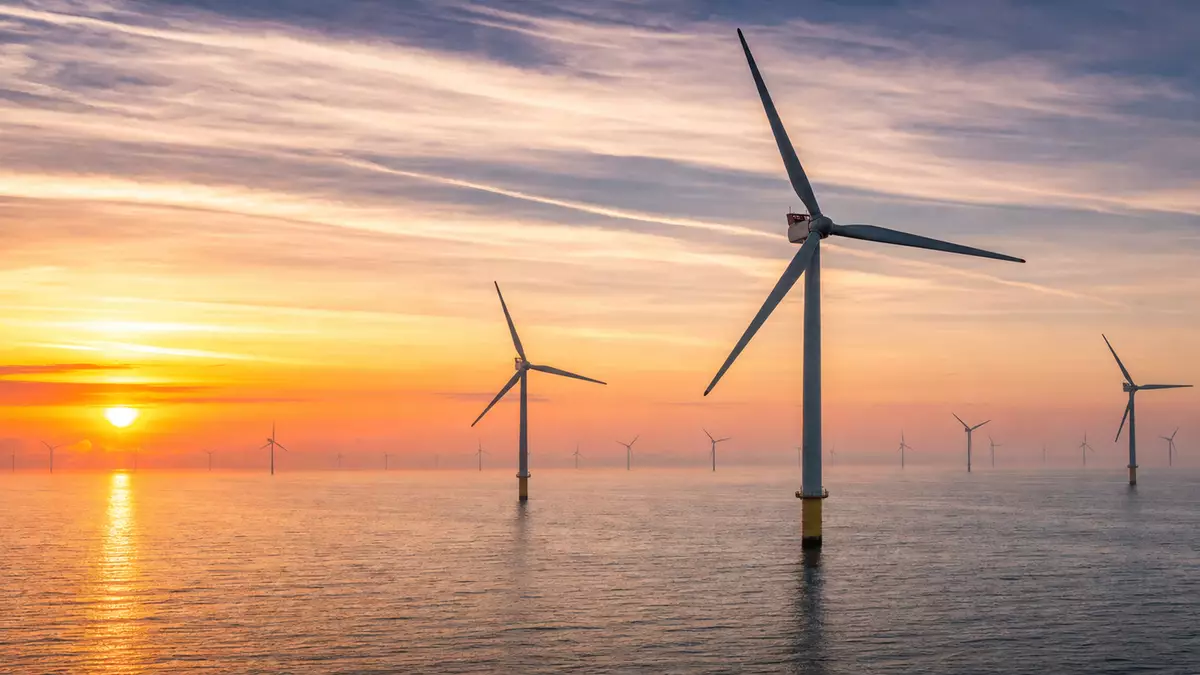
RWE has raised its medium-term financial targets, pairing a stronger-than-expected first half of 2026 with a decisive move deeper into regulated grid infrastructure. The Essen-based utility now expects to earn more from both ends of its business — variable power generation and predictable network revenue — and management has reworked its spending plans to match.
Grid stake gives the utility a second earnings pillar
The company has secured a majority in transmission system operator Amprion. After lifting its holding in the M31 investment vehicle from 25 percent to 55 percent roughly a month ago, RWE acquired a further 3 percent of M31, according to dpa-AFX, pushing its effective Amprion stake to 58 percent. None of the parties disclosed the purchase price.
That regulated cash flow is being reinforced with a sharply higher capital budget. RWE has increased its net investment plan for 2026 through 2031 by EUR 7 billion, bringing the total to EUR 42 billion. Grid expansion alone accounts for an additional EUR 6.5 billion of that sum through 2031.
First-half results beat on cheaper offshore wind and new capacity
The generation portfolio delivered in the first six months of 2026. Adjusted net income climbed 57 percent year-on-year to EUR 1.257 billion, helped by more favorable offshore wind conditions and newly commissioned plants. Offshore Wind contributed EUR 810 million in operating profit, while the Onshore Wind and Solar segment added EUR 1.016 billion.
At the mid-year mark, RWE's operational portfolio stood at 41 gigawatts, with a further 10.3 gigawatts under construction. Net debt was EUR 15 billion as of the end of June.
Should investors sell immediately? Or is it worth buying Rwe?
Guidance raised for both 2026 and 2027
Management lifted its targets on the back of that performance. For 2026, RWE now forecasts adjusted EBITDA of EUR 5.75 billion to EUR 6.35 billion, up from a previous range of EUR 5.2 billion to EUR 5.8 billion. Adjusted net income is projected at EUR 1.95 billion to EUR 2.45 billion.
For 2027, the company is targeting adjusted EBITDA of EUR 6.7 billion to EUR 7.3 billion. Earnings per share are planned to reach EUR 4.55 by 2031.
The market weighs recurring profit against one-off effects
RWE attributed the upgrades to a solid operating performance in the first half of 2026 as well as positive one-off items — a distinction that now sits at the center of the investment case. The question for shareholders is how much of the improved result reflects repeatable business earnings rather than special effects. One-offs can bolster near-term numbers and cushion the balance sheet, but they cannot substitute for structural profit growth over time.
On the optimistic reading, the operating momentum of the first half carries into coming quarters. If RWE can keep its core business running without being derailed by volatile wholesale power prices, the raised 2026 and 2027 targets should be met or even exceeded. Institutional observers have added their support, with both research houses seeing meaningful valuation headroom relative to prior peaks. Should that view take hold more broadly, the stock's 52-week high of EUR 62.00 becomes the next technical hurdle.
Infrastructure threats and the durability of one-offs cut the other way
Risks extend beyond ordinary market swings. Disruptions to critical infrastructure rank among the unpredictable factors; should such threats materialize, or should additional protective measures require significant one-time operating outlays, margins in both the grid and generation businesses could come under pressure.
A second concern is that first-half one-off effects may have overstated the underlying earnings trajectory. If upcoming interim reports show base income falling short of expectations, optimistic estimates face a visible correction.
Rwe at a turning point? This analysis reveals what investors need to know now.
Chart levels frame the next move
The stock's distance from its annual high is the key directional signal. As long as support from the recent guidance hike holds and the shares defend the EUR 58 area, a test of the 52-week high at EUR 62.00 remains the dominant technical scenario. A sustained break above that resistance would open the way toward the EUR 75.00 level sketched by analysts.
The shares closed Wednesday at EUR 59.64 after a 2.5 percent gain, recovering from a consolidation phase. They currently trade at EUR 60.62, a rise of 34 percent since the start of the year.
Should sentiment sour on renewed security risks to energy networks, or should the one-off effects prove non-recurring, the stock would likely surrender its recent gains. The next concrete catalyst for reassessing the forecasts will be the detailed third-quarter financial reports, which must show whether the operating performance of the first half of 2026 can underpin the raised 2027 targets.
Ad
Rwe Stock: New Analysis - 17 September
Fresh Rwe information released. What's the impact for investors? Our latest independent report examines recent figures and market trends.


