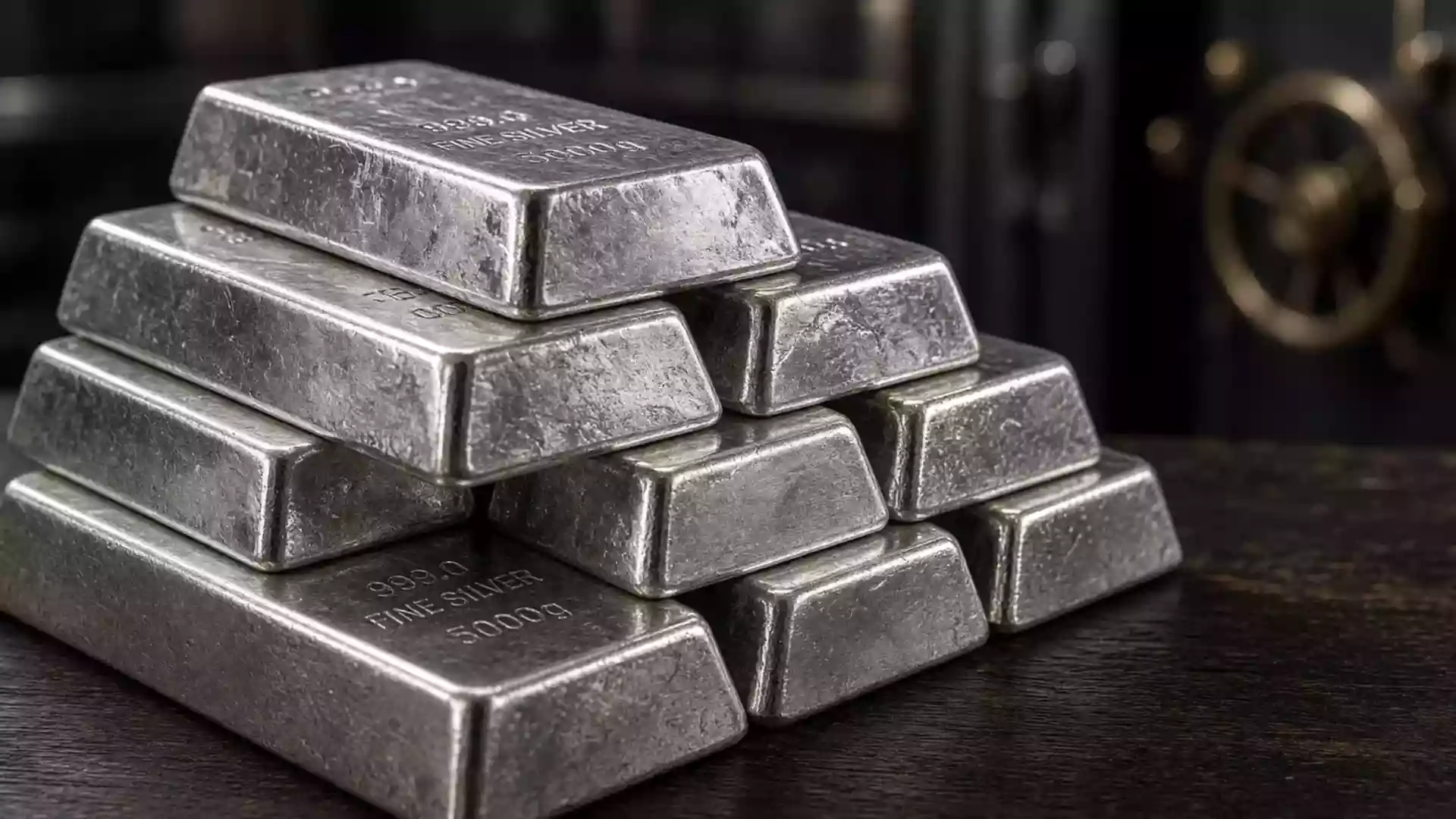
Silver's October Slip: Maintenance, Not Scarcity, Drives China's Output Lower
Published on 11/05/2026 at 11:11 | Editorial boerse-global.de
China's silver bullion output fell 5.03% in October from September, but the survey published Tuesday offers no clear signal of tightening supply. Maintenance work and holiday stoppages weighed on production, while cumulative output for the year to date remains above last year's level. For the silver price, a short-term supply brake thus sits alongside a less strained longer-term production picture.
Maintenance, not lost capacity
According to media reports, holiday shutdowns at recycling operations and maintenance work at copper smelters drove the monthly decline. Tracked Chinese silver bullion production totaled roughly 16,000 tonnes for the year to date, a gain of 3.72% over the prior-year period.
The cause of the drop matters. Temporary operational interruptions are a different matter from a permanent loss of production capacity, so the October figures alone do not prove a structural worsening of the supply situation. Further maintenance stoppages at individual copper smelters are expected in November and December. At the same time, silver bullion output at lead-zinc smelters has been recovering gradually since September. These opposing developments limit what the latest monthly decline can say about China's overall supply.
Buyers offered support as well. Seasonal jewelry demand during China's National Day holidays and restocking after price declines underpinned purchases in October. That does not amount to a broad acceleration in industrial demand.
Should investors sell immediately? Or is it worth buying Silber Preis?
A sixth straight deficit — with demand easing
The Silver Institute's survey, published in April, projected a sixth consecutive global market deficit of 46.3 million ounces for 2026. At the same time, the institute forecast a 3% decline in industrial demand, mainly on weaker solar demand. A deficit and fading demand are not mutually exclusive. For investors, the distinction matters: an arithmetic shortfall does not automatically mean demand is growing or that the price must rise immediately. The Chinese production data round out this picture but do not substitute for a global supply balance.
Rates still call the tune
Recent price action shows how strongly monetary-policy expectations drive silver. FOCUS Online pointed Tuesday to robust US inflation data and rising oil prices as headwinds. A day earlier, a weaker US dollar and falling US Treasury yields had supported the recovery. Spot silver trades at USD 52.83 per troy ounce, leaving the rebound alongside a supply picture that contains both temporary production brakes and signs of recovery.
The next scheduled catalyst arrives Friday, November 6, 2026, when the US Department of Labor releases October payroll data at 8:30 a.m. US Eastern time. The report could shift rate expectations once more. It lands on a market where supply-side fundamentals offer support while demand and rate expectations provide headwinds.
A rebound built on financial flows
The recent recovery was carried mainly by financial markets. A weaker dollar and declining Treasury yields buoyed the non-yielding precious metal, and market participants read reported Democratic gains in the US midterm elections as a possible signal of political gridlock and less fiscal expansion. Silver reflected that tailwind clearly, closing at USD 52.24 per troy ounce with a daily gain of 4.9%. The advance alone does not answer whether the monetary environment has durably turned in the metal's favor.
Silber Preis at a turning point? This analysis reveals what investors need to know now.
Persistent expectations of further tightening by the Federal Reserve form a counterweight. The payrolls report is therefore more than another economic calendar entry: it could move the rate expectations that already helped shape the latest price move. For investors, separating short-term financial-market impulses from the physical market situation remains essential. An anticipated supply deficit alone removes neither rate worries nor risks to industrial demand.
The Silver Institute expects a global supply deficit of 46.3 million ounces for 2026, while media reports cite weaker industrial demand and retreating speculative investors as drags. The next concrete test is the payrolls release: it meets a silver market whose supply position offers support while demand and rate expectations blow against it. China's smaller October output is a fundamental data point for silver — not an unambiguous signal of a sustained price rise.
Ad
Silber Preis Stock: New Analysis - 5 November
Fresh Silber Preis information released. What's the impact for investors? Our latest independent report examines recent figures and market trends.