Trench Collapses and Safety Fines Put Spotlight on Excavation Risks
Published on 08/04/2026 at 15:37 | Redaktion boerse-global.de
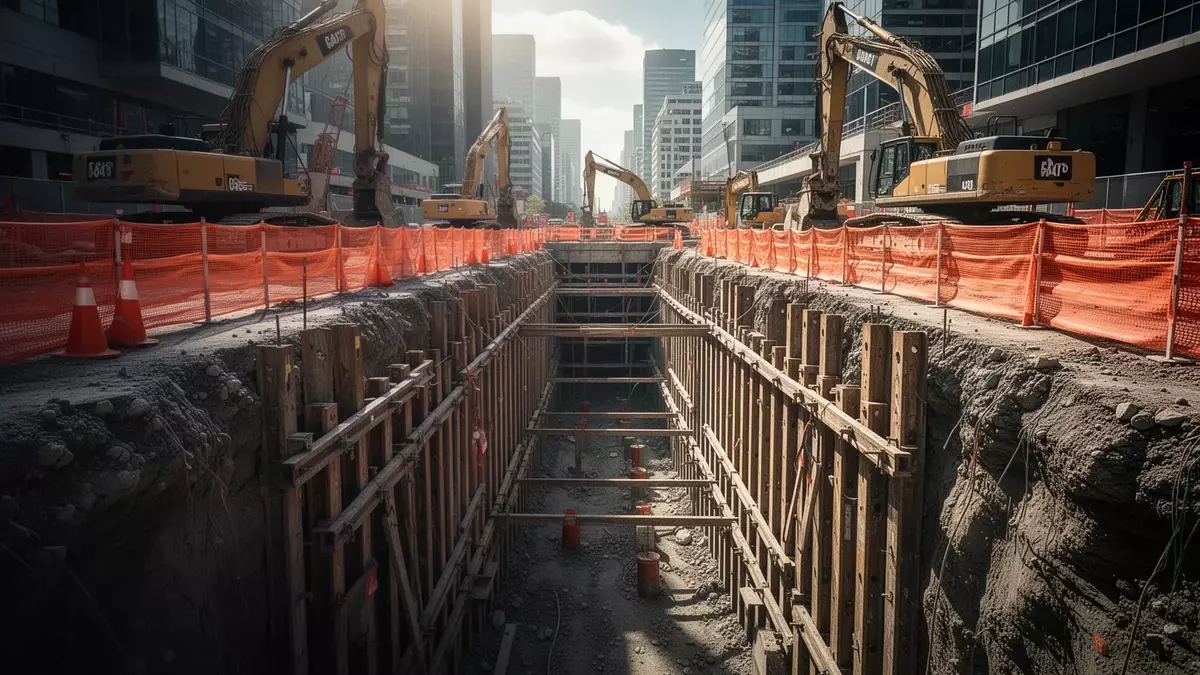
A spate of trench collapses, fatal accidents and hefty regulatory penalties in early August 2026 has thrown the spotlight back onto the dangers of excavation work — a hazard that UK employers know all too well. From Ohio to Alberta, authorities are responding to incidents that have cost lives, injured workers and disrupted infrastructure, underscoring why proper shoring, training and utility checks are non-negotiable on any site.
Rescues and Fatalities Across North America
Emergency crews in Madison Township, Ohio, successfully extricated a person from a collapsed construction trench on August 4, 2026. The individual was stabilised by fire crews and taken to hospital. The rescue came just a day after a similar operation in Creve Coeur, Missouri, where first responders were called to a residential site to free someone trapped in a collapsed trench.
Those rescues followed a fatal incident in Alaska on July 30, 2026. Jacquelyn Wilder, 71, and Paul Hebert, 68, died when a 13-foot-deep trench collapsed near Delta Junction. The pair had been installing a septic tank at the time. Family members said Wilder was an experienced builder who had previously worked on the Trans-Alaska Pipeline.
Excavation work carries risks that can escalate quickly when documentation and planning fall short. A free Risk Assessment Toolkit provides 41 ready-to-use templates and checklists to help you document hazards properly before anyone sets foot on site. Download the free Risk Assessment Toolkit
Regulators Hand Down Six-Figure Fines
Companies that fail to meet safety standards are facing increasingly severe financial consequences. In Calgary, Mr. Mike's Plumbing was ordered to pay $330,000 after pleading guilty to charges under the Alberta OHS Act. The case centred on the death of apprentice plumber Liam Johnston, who was killed in a trench collapse in June 2023. Part of the fine will fund injury prevention research at the University of Alberta.
In the United States, Blazey Construction Services LLC was fined $343,797 following an excavation collapse in Alvin, Texas, that hospitalised a worker. OSHA issued two repeat violations against the company on July 15, 2026, citing a history of safety infractions dating back to 2019.
Cal/OSHA has also taken action against three roofing contractors in Los Angeles County. Atlas Building and Roofing, Atlas Roofing Company and Roof-Top Construction were cited for a combined $282,420 after a fatal 24-foot fall in January 2026. Investigators found the companies had failed to provide adequate fall protection, first aid or heat illness prevention training.
Fines like these show how costly it can be when safety documentation isn't up to standard. A free Health & Safety Toolkit gives you immediately usable risk assessments and checklists covering key UK regulations, so you can protect your workforce and stay compliant. Get the free Health & Safety Toolkit
Utility Strikes and Infrastructure Damage
The risks of excavation extend beyond worker safety to the integrity of essential infrastructure. In Ohio's Trumbull County, officials are investigating multiple gas line strikes caused by fibre optic contractors. Lumos, the company involved, recently terminated a third-party contractor following the incidents — which come after a gas explosion in May prompted a temporary pause on fibre digging in the region.
In Indirapuram, India, drainage network excavations damaged several underground utility lines, including a Ganga water pipeline and optical fibre cables. Contractors reportedly failed to follow a 2024 directive requiring the use of utility-tracking applications before starting work.
Meanwhile, Fort Myer Construction Corp. has agreed to pay $450,000 and implement practice upgrades to resolve water pollution violations in Washington, D.C. The settlement addresses claims of polluted runoff entering the Anacostia River watershed from the company's facilities since 2015. Under a consent order, the firm must provide progress reports for the next three years.