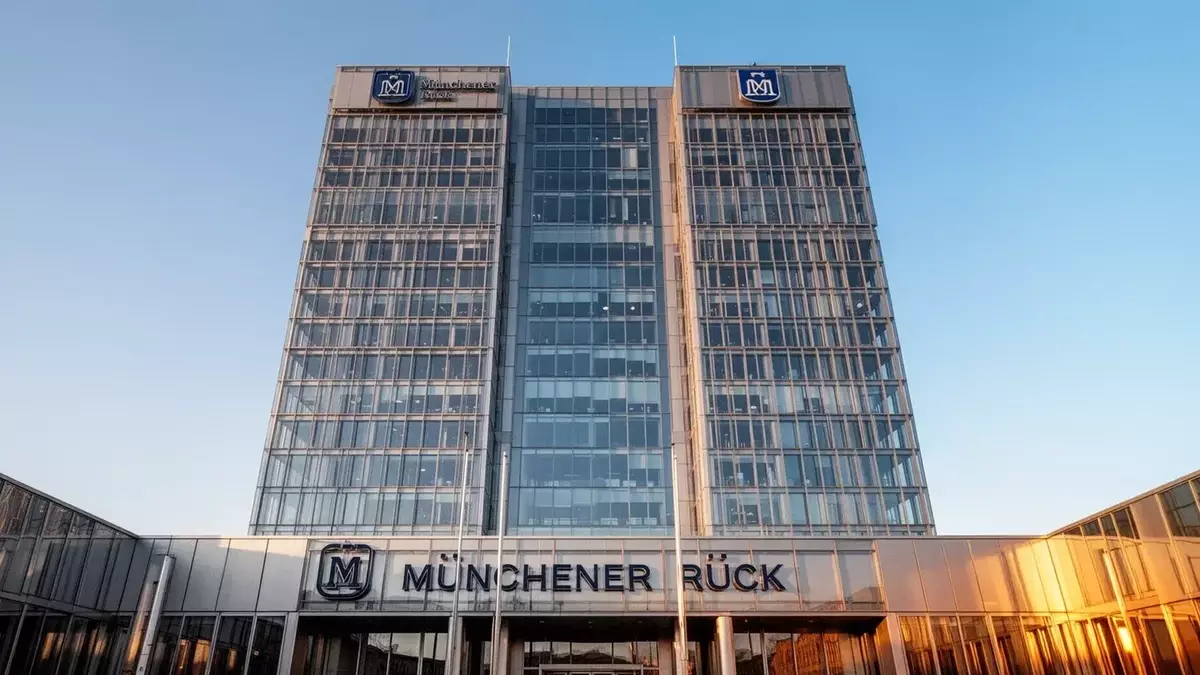
Munich Re Puts New CEO in Global Insurance Spotlight as Stock Tries to Recover
10.06.2026 - 03:01:50 | boerse-global.de
Christoph Jurecka has taken a seat on the board of the Geneva Association, the premier international insurance think tank, just as Munich Re’s share price attempts to claw back ground from its worst levels of the year. The appointment, confirmed at the association’s general meeting on 4 June and made public on 8 June, places the company’s new chief executive at the heart of industry debates on climate risk, natural catastrophes and regulatory capital — precisely the issues that have shaped the stock’s recent slide.
Jurecka, who has led Munich Re since the start of 2026 and oversees strategy, sustainability and regulation, was elected alongside Tim Sweeney, chairman and CEO of Liberty Mutual Insurance. The Geneva Association also turned over its chairmanship: Lard Friese, CEO of Aegon, succeeded Lee Yuan Siong of AIA, who remains on the board. The move is a governance play, not a trigger for earnings upgrades, but it underscores Munich Re’s effort to shape the narrative at a time when its shares are under intense pressure.
The stock closed at €457.80 before staging a 1.96% rally to €458.70, leading the DAX on the day’s recovery. Even after that bounce, the shares remain roughly 17% lower since the start of the year and trade less than 5% above the 52-week low struck on 2 June. The gap to the 200-day moving average of €530.57 stands at nearly 14%, while the distance from the year’s high of €605.00 is a punishing 24%. The Relative Strength Index hovers around 40 — no longer in deeply oversold territory, but far from signalling a decisive trend reversal.
Should investors sell immediately? Or is it worth buying Münchener Rück?
Scepticism has been driven by fears of softening prices in the reinsurance market and Munich Re’s own decision to trim volume at the April renewal season. The market punished the restraint as a sign of weakness, but management frames it as discipline: sacrificing short-term growth to protect long-term profitability. That argument is backed by the company’s robust solvency ratio and a reaffirmed full-year outlook, neither of which has been enough to halt the selloff.
There are, however, signs of a possible shift in sentiment. Meteorologists are calling for a relatively mild hurricane season in 2026, with developing El Niño conditions likely to reduce storm frequency in the key US market. That would mean lower catastrophe losses for the industry and less pressure on reinsurance pricing. Meanwhile, Munich Re’s latest RiskScan highlights sustained demand for cyber cover, a fast-growing specialty line that offers higher margins. The combination of a benign catastrophe outlook and a profitable niche could provide the operational backstop the stock needs.
All eyes now turn to the half-year report due on 7 August, followed by the third-quarter update on 12 November. Those numbers will reveal how large-loss exposure and pricing trends have evolved under Jurecka’s leadership. His new Geneva seat sharpens the company’s profile at industry level, but the share price remains a question that only the underlying earnings can answer. At a market capitalisation of roughly €57 billion, the valuation is pricing in more pessimism than the group’s fundamentals would seem to justify — a gap that either the upcoming results or a broader reassessment of the sector will eventually have to close.
Ad
Münchener Rück Stock: New Analysis - 10 June
Fresh Münchener Rück information released. What's the impact for investors? Our latest independent report examines recent figures and market trends.
So schätzen die Börsenprofis Munich Aktien ein!

Für. Immer. Kostenlos.