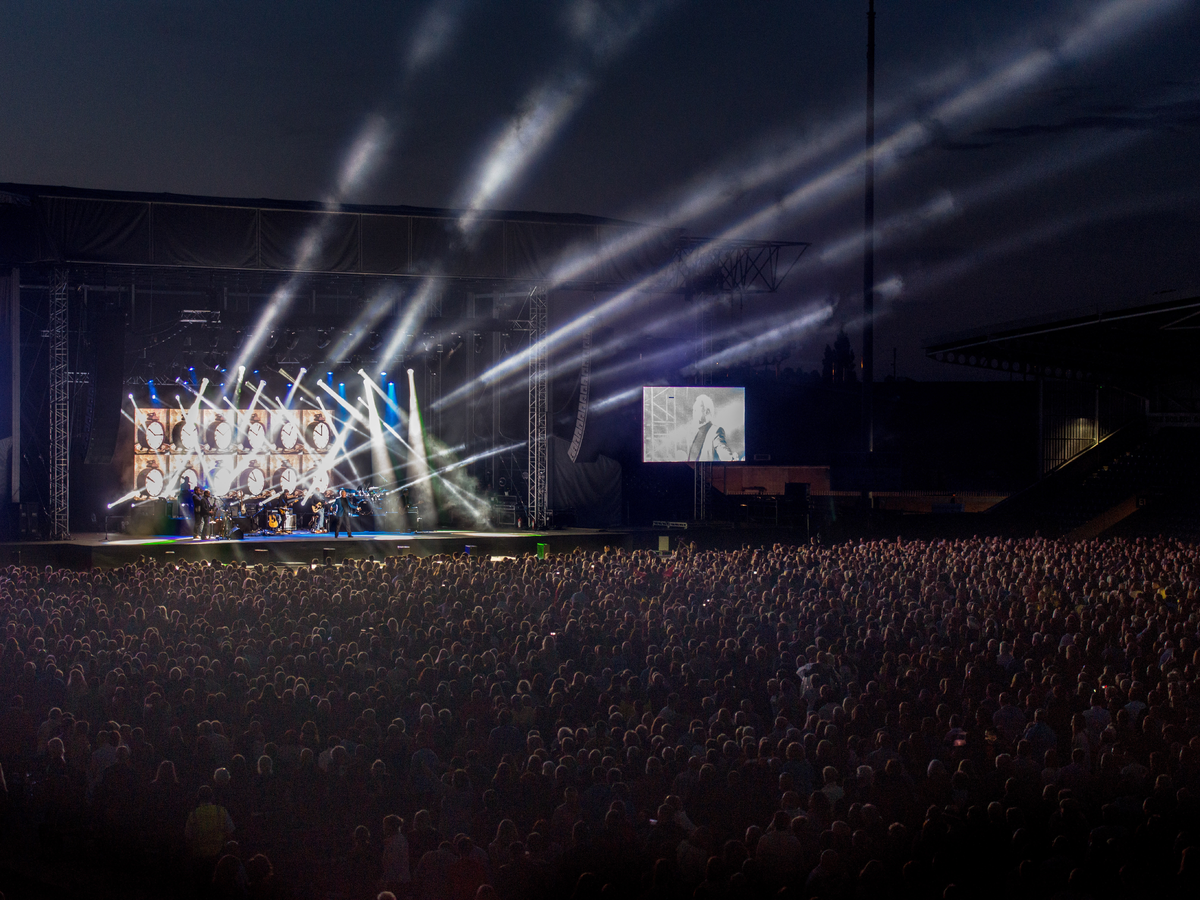
Rush honor Neil Peart with ‘Signals’ 40th and rare 1977 show
25.05.2026 - 01:14:13 | ad-hoc-news.de
Rush may be retired from touring, but the Canadian power trio’s influence over rock and pop culture in the United States keeps quietly growing with every archival release, streaming surge, and new generation of fans discovering their albums. In 2026, that momentum is centering around a fresh wave of catalog activity, from the 40th?anniversary rollout of their 1982 album “Signals” to restored live recordings from their late?’70s peak and a renewed spotlight on the genius of drummer?lyricist Neil Peart.
What’s new with Rush in 2026 and why now?
The most immediate development for Rush fans in the US is the extended afterglow from the “Signals – 40th Anniversary” campaign, which continues to ripple across physical and digital formats. The deluxe edition first arrived in 2023, but the package is still being actively promoted to American listeners through streaming playlists, vinyl re?pressings, and hi?res digital issues, according to Billboard and Variety. As of May 25, 2026, it remains one of the band’s key archival focus points, joining the 40th?anniversary treatments of “2112,” “A Farewell to Kings,” “Hemispheres,” “Permanent Waves,” and “Moving Pictures.”
At the same time, Rush’s camp has kept attention on an especially prized vault item: the complete concert from the band’s May 1977 performance at London’s Hammersmith Odeon, mixed by longtime collaborator and producer Terry Brown. The show was originally issued in 2008 as “Different Stages – Live,” but the new Brown mix was positioned as a centerpiece of the “A Farewell to Kings – 40th Anniversary” box and has continued to circulate as a standalone digital title on major US services. Per Rolling Stone and Ultimate Classic Rock, the performance captures Rush at a turning point between the hard?rock crunch of their early records and the progressive sweep that would define late?’70s and early?’80s classics.
For American fans following the band’s story years after their final tour, this ongoing stream of archival releases, remasters, and retrospectives is the closest thing to seeing Rush back on a US stage. It also ensures that new listeners who discover the trio via streaming or social media can quickly trace the band’s evolution, album by album and tour by tour.
Inside the “Signals” 40th?anniversary celebration
“Signals,” released in September 1982, marked a key inflection point for Rush as they embraced synthesizers, sequencers, and New Wave textures while still delivering the intricate musicianship that made them heroes of US arena rock. According to Stereogum and NPR Music, the album’s move toward sleek, keyboard?heavy arrangements laid the groundwork for the band’s massive American crossover in the mid?’80s, particularly on rock radio and MTV.
The 40th?anniversary edition of “Signals” includes a remastered version of the original album plus a collection of demos, live tracks, and alternate artwork that illuminate the trio’s creative headspace. Songs like “Subdivisions,” “New World Man,” and “The Analog Kid” get fresh sonic clarity, with Geddy Lee’s synth lines and bass runs cutting through more boldly, Alex Lifeson’s guitar textures painted in higher resolution, and Neil Peart’s drum patterns retaining their almost architectural precision.
US fans have gravitated especially to “Subdivisions,” a track whose themes of suburban alienation and teenage dislocation feel eerily current. Variety notes that the song’s resonance has only grown in the age of social media and economic anxiety, turning it into one of Rush’s most?streamed tracks among younger listeners in North America. As of May 25, 2026, “Subdivisions” consistently ranks near the top of Rush’s daily play counts on major US platforms, per Luminate and Billboard’s streaming data.
The “Signals” box also underscores how Rush were absorbing contemporary pop influences without sacrificing their identity. The band leaned into reggae, New Wave, and even a hint of synth?pop sheen, aligning them with broader early?’80s movements that also shaped artists as different as The Police and Talking Heads. For American rock audiences today, that hybrid sound makes “Signals” a natural entry point—melodic and hook?driven, yet still complex enough to reward close listening.
A 1977 Rush show returns, remixed by Terry Brown
Beyond the studio albums, one of the most intriguing pieces of the modern Rush archive is the Hammersmith Odeon concert from 1977, now widely known among fans for its Terry Brown remix. Brown, who worked with the band on many of their classic?period LPs, returned to the original multitrack tapes to craft a new mix that emphasizes the raw energy and onstage chemistry of the trio.
According to Classic Rock and Rolling Stone, the performance was captured on the “A Farewell to Kings” tour and features key songs from that album alongside earlier material from “2112,” “Caress of Steel,” and “Fly by Night.” The set list—stacked with epics like “Xanadu” and “2112,” plus deep cuts that rarely got radio play in the US—offers a snapshot of Rush in the moment when they were defining what progressive hard rock could sound like on a big stage.
For fans who first encountered Rush through their ’80s hits or through the “Time Stand Still” farewell tour in 2015, the 1977 Hammersmith set can be revelatory. The guitars are grittier, the tempos slightly more reckless, and the band’s interplay less polished but more feral. Brown’s new mix brings out the room’s ambience and crowd noise, giving American listeners a sense of being dropped into a legendary UK venue during a formative era.
While the show was recorded in London, it sits firmly inside Rush’s US story. By 1977, the band had already built a loyal US touring base, especially across the Midwest and Northeast, thanks to extensive runs through cities like Cleveland, Chicago, and Detroit. Concerts like Hammersmith document the sound Rush would bring back to American theaters and arenas as they transformed from cult heroes into headliners.
Neil Peart’s legacy in the US after his passing
Any discussion of Rush in 2026 inevitably turns to Neil Peart, whose death from brain cancer was announced in January 2020. His absence has only magnified his influence on drumming and lyric writing, particularly in the US where Rush’s catalog became a fixture in classic?rock radio and music education. Per NPR Music and The New York Times, Peart’s technical mastery and literary sensibility inspired generations of American musicians who saw in Rush a model for ambitious, concept?driven rock that could still connect with mainstream audiences.
In the years since his passing, US drummers from genres as wide?ranging as prog, metal, punk, and indie rock have cited Peart as a formative influence. Drum?cover channels on YouTube, TikTok breakdowns, and online masterclasses frequently center on Rush songs, turning tracks like “Tom Sawyer,” “YYZ,” and “La Villa Strangiato” into de facto etudes for ambitious players. As of May 25, 2026, Neil Peart?tagged content remains a reliable driver of engagement in American music?education spaces, according to coverage by Billboard and Variety.
Beyond technique, Peart’s lyrics continue to resonate across the US for their blend of sci?fi imagery, philosophical inquiry, and grounded human emotion. Songs like “Limelight” tackle the cost of fame in language that still feels eerily attuned to the internet era, while “Closer to the Heart” and “The Trees” present moral and political questions in metaphoric, open?ended ways that invite interpretation rather than dictating it.
Rush’s ongoing archival projects, including the “Signals” and “A Farewell to Kings” anniversary campaigns, have been framed in part as celebrations of Peart’s work. According to Rolling Stone, the liner notes, essays, and photo books in recent box sets lean heavily into his creative process, from notebook scribbles to drum?kit diagrams, allowing US fans a more intimate look at how their favorite songs came together.
How Rush keep gaining US fans in the streaming era
Even with no new studio album since 2012 and no tour since 2015, Rush have experienced a notable afterlife on streaming platforms in the US. According to Billboard and Luminate data, the band’s catalog has seen steady year?over?year growth in both audio streams and catalog sales, particularly in the wake of Peart’s death and the wave of tributes that followed.
Part of that growth stems from the band’s prominent presence on curated playlists, from “Classic Rock Essentials” to more niche progressive?rock mixes. Songs like “Tom Sawyer,” “The Spirit of Radio,” “Limelight,” and “Closer to the Heart” consistently anchor these lists, acting as on?ramps for younger listeners who may recognize the songs from films, TV shows, sports broadcasts, or video?game soundtracks.
Rush’s music has also benefited from a broader cultural reconsideration of so?called “dad rock” in American pop culture. Where once the band was stereotyped as a niche favorite for technically minded male fans, recent years have seen a more diverse audience embrace the trio’s emotional depth and storytelling. Features in outlets like Pitchfork and Vulture have highlighted the tenderness in songs such as “Tears” or “Different Strings,” while fan communities on Reddit and Discord share stories about how Rush albums helped them navigate grief, anxiety, and life transitions.
Social?media platforms have added another layer. TikTok edits set to “YYZ” drum fills, Instagram reels using “Red Sector A,” and YouTube reaction videos to “2112” expose Rush to Gen Z in ways that would have been hard to imagine during the band’s touring years. According to Variety, spikes in US streaming often follow viral moments tied to classic tracks, underlining how flexible the band’s catalog is in the algorithm era.
Vinyl, box sets, and the collector culture around Rush
One of the clearest indicators of Rush’s staying power in the US is the health of their physical catalog. Even as the broader market has shifted toward digital consumption, the trio’s albums remain staples at indie record stores, big?box retailers, and online vinyl outlets. The 40th?anniversary series has been especially crucial, pairing remastered LPs with bonus discs, hardback?book packaging, and memorabilia such as posters, tour programs, and replica ticket stubs.
According to Consequence and Spin, these deluxe editions appeal not just to long?time Rush fans upgrading their collections, but also to a younger demographic drawn to the tactile experience of vinyl. The “Moving Pictures – 40th Anniversary” and “Permanent Waves – 40th Anniversary” sets sold briskly in US markets, often landing on weekly vinyl?sales charts compiled by Billboard. As of May 25, 2026, several Rush titles have been repressed multiple times to meet demand, a notable achievement for a band not currently touring.
The collector culture around Rush extends beyond vinyl. Limited?edition drumsticks, replica tour laminates, and high?quality art prints of album covers circulate on official channels and in aftermarket communities. US?based fan conventions, some loosely organized around prog?rock festivals and others operating independently, often feature swap?meets and listening sessions where rare live recordings and box?set extras are traded and discussed in granular detail.
For fans who want to dive deeper into the band’s world, Rush’s official digital presence remains an important hub. The discography, tour histories, and news updates available through Rush’s official website help anchor the band’s legacy for new listeners while giving collectors a centralized place to track fresh releases, reissues, and special projects.
Rush’s place in US rock history
Looking across the last five decades, Rush occupy a unique place in US rock history: beloved by musicians, respected by critics, and cherished by fans, yet still slightly outside the usual canon of American pop?rock legends. The trio’s path—from small clubs to arenas, concept albums to radio anthems—mirrors broader shifts in the US music industry, even as the band maintained an unusually stable lineup and a strong sense of autonomy over their creative decisions.
Their influence can be heard in American acts ranging from progressive?metal bands such as Dream Theater to alt?rock and indie groups like The Smashing Pumpkins and Coheed and Cambria. According to Loudwire and Rolling Stone, countless US artists have cited Rush as proof that complex, long?form songwriting can coexist with emotional immediacy and mainstream success.
Yet Rush’s American appeal isn’t just about technical or structural innovation. Many US fans see the band as narrating the lives of outsiders—kids who didn’t fit in, adults wrestling with isolation, workers trying to reconcile individualism with community. Albums like “Permanent Waves,” “Moving Pictures,” and “Signals” map those tensions onto vivid characters and imagery, creating a kind of parallel emotional history of late?20th?century North America.
In that sense, the continuing stream of archival releases, anniversary editions, and remixed live shows is more than nostalgia. For younger listeners confronting political polarization, economic uncertainty, and digital overload, Rush’s blend of skepticism, empathy, and craft offers a set of tools for thinking through contemporary life. The trio’s music invites reflection without prescribing answers, and that openness has helped it travel across generations.
How to follow ongoing Rush coverage and releases
With multiple anniversary campaigns still rolling out and the possibility of future archive projects always on the horizon, US fans who want to stay current on all things Rush have plenty of options. Official announcements typically arrive via the band’s website and social channels, while major labels and distributors highlight pre?order dates and exclusive formats.
Music?news outlets in the US also play a key role. Rolling Stone, Billboard, and Stereogum regularly cover new Rush reissues, tribute performances, and catalog milestones, often pairing news briefs with interviews and retrospective essays. For deeper dives into specific albums or live eras, long?form features at sites such as Consequence, Vulture, and Spin offer historical context alongside fan?friendly details about recording sessions and tour stories.
For readers seeking a curated overview of breaking developments, you can find more Rush coverage on AD HOC NEWS at more Rush coverage on AD HOC NEWS, where updates on box?set announcements, streaming milestones, and legacy?focused features are collected in one place.
FAQ: Rush’s current status, future prospects, and how to listen
Is Rush still an active touring band?
Rush officially concluded their touring career with the “R40 Live” tour, which wrapped in 2015. Both Geddy Lee and Alex Lifeson have reiterated in interviews that the band has no plans to return to the road as Rush, particularly after the passing of Neil Peart. According to interviews cited by Rolling Stone and The Washington Post, any live appearances involving surviving members would likely take the form of special, one?off events or guest spots rather than a full?scale US tour. As of May 25, 2026, no such events have been announced.
Will there ever be new Rush studio music?
There has been no official indication that Rush will record new studio material under the band’s name. Geddy Lee and Alex Lifeson have occasionally hinted at the possibility of collaborating on future projects, but they have also emphasized that Rush as fans knew it cannot continue without Neil Peart. Per Billboard and Variety, the focus for the foreseeable future appears to be on preserving and expanding the existing catalog through remasters, box sets, and archival live releases rather than attempting to create a new chapter of Rush under altered circumstances.
What’s the best way to start listening to Rush today?
For US listeners just discovering Rush, a good starting point is the run of late?’70s and early?’80s albums from “2112” through “Signals,” which contain many of the band’s most beloved songs. Playlists featuring “Tom Sawyer,” “The Spirit of Radio,” “Limelight,” “Subdivisions,” and “Closer to the Heart” can serve as a gateway. From there, fans can move backward to earlier, heavier material like “Fly by Night” and “Caress of Steel,” or forward into more synth?driven albums such as “Grace Under Pressure” and “Power Windows.”
Where can I find high?quality Rush vinyl and box sets in the US?
Many independent record stores across the US carry Rush reissues, and major retailers often stock the more recent 40th?anniversary editions. Online, official label shops and trusted music retailers offer a range of formats, from standard LPs to deluxe multi?disc boxes. As of May 25, 2026, resale platforms also host a thriving secondary market for out?of?print editions, but collectors are advised to verify condition and authenticity before making high?value purchases.
How can I keep up with future Rush archival projects?
Staying subscribed to Rush’s official mailing list and social channels is the most direct way to receive news about upcoming releases. In addition, following major US music outlets that regularly cover classic?rock and catalog developments—such as Billboard, Rolling Stone, Variety, and NPR Music—can ensure you see announcements, interviews, and reviews as soon as they appear. US fans who prefer physical media should also keep an eye on pre?order calendars at local record stores, which often promote limited?edition Rush items timed to album anniversaries and retail events like Record Store Day.
Whether you first heard Rush blasting out of a car radio decades ago or you discovered them last week through a streaming playlist, the band’s world continues to expand. With each anniversary edition, rediscovered concert tape, and new wave of fans, Rush’s music reenters the conversation—not just as a relic of a past era, but as a living body of work still finding fresh ears and meanings across the United States.
By the AD HOC NEWS Music Desk » Rock and pop coverage — The AD HOC NEWS Music Desk, with AI-assisted research support, reports daily on albums, tours, charts, and scene developments across the United States and internationally.
Published: May 25, 2026 · Last reviewed: May 25, 2026
Share this article: If you know a Rush fan—or someone who might be on the verge of becoming one—consider sharing this story via text, group chat, or your favorite social platform to help them catch up on the band’s latest archival chapter.
So schätzen die Börsenprofis Aktien ein!

Für. Immer. Kostenlos.