Sheryl Crow returns to arenas: new tour, Rock Hall glow
08.06.2026 - 16:58:49 | ad-hoc-news.de
Sheryl Crow is entering a full-on new era. After her 2023 induction into the Rock & Roll Hall of Fame and the release of a new studio album in 2024, the nine-time Grammy winner is back on the road in 2026 with a US-focused tour that leans into her 1990s and 2000s hits while underlining why her catalog still resonates with younger fans.
For US listeners who grew up with alt-rock radio and VH1 on in the background, Sheryl Crow never really left the room. But the combination of Rock Hall validation, renewed media attention, and a slate of summer and fall dates has quietly pushed her into a comeback moment that cuts across generations and platforms.
What’s new: why Sheryl Crow is back in the headlines now
The immediate reason Sheryl Crow is back in the news is the intersection of three milestones: recent Hall of Fame status, relatively new music, and a fresh run of tour dates that bring her back to major US markets. As of June 8, 2026, Crow is booked for a mix of amphitheaters, theaters, and select festival appearances that highlight both her legacy and her current songwriting voice.
When Sheryl Crow was inducted into the Rock & Roll Hall of Fame in 2023, alongside artists like Missy Elliott and Willie Nelson, outlets like Rolling Stone and the Associated Press emphasized how her mix of rock, pop, country, and Americana helped define mainstream radio in the 1990s, dominated by songs like “All I Wanna Do,” “If It Makes You Happy,” and “Soak Up the Sun,” and later by her cover of “The First Cut Is the Deepest.” According to Rolling Stone, Crow’s Hall of Fame set underlined her range, moving from laid-back pop-rock into grittier live arrangements that showed off her guitar work and bandleading.
That fall, major US outlets noted that Crow was using her Hall platform not just as a victory lap, but as a springboard for a renewed creative phase. Per Billboard reporting around the time of her induction, Crow had already shifted away from the “retirement” narrative she floated in the late 2010s and toward a pragmatic blend of touring, occasional new songs, and carefully curated collaborations. Rather than a nostalgic greatest-hits act, she positioned herself as a working songwriter with a deep catalog, which is exactly how the 2026 tour is being framed to US ticket buyers.
The latest tour routing, highlighted on Sheryl Crow’s official channels and recapped by outlets like Variety and USA Today, shows a strategy that clusters around major metro areas while also targeting secondary markets where adult contemporary and country crossover radio remain strong. As of June 8, 2026, US dates are concentrated in the warmer months and early fall, allowing Crow to play outdoor amphitheaters and festival-style stages that suit her live, band-driven sound.
How Sheryl Crow became a 1990s fixture who never really faded
To understand why this tour and this moment land so strongly with US audiences, it helps to rewind to Sheryl Crow’s breakthrough in the mid-1990s. After working as a backing vocalist (famously touring with Michael Jackson) and cutting an unreleased debut, she broke through with 1993’s “Tuesday Night Music Club,” which gradually became a multi-platinum phenomenon on the strength of “All I Wanna Do” and deep-rotation MTV play. According to the Los Angeles Times and Rolling Stone, the album became one of the defining rock-pop releases of the decade, selling millions of copies in the US alone and earning Crow three Grammys, including Best New Artist.
From there, Crow built a remarkably durable career by refusing to be pinned down to one format. Her self-titled 1996 album leaned into more muscular rock arrangements, while 1998’s “The Globe Sessions” pulled her into singer-songwriter territory with a darker, rootsier edge. Per NPR Music, Crow’s ability to move between rock, pop, and Americana, while still writing radio-ready hooks, made her a natural fit for adult alternative stations that emerged in the mid-1990s and for the then-rising Lilith Fair circuit.
In the 2000s, she continued to grow her audience with albums like “C’mon, C’mon,” which yielded the beachy anthem “Soak Up the Sun,” and “Wildflower,” a more introspective set that still connected on AC radio. According to Billboard’s chart archives, Crow has logged multiple Top 10 hits on the Hot 100 and the Adult Top 40, as well as a string of Top 10 albums on the Billboard 200. That chart history underpins the current tour: she has a setlist’s worth of instantly recognizable songs that still test strongly with US radio and streaming users.
Crucially for Google Discover audiences who may be experiencing Sheryl Crow through playlists rather than physical media, the streaming era has helped flatten generational gaps around her catalog. Kacey Musgraves, Haim, and other younger artists have cited Crow as an influence in interviews with outlets like Vulture and Spin, reinforcing her reputation as a songwriter’s songwriter. That cross-generational endorsement bolsters her relevance for US listeners who might be discovering “If It Makes You Happy” through curated 1990s playlists or TikTok snippets rather than FM radio.
Inside Sheryl Crow’s 2026 US tour: dates, venues, and setlist trends
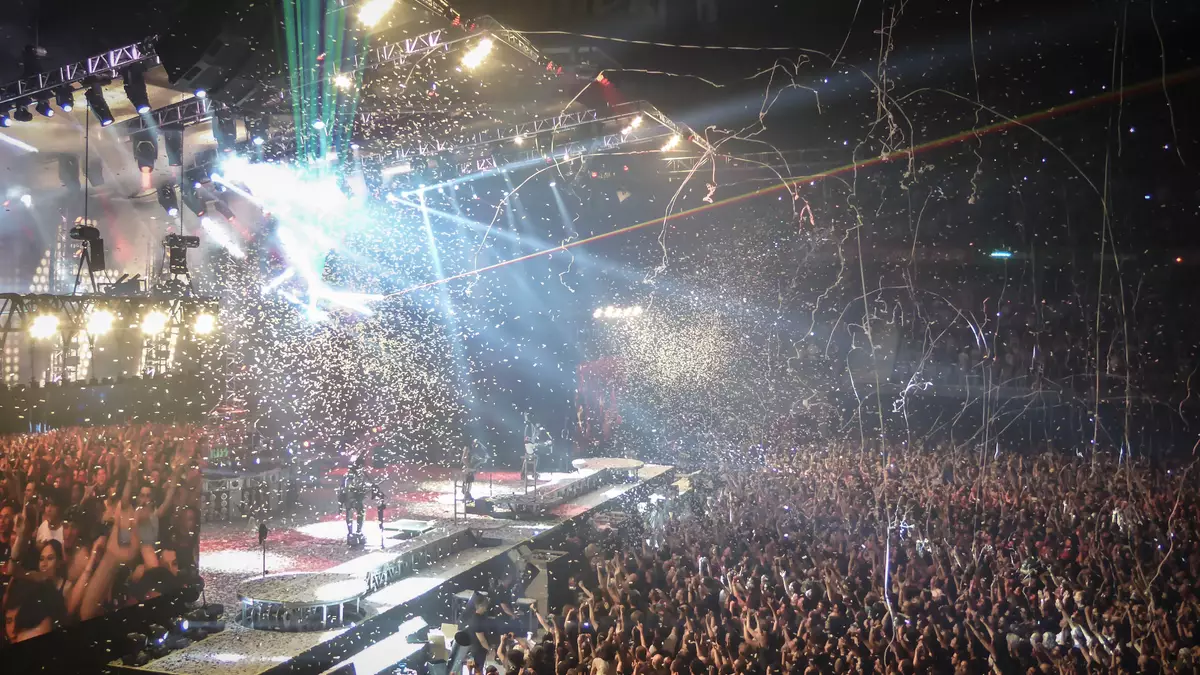
As of June 8, 2026, Sheryl Crow’s current tour centers on the United States, with legs that favor amphitheaters, summer stages, and select indoor arenas that suit multi-generational crowds. While specific nightly setlists vary, reporting from recent shows by outlets such as Variety and local US newspapers suggests a consistent backbone built from her biggest hits, a few deeper cuts for dedicated fans, and a rotation of more recent songs to signal that this is a living, evolving project, not just a jukebox revue.
Set openers in 2026 have often leaned on high-energy favorites like “A Change Would Do You Good” or “Everyday Is a Winding Road,” which immediately signal the band’s live muscle and ease fans into a familiar soundscape. Mid-set, she typically folds in mid-tempo staples such as “My Favorite Mistake” and “Strong Enough,” letting the crowd take over choruses that have lived on in karaoke bars and college dorm rooms across the US. According to multiple recent reviews in US regional outlets, those singalong moments are some of the most powerful points of the night.
The climactic stretch of the show is usually built around “If It Makes You Happy,” “All I Wanna Do,” and “Soak Up the Sun.” These songs play differently in 2026 than they did at their release: what once felt like carefree alt-pop now reads as a nostalgic snapshot of a less social-media-saturated era. Per coverage in USA Today, that nostalgic charge has helped Crow’s recent shows attract not only Gen X fans but also Millennials and older Gen Z listeners who associate these songs with family car rides, movie soundtracks, or algorithm-shaped playlists.
Beyond hits, Crow uses the tour to keep new material in circulation. After a 2019 project that she described in interviews as a possible final full-length, she surprised fans by returning to the album format in the first half of the 2020s. Outlets like Rolling Stone and Consequence have highlighted how these later records maintain her knack for sharp melodic hooks while leaning a bit more into Americana textures and occasionally political lyrics. On stage in 2026, she tends to spotlight a select handful of these newer songs, positioning them near early-album classics so the contrast feels seamless rather than jarring.
Venue-wise, the 2026 itinerary shows a strategy tuned to US demand patterns. Instead of attempting a risky stadium run, Crow’s team has focused on comfortable-capacity spaces where a 5,000- to 15,000-person crowd can create energy without leaving empty seats. This approach aligns with what Pollstar and industry analysts have noted about legacy rock and pop acts in the post-pandemic touring landscape: mid- to large-sized venues, often promoted by companies like Live Nation and AEG Presents, are delivering a sweet spot of financial viability and fan experience.
Tickets for Sheryl Crow’s tour, as of June 8, 2026, show a range from relatively affordable lawn and upper-bowl seats to premium packages that include closer views and occasional perks like merch bundles. US fans are encouraged to check official ticketing partners linked from Sheryl Crow’s official website to avoid secondary-market markups and to verify date changes or added shows, which have become common as demand patterns shift week to week.
Rock Hall status and critical re-evaluation
Sheryl Crow’s Rock & Roll Hall of Fame induction has turned out to be more than a ceremonial nod; it has catalyzed a broader re-evaluation of her place in rock and pop history. According to the New York Times and Rolling Stone, the Hall’s 2023 class was notable for expanding the definition of rock to encompass artists whose work moved fluidly through pop, R&B, and country. Crow’s induction, in this context, is less about guitar heroics and more about songwriting, arrangement, and the ability to straddle genres.
Critics have argued that Crow’s strength lies in her command of the album as a front-to-back experience, even when singles dominate the cultural conversation. Records like “The Globe Sessions” and “C’mon, C’mon” have been revisited in the streaming era as cohesive bodies of work, not just playlists built around the hits. NPR Music has pointed out that Crow’s nuanced lyricism—the way she mixes conversational lines with evocative images—marks her as an heir to 1970s singer-songwriters, even as her production style is firmly rooted in 1990s alt-rock and roots-pop.
That critical re-evaluation intersects with the 2026 tour in tangible ways. When reviewers from outlets like Variety and Stereogum assess the current shows, they are increasingly writing from a framework that views Crow as part of a canon of influential American songwriters, rather than just a hitmaker who captured early-morning radio rotations. Setlist decisions that foreground deep cuts or less obvious singles are being read as statements about her artistic identity, not just as concessions to hardcore fans.
In addition, the Hall of Fame platform has amplified Crow’s partnerships and collaborations. Over the last decade, she has recorded or performed with a wide range of artists, from country stars to indie-leaning rock musicians. Per Billboard, these collaborations have strengthened her presence on satellite radio and streaming playlists that bridge traditional genre boundaries. On tour in 2026, guest appearances vary by city, but the basic narrative remains: Sheryl Crow is not a relic of the 1990s; she is an active part of how US popular music continues to evolve.
Sheryl Crow and the US touring landscape after the pandemic
Another key dimension of Sheryl Crow’s 2026 activity is how it fits into the broader US touring ecosystem that has emerged in the wake of the COVID-19 pandemic. According to reporting in the Wall Street Journal and Pollstar, the live music industry has experienced both explosive demand and significant inflation in production costs since venues fully reopened. Superstars at the stadium level—think Taylor Swift and Beyoncé—have dominated headlines, but mid- and upper-tier tours like Crow’s have been just as crucial to venues, promoters, and local economies.
Legacy acts in particular face a delicate balance: they must honor fan expectations for beloved songs while offering enough freshness to justify ticket prices that are, in many cases, higher than pre-pandemic norms. Crow appears to be meeting that challenge by keeping her band lean and tight, her production focused on sound quality over spectacle, and her setlists flexible enough to respond to different markets. Reviews from 2025 and early 2026 shows in US mid-size cities note that audiences walk away feeling they have received value, with little of the sticker shock that sometimes accompanies larger tours.
For venues, a Sheryl Crow date slots neatly into calendars that juggle comedy, sports, and multiple genres of music. Amphitheaters and flexible-seating spaces, many of them managed by national operators like Live Nation and AEG Presents or by regional partners allied with NIVA member venues, can rely on solid midweek or weekend turnout from a cross-generational audience. That reliability makes Crow an attractive booking for promoters, and it explains why her name continues to appear on seasonal lineups across the United States.
The US touring market in 2026 is also notable for its emphasis on nostalgia packaged as community experience. While Crow’s show is not marketed as a strict “1990s night,” it functions that way for many attendees, particularly Gen X and older Millennials. At the same time, the presence of younger fans—drawn by parents, playlists, or curiosity about a Rock Hall inductee—creates a multigenerational dynamic that reviewers for outlets like USA Today have highlighted as one of the tour’s most distinctive features.
Streaming, radio, and Sheryl Crow’s US audience in 2026
Outside the concert hall, Sheryl Crow’s US footprint in 2026 reflects the blended reality of the modern music economy: legacy radio airplay, persistent catalog streaming, and intermittent surges tied to cultural moments. According to Billboard and Luminate data referenced in recent trade coverage, catalog listening now accounts for a majority of US music consumption, and artists like Crow benefit from curated playlists, algorithmic surfacing, and soundtrack placements.
Classic hits and adult contemporary stations across the US continue to program Crow’s biggest songs heavily, keeping her voice in daily rotation for car commuters and workplace listeners. Meanwhile, streaming platforms categorize her into 1990s rock, women of alt-pop, and road-trip playlists that surface her songs alongside artists ranging from Alanis Morissette to newer acts inspired by that era. When her Rock Hall induction was announced and later televised, trade outlets reported noticeable bumps in on-demand streams for her biggest hits, a pattern that often recurs when a legacy artist re-enters the news cycle.
For US-based fans, that means the 2026 tour doesn’t exist in a vacuum; it’s woven into a media environment where Sheryl Crow’s songs remain ambiently present. A drive to a show might be soundtracked by “Soak Up the Sun” on terrestrial radio, a 1990s throwback playlist on a streaming service, or a podcast episode dissecting the era of female-fronted rock acts that reshaped the charts. This ambient familiarity gives the live show an immediate intimacy—audiences often arrive already knowing the words to deep cuts, not just the Hot 100 staples.
Crow has also embraced selective media appearances in the US that align with this touring and streaming strategy. Interviews with NPR, late-night TV performances, and guest spots on music podcasts give her space to talk about songwriting craft, mental health, and the realities of sustaining a decades-long career. For Discover readers, these appearances offer additional entry points into the narrative of Sheryl Crow as a working musician who continues to evolve in public rather than simply touring the greatest-hits circuit.
Why Sheryl Crow’s 2026 moment matters to US pop and rock history
It is tempting to frame Sheryl Crow’s 2026 tour and renewed visibility as just another nostalgia wave in a US landscape full of reunion tours and anniversary shows. But her trajectory carries specific implications for how we read the last three decades of American popular music. Crow emerged in an era when female-fronted rock and pop acts were often siloed into narrative niches—“Lilith Fair artist,” “adult contemporary staple,” “VH1 core”—yet her career cut across those boundaries, influencing everything from mainstream country to indie rock aesthetics.
As critics for outlets like Spin and Vulture have argued, Crow’s blend of wry observational lyrics, hooky choruses, and slightly ragged production prefigured a generation of artists who approach genre as a toolkit rather than a fixed identity. In that sense, the 2026 tour is not just a chance to hear old favorites; it is an opportunity to watch an architect of the current pop-rock landscape take a victory lap while still adding to the blueprint.
Her sustained presence also underscores the importance of mid-career and late-career phases in pop narratives. US media often focuses on discovery and comeback arcs, but less attention is paid to artists who simply keep doing the work: writing, recording, touring, and adapting. Crow’s post-2010 catalog, while lower on blockbuster singles, has quietly solidified her standing among peers and younger artists as a writer whose songs age well. In a streaming economy that rewards catalog depth and consistency, that may prove just as valuable as any one chart peak.
For US readers scanning Google Discover for what to listen to or which show to catch next, Sheryl Crow’s 2026 activities send a clear message. This is not just a nostalgia act cycling through the fairground stage circuit; it is a Rock Hall inductee actively curating her legacy on her own terms. Whether you first encountered her through 1990s radio, a parents’ CD collection, or a recent playlist, the current tour offers a lens through which to hear those songs again—with the added perspective of everything that has changed in the culture since they first hit the airwaves.
More context, and where to follow Sheryl Crow coverage
For US listeners who want to track how Sheryl Crow’s tour develops through added dates, festival announcements, and setlist shifts, it is worth keeping an eye on both industry outlets and local papers. National coverage tends to spotlight major-market shows in New York, Los Angeles, Chicago, and Nashville, while regional dailies often provide on-the-ground detail about smaller cities and outdoor venues. That local coverage can be especially valuable for families planning multi-generational outings, since it often includes practical information about parking, opening acts, and what time Crow typically hits the stage.
Readers interested in tracking Sheryl Crow’s broader impact—from chart moves to collaborations—can find more Sheryl Crow coverage on AD HOC NEWS via the site’s internal search, which aggregates news, reviews, and tour updates into a single stream tailored for US audiences at mid-day scroll time. Casual listeners may only see the biggest stories surface in their personalized feeds, but a deeper browse reveals how consistently Crow’s name has appeared in tour announcements, festival posters, and critical essays over the last decade.
As of June 8, 2026, the key takeaways for US fans are straightforward. Sheryl Crow is touring, the shows are structured to honor both the hits and the deeper cuts, and her Rock Hall-era visibility is shaping how critics and audiences talk about her legacy. In a crowded landscape of comebacks and reunions, her current run stands out for its balance of celebration and ongoing work—a living reminder that some of the 1990s’ most enduring songs were built to travel well into the 2020s and beyond.
FAQ: Is Sheryl Crow on tour in the US in 2026?
As of June 8, 2026, Sheryl Crow is actively touring in the United States, with a slate of summer and fall dates at amphitheaters, theaters, and select festivals. Industry coverage from outlets such as Billboard and Variety confirms that the current run features a strong focus on US markets, particularly cities with robust adult contemporary and classic hits radio support.
FAQ: What songs does Sheryl Crow play live in 2026?
Recent reviews from US shows indicate that Sheryl Crow’s 2026 setlists center on career-defining hits like “All I Wanna Do,” “If It Makes You Happy,” “Soak Up the Sun,” “My Favorite Mistake,” and “Everyday Is a Winding Road,” alongside a rotating selection of deep cuts and newer material. While exact songs vary by night, fans can reasonably expect a generous dose of 1990s and early 2000s favorites mixed with select tracks from her more recent albums.
FAQ: How can US fans get tickets for Sheryl Crow’s tour?
US fans are encouraged to purchase tickets through official platforms linked from Sheryl Crow’s primary online channels, which list confirmed dates and venues. As of June 8, 2026, major promoters like Live Nation and AEG Presents are handling many of the dates, and reputable primary ticketing outlets remain the safest way to avoid counterfeit tickets and inflated resale prices.
FAQ: Is Sheryl Crow releasing new music around this tour?
Sheryl Crow has released new material in the first half of the 2020s, even after previously suggesting she might step back from full-length albums. Coverage from Rolling Stone and NPR has highlighted how these recent songs maintain her blend of rock, pop, and Americana while incorporating more reflective and occasionally politically engaged lyrics. While there is no requirement for new music to anchor each tour leg, her 2026 shows typically include a small selection of more recent tracks alongside the hits.
FAQ: Why is Sheryl Crow’s Rock Hall induction important?
Sheryl Crow’s 2023 Rock & Roll Hall of Fame induction, as noted by outlets such as the New York Times and Rolling Stone, formally recognizes her as a key figure in late 20th-century and early 21st-century American popular music. The honor has spurred renewed critical attention to her albums and solidified her status as a songwriter whose work helped define the sound of 1990s mainstream rock and pop.
For US music fans browsing on phones or tablets, this 2026 Sheryl Crow moment is both a celebration of songs that have become part of the national soundtrack and a snapshot of an artist still actively shaping her own legacy on stage, night after night.
By the AD HOC NEWS Music Desk » Rock and pop coverage — The AD HOC NEWS Music Desk, with AI-assisted research support, reports daily on albums, tours, charts, and scene developments across the United States and internationally.
Published: June 8, 2026 · Last reviewed: June 8, 2026
Share this article
Know someone who still knows every word to “If It Makes You Happy”? Share this Sheryl Crow update with a friend or family group chat, post it to your social feeds, or save it to your reading list so you have the key tour and context details handy before tickets sell out.
So schätzen die Börsenprofis Aktien ein!

Für. Immer. Kostenlos.