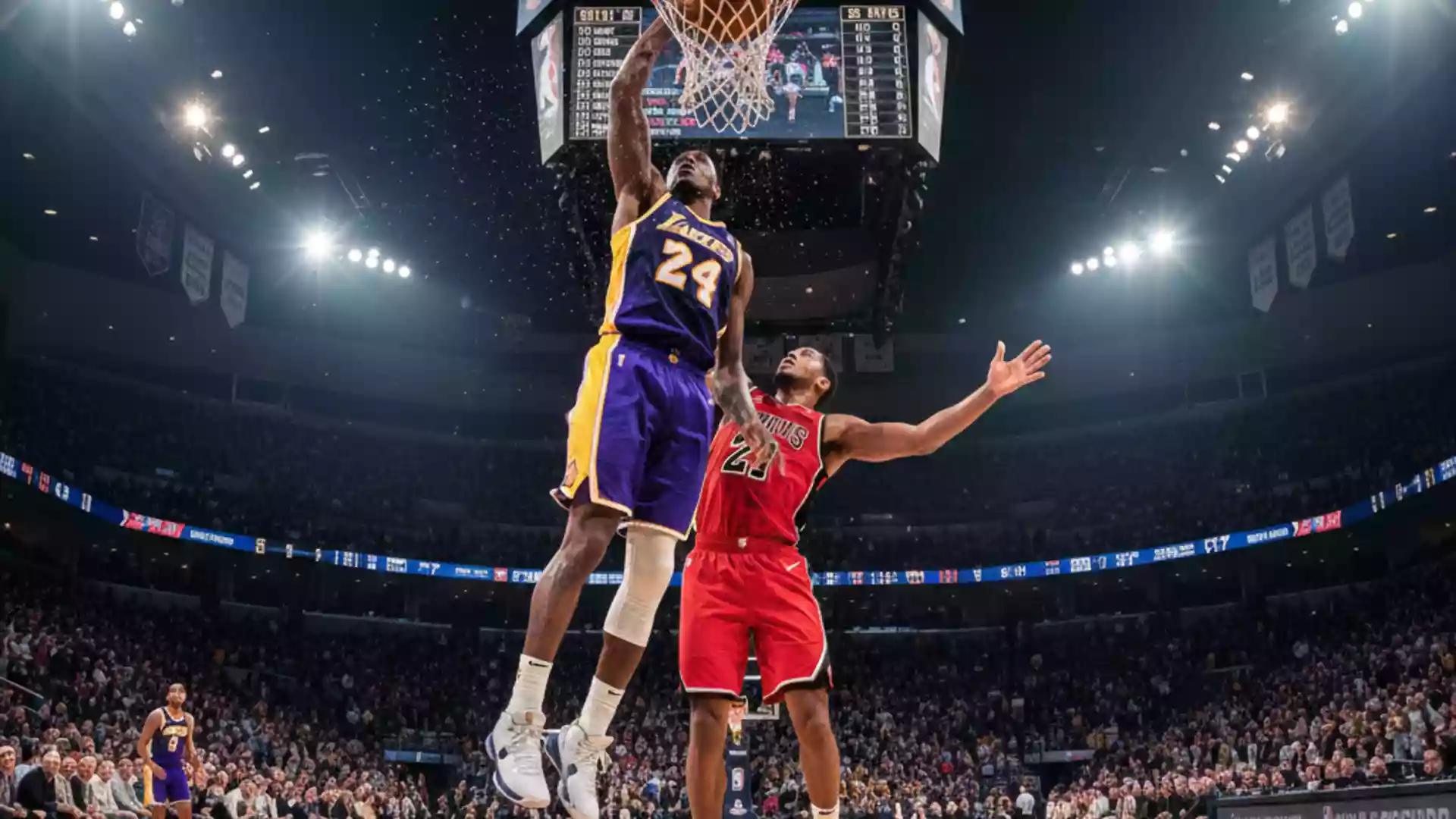
No NBA Games Today: Schedule Lull Sets Stage For Next Wave Of Offseason Drama
Published on 07/27/2026 at 12:01 | Editorial responsibility: Rafael Müller, Editor-in-Chief AD HOC NEWS
There are no NBA games being played, completed or scheduled for today, but the league is anything but quiet as front offices, players and coaches use this lull in the calendar to shape the upcoming season.
By James Whitfield, Sports Editor | 2026-07-27
On a day with no official NBA games tipping off, the headlines shift away from box scores and toward the broader forces that will decide who contends next year. The open floor in the schedule gives teams space to work behind the scenes on trades, contract extensions, medical evaluations and coaching plans without the immediate pressure of game nights. For fans, it is a chance to zoom out from single-game storylines and look at the bigger picture of who is rising, who is retooling and who is at risk of falling behind.
Because there are no games today, there are no fresh final scores, no live stat lines to dissect and no immediate movement in the standings or playoff picture. That does not mean the competitive landscape is standing still. The league calendar keeps moving through key offseason checkpoints: front offices evaluate summer developments, medical staffs assess players returning from injuries and coaching groups refine schemes that will be installed once training camps open. The work done on quiet days often becomes visible only months later, when rosters are set and rotations take shape.
For international fans and readers accessing everything on mobile, this pause in game action is also an ideal moment to reset: to understand how the schedule works, why certain dates are empty and what usually happens on these in-between days. Even without tip-offs, the NBA ecosystem is still in motion, driven by contracts, development plans and long-term roster strategy.
NBA schedule check: why there are no games today
Every NBA season is defined as much by its gaps as by its marquee matchups. The league calendar includes long regular-season stretches, the postseason, the draft period, free agency and then pockets of downtime where no games are played. Today falls into one of those pockets, a quiet date that sits outside the core competitive windows in which the schedule is tightly packed with daily action.
On days like this, there are no live games to follow and no new scoreboard data flowing in. That means no fresh updates to win-loss records, no shifts in conference standings, no new clinching or elimination scenarios and no direct playoff consequences. Any standings discussion today is necessarily backward-looking, referring to how teams finished the previous season, rather than reflecting live movement.
For teams, the absence of game-day obligations changes the rhythm of operations. Instead of shootarounds, matchups and postgame media sessions, the focus turns to meetings, film study and strategic planning. Some organizations use this time to review the previous season in detail, breaking down where their offensive and defensive schemes succeeded and where they broke down. Others concentrate on integrating new arrivals from the offseason into their long-term planning.
For players already under contract, today is part of the broader offseason or preseason arc, depending on the exact point of the league year. With no games scheduled, the emphasis is on controlled workouts, conditioning sessions and skill development rather than the physical and mental demands of back-to-back contests. The absence of live competition can also be crucial for players managing minor injuries or long-term rehabs, allowing them to progress without the stress of immediate game returns.
Standings, seeds and playoff context: frozen for now
Because no games are on the board today, the standings are effectively frozen. No team is picking up a half-game in the conference race, no club is falling a spot because of a tiebreaker and no new mathematical elimination or clinching scenarios are being triggered. Any talk of first seeds, play-in hopefuls or lottery positioning is rooted in where teams finished previously, not in new information from the current date.
That stasis can actually be helpful for front offices. With no new results coming in, decision-makers can step back and study the last completed season as a full data set. They can evaluate whether their core players, coaching philosophy and rotation patterns are robust enough to carry over, or whether deeper changes are required. In practice, that can mean weighing the potential impact of a major trade, considering if a star extension is aligned with the team’s trajectory, or determining whether young players are ready for expanded roles.
For fans, a standings freeze is also a moment to reassess expectations without the noise of nightly wins and losses. Supporters can look at how their team performed and decide whether to be optimistic about growth, cautious about repeating the same issues or skeptical about the current roster’s ceiling. When games resume on future dates, the big questions being asked now will shape how those results are interpreted.
Another side effect of a non-game day is that national attention is not dominated by one or two high-profile matchups. Instead, the narrative spreads out to all 30 teams, from established contenders fine-tuning their depth charts to rebuilding franchises trying to find the next cornerstone. With the race paused, everyone’s long-term plan is on the table for scrutiny.
Sentiment and reactions
Offseason gravity: trades, contracts and roster construction
In the absence of game action, the loudest stories around the NBA tend to revolve around roster changes. Whether it is a blockbuster trade moving an All-Star to a new city, a role player switching teams in search of a bigger opportunity, or a veteran choosing between contenders, these decisions quietly redefine the competitive map before a single tip-off.
On a day without games, general managers and front-office executives can focus on exploring trade frameworks, evaluating salary-cap flexibility and aligning their moves with ownership’s long-term vision. Many deals take shape over a series of calls and meetings, with concepts refined gradually rather than in a single conversation. A lull in the schedule gives space for that process, free from the distractions of daily game preparation.
Contract talks are another central storyline. Extensions for rising stars, rookie-scale deals, and new free-agent signings are all negotiated in a landscape where future cap projections, luxury-tax implications and roster balance matter as much as pure talent. With no games tipping off today, those negotiations can be discussed more openly in media circles, as insiders and analysts weigh whether teams are paying for past performance or wagering smartly on future potential.
Rebuilding teams often use this window to take calculated risks, absorbing contracts in exchange for future draft picks or positioning themselves for flexibility in upcoming summers. Contenders, meanwhile, are more likely to look for marginal upgrades that address specific weaknesses exposed in prior playoff runs, such as bench shooting, perimeter defense or size on the glass. These moves rarely make instant headlines like a buzzer-beater, but they matter over the course of an 82-game campaign.
For players, the business side of the league can be both opportunity and uncertainty. A day without games can still bring news of a trade that changes a player’s city, role or trajectory. It can also bring confirmation of a long-awaited extension or the realization that a free-agent market has shifted. Fans following the league closely are accustomed to this: even in the calendar’s quiet patches, an alert on a major signing can change the conversation instantly.
Injury rehab, workload management and player development
Another critical storyline on days without games is health. Without the spotlight of a live broadcast, players recovering from injuries can take important steps in their rehab programs. Medical and performance staffs use these stretches to reassess timelines, adjust conditioning plans and decide when a player might safely ramp up activity ahead of the next competitive window.
For stars returning from significant injuries, every incremental stage matters: progressing from individual workouts to controlled scrimmages, then to full-contact practice and ultimately clearance for game action. Those timelines are often planned against the league calendar, and non-game days are essential checkpoints. While fans may only get periodic updates, much of the decisive work happens on days exactly like this.
Workload management is not just about injuries, but also long-term durability. Veteran players with deep playoff histories and heavy minutes often follow carefully curated offseason programs designed to extend their careers. Quiet days provide space for recovery sessions, strength work, and biomechanical assessments that aim to prevent issues during the next long season.
Younger players use the same window in a very different way. For them, development is the primary focus: tightening shooting mechanics, expanding ball-handling, building defensive versatility or studying film to better understand reads. Without games clogging the schedule, they can get extended on-court reps, deeper feedback from coaches and more time to build chemistry with prospective teammates in informal runs and structured workouts.
This developmental work is often what separates future rotation mainstays from players who struggle to stick in the league. Fans may not see it live, but when a sophomore suddenly looks more confident or a fringe rotation player breaks through, the roots usually trace back to the work put in on days when the scoreboard was dark.
More NBA News on ad-hoc-news.de
Coaching labs: schemes, roles and culture building
The coaching side of the league also looks very different when no game is on the nightly schedule. Instead of preparing scouting reports for specific opponents, coaching staffs can run deeper self-audits. They review their own playbook, examining which actions produced efficient looks, which defensive coverages held up against elite opposition and where adjustments may be needed.
On non-game days, coaches have more bandwidth for individual sessions with players. They can walk a young guard through pick-and-roll reads on film, show a big man exactly how to position for rim protection against various types of drives, or refine the timing of off-ball actions for shooters. That granular coaching is harder to prioritize in the relentless rhythm of game-after-game, but it is vital for building a cohesive system.
Cultural work is another underappreciated dimension. Teams use the quieter days to reinforce identity: what it means to play for this organization, what standards are non-negotiable and how accountability is handled in the locker room. Leaders, both coaches and veteran players, can set expectations in meetings and conversations without the immediate emotional swing of a win or a loss.
For new head coaches or revamped staffs, this period is especially important. Installing a new system requires buy-in, repetition and clarity of communication. Without games on the docket, camps, mini-camps or informal group sessions can be used to introduce terminology, walk through sets and ensure that everyone understands the defensive and offensive principles that will define the upcoming season.
Fan experience: following the league when the court is quiet
From a fan perspective, days without games can feel strange in such a content-rich league. But they also invite a different kind of engagement. Instead of live-tweeting plays or reacting to calls in real time, fans often turn to podcasts, long-form analysis, salary-cap breakdowns and deep dives into team-building strategies. The conversation shifts from "What just happened?" to "What should happen next?"
International fans, in particular, benefit from these pauses. Time zone differences can make it difficult to follow every live game, but on non-game days there is less fear of missing out and more room to catch up on storylines at a comfortable pace. Features on emerging players, retrospectives on playoff runs and explanations of draft strategy tend to circulate more widely when they are not competing with instant viral highlights.
These quieter windows are also where fan optimism and anxiety can both peak. Without immediate results to confirm or challenge beliefs, supporters project forward: will this roster construction hold up against elite competition, is a particular young player ready to take a leap, or is a front office doing enough to support its star? The absence of daily outcomes makes the long-term stakes feel even larger.
For content creators and media outlets, this is a prime period for explanatory journalism. Articles that break down how the collective bargaining agreement shapes free agency, how analytics departments influence shot selection, or how teams manage travel and rest can gain traction when fans are not focused on the countdown to tip-off. Even without new scores, there is always more to understand about how the NBA functions.
Looking ahead: what to watch when games return
Although today offers a break from on-court action, it also serves as a natural pivot point toward the next burst of games, whether that is preseason matchups, regular-season openers or marquee nationally televised clashes. Fans using this time to reset can sharpen their watchlists: which teams have the most to prove, which players are under the most pressure, and which coaching staffs must deliver visible progress.
When games resume, the impact of the work done on quiet days becomes easier to spot. Has a star returning from injury regained their explosiveness? Did a retooled roster find better two-way balance? Is a young player handling more on-ball responsibility with confidence? These are the questions that link today’s unseen preparation to tomorrow’s box scores.
Front offices will also be under the microscope. If a team that stayed quiet in the transaction market struggles out of the gate, the narrative will quickly shift to whether they missed their chance to act. Conversely, an aggressive team that gelled quickly will be praised for seeing the moment clearly and using downtime to make bold moves.
For neutral fans, the league’s competitive parity adds intrigue. In recent years, the gap between traditional powerhouses and so-called small-market teams has narrowed, with smart drafting, development and cap management giving more franchises a path to relevance. Non-game days are the backdrop to those structural changes, even when the headlines focus squarely on stars.
Official NBA ScoresSo while the scoreboard is blank today and no fresh highlights are being added to the reel, the NBA remains very much alive. Decisions are being made, bodies are being strengthened, schemes are being refined and expectations are being reset. For fans willing to look beyond the box score, days like this are an invitation to understand the league not just as a series of games, but as a year-round ecosystem where every quiet moment helps shape the drama to come.
Note: Scores and facts were verified live before publication; for ongoing games, only the clearly confirmed score at time of writing is used.