ABBA legacy returns in immersive Voyage era
Veröffentlicht am: 02.06.2026 um 21:15 Uhr | Redaktionelle Verantwortung: Rafael Müller, Chefredakteur AD HOC NEWS
Decades after redefining pop from Stockholm to the States, ABBA are back in the global spotlight thanks to their cutting-edge Voyage concert experience and a new wave of appreciation for their meticulously crafted hits.
Voyage era keeps ABBA in motion
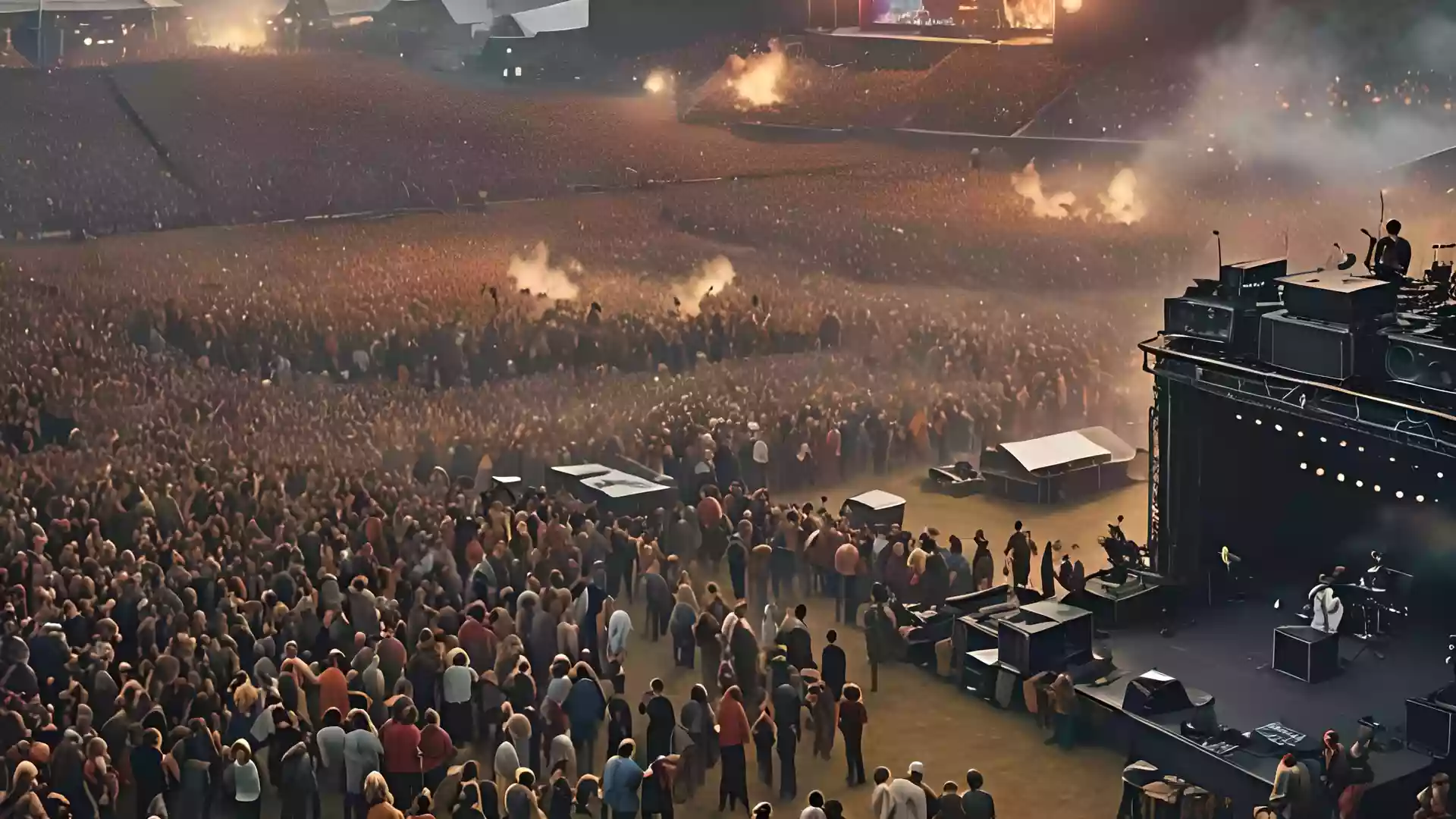
For many US fans, ABBA were the soundtrack to car rides, roller rinks, and school dances in the late 1970s, long before anyone imagined avatars and arena-sized LED walls. Today, the group are back in the cultural conversation through Voyage, a digital concert residency in London that uses motion capture and advanced visual technology to present the four members as de-aged performances backed by a live band.
While the residency itself is based in the United Kingdom, its impact extends across the Atlantic. As Billboard and other outlets have noted in recent coverage, the show functions as a kind of living museum for one of pop's most enduring catalogs, encouraging US listeners to revisit albums like Arrival and Super Trouper alongside newer releases such as the 2021 reunion record Voyage.
Instead of relying on traditional touring, the group have embraced a hybrid of theater, film, and concert design that points toward a possible future for legacy acts. For American audiences, that future is mostly experienced through streaming, social media clips, and travel pilgrimages, but the net effect is the same: ABBA are once again a contemporary talking point, not just a nostalgia act.
- ABBA's Voyage era has reignited interest in their 1970s and 1980s albums for a new generation of US listeners.
- The digital show model highlights how legacy pop acts can reach global audiences without constant touring.
- US media outlets regularly revisit ABBA's chart history on the Billboard 200 and Hot 100 in light of the renewed attention.
- Streaming-era discovery means classic tracks like Dancing Queen sit alongside modern pop hits on American playlists.
From Eurovision winners to US radio staples
ABBA's path to American ears began in earnest with their victory at the 1974 Eurovision Song Contest with Waterloo. Although Eurovision is a European institution, the win gave the group a strong narrative hook and a breakout single that crossed over to the US, where Waterloo entered the Billboard Hot 100 and signaled that the Swedish quartet had global potential.
By the time Arrival arrived in 1976, the group were developing a particular resonance in North America. As chronicled by outlets like Rolling Stone and NPR Music, ABBA's blend of bright melodies, melancholy undercurrents, and meticulous production gave them a distinct identity amid the disco, soft rock, and singer-songwriter sounds dominating US radio at the time. Songs like Knowing Me, Knowing You and Fernando became staples on adult contemporary and pop playlists.
The group built their US reputation not just through singles but through a steady run of albums. Arrival introduced the timeless Dancing Queen, which became ABBA's signature hit in the States and their lone Billboard Hot 100 No. 1, while Voulez-Vous and Super Trouper further showcased their ability to adapt to shifting disco and pop trends without losing their songwriting core.
For US listeners, the group represented an intriguing blend of European sophistication and universal pop appeal. Their lyrics, though written by non-native English speakers, often captured emotional nuances that resonated with American audiences dealing with breakups, career anxiety, and family dynamics. This emotional clarity wrapped in glossy hooks would later influence waves of US pop and indie acts.
Stockholm beginnings and global breakout years
Long before arenas, residencies, and jukebox musicals, ABBA began as two couples and four individual careers intersecting in 1960s and early 1970s Sweden. Björn Ulvaeus and Benny Andersson were already established musicians and songwriters in their home country, while Agnetha Fältskog and Anni-Frid Lyngstad were developing reputations as vocalists and recording artists.
According to numerous histories of the group, including books and profiles cited by major outlets, the four first collaborated on studio recordings and television performances under various titles before committing to the ABBA name, constructed from the initials of their first names. The decision to present themselves as a cohesive quartet, rather than as a backing band for one singer, proved crucial in shaping their live presence and visual identity.
Their early albums, including Ring Ring and Waterloo, laid the groundwork for international success. By the mid-1970s, they were touring globally and appearing on American television, with carefully choreographed performances and colorful costumes that made them ideal subjects for the era's variety shows. US exposure during this period helped cement their status as more than a European curiosity.
The period from 1976 through the early 1980s is widely regarded as their imperial phase. During these years, albums like Arrival, The Album, Voulez-Vous, and Super Trouper delivered a near-continuous stream of charting singles and deep cuts that have since become standards. Despite shifts in musical fashion, ABBA maintained a knack for balancing upbeat arrangements with lyrics steeped in doubt, regret, and romantic complexity.
Behind the scenes, however, the pressures of fame, relentless work, and evolving personal relationships took a toll. By the early 1980s, both couples had divorced, and the group gradually ceased recording and performing together without a formal breakup announcement. For US fans, this hiatus meant that ABBA's story seemed frozen in time, preserved in vinyl grooves and radio rotations.
Inside ABBA's studio sound and classic records
One reason ABBA's music has endured so strongly in the US is the sheer craftsmanship of their recordings. The production work led by Benny Andersson and Björn Ulvaeus, often in collaboration with engineer Michael B. Tretow, aimed for an almost orchestral density while maintaining clarity on radio and home stereos. This approach yielded records that still sound detailed and punchy on modern streaming platforms.
Arrival, released in 1976, serves as a prime example. The album features Dancing Queen, a song whose piano-driven rhythm, layered harmonies, and gliding strings create an air of euphoria that barely masks the bittersweet lyrics. American critics frequently place Dancing Queen among the greatest pop singles of all time, citing its combination of emotional ambiguity and sheer sonic delight.
The Album, arriving in 1977 alongside the film ABBA: The Movie, showed the group stretching beyond straightforward pop. Tracks like The Name of the Game and Take a Chance on Me incorporate shifting tempos, complex vocal arrangements, and narrative lyrics that hint at the influence of rock albums and concept works popular in the US at the time. Yet the songs remain immediate, designed for both radio and repeat listening.
With Voulez-Vous in 1979, ABBA leaned into disco-era rhythms and textures. Songs such as Voulez-Vous and Gimme! Gimme! Gimme! (A Man After Midnight) feature prominent bass lines, four-on-the-floor drum patterns, and synthesizer riffs that fit seamlessly into the late-1970s dance landscape. These tracks have since become staples of DJ sets, remixes, and pop sampling, particularly in the United States where disco and its influence continue to inform pop and electronic music.
Super Trouper and The Visitors, released in 1980 and 1981 respectively, capture a darker, more introspective phase. Songs like The Winner Takes It All and One of Us deal directly with heartbreak, separation, and the cost of success. Many US listeners discovered these later albums retroactively, especially after the rise of the musical Mamma Mia! and its film adaptations, which used key songs to anchor narratives about family and reconciliation.
Even the 2021 album Voyage, recorded after a four-decade gap, maintains the core elements of ABBA's sound: interlocking vocals, carefully constructed arrangements, and lyrics that treat aging, memory, and regret with plainspoken honesty. For American fans who grew up with the group, hearing their familiar sonic palette applied to new material has been both nostalgic and quietly moving.
How US culture kept ABBA in rotation
ABBA's cultural impact in the United States has unfolded in waves, often driven by media recontextualizations that introduce the group to new listeners. In the 1990s, alternative and indie acts publicly citing the band as an influence helped shift critical perceptions. Publications like Spin and Pitchfork would later reappraise their catalog, framing the group not as guilty-pleasure kitsch but as master craftsmen whose work rivals classic rock songwriters in sophistication.
The arrival of the stage musical Mamma Mia! in the late 1990s and its Broadway run were pivotal for American audiences. By building a narrative around ABBA songs, the show turned their catalog into a theatrical universe that families could experience together. The subsequent film adaptations, with major Hollywood stars performing the songs, further embedded the music in US pop culture. For many younger listeners, these movies were their first exposure to tracks like SOS and Lay All Your Love on Me.
Streaming has played a crucial role in the latest wave of ABBA appreciation. With the advent of playlists and algorithmic discovery, songs such as Dancing Queen, Mamma Mia, and Take a Chance on Me appear alongside contemporary hits in curated sets for parties, road trips, and workout sessions. The group's cross-generational appeal is evident in the fact that their streams come from both older listeners revisiting favorites and younger users encountering the songs for the first time.
US media frequently reference ABBA when discussing the evolution of pop songwriting and production. Critics and academics alike point to the group's use of key changes, counter-melodies, and narrative storytelling as examples of a pop tradition that prioritizes craftsmanship. Their songs are commonly used in music theory classes and production tutorials to illustrate concepts such as arrangement density, vocal stacking, and dynamic contrast.
Their influence also runs through modern pop and indie music. American artists in genres ranging from mainstream pop to indie rock and even country have cited ABBA as an inspiration, particularly in terms of harmonic daring and the blending of joy and melancholy. This influence is audible in the way many contemporary songs build toward expansive choruses while maintaining emotional complexity.
Beyond music, ABBA's visual style and branding have become touchstones for retro aesthetics. Costume parties themed around the 1970s, drag performances, and Pride events in US cities often feature ABBA songs and references, underscoring how deeply the group's imagery and sound are woven into communal celebrations.
Questions US fans still ask about ABBA
Is ABBA officially back together as a band?
ABBA's members reunited to record the album Voyage, released in 2021, and collaborated on the digital concert residency that uses avatar performances backed by a live band. While they do not tour in a traditional sense and continue to live largely private lives, their creative reunion has resulted in new music and a sustained presence in global pop culture.
Which ABBA songs are most popular in the United States?
In the US, Dancing Queen is often cited as ABBA's defining hit and remains an evergreen staple on radio and playlists. Other widely loved tracks include Mamma Mia, Take a Chance on Me, The Winner Takes It All, and Gimme! Gimme! Gimme! (A Man After Midnight). Streaming-era data and critical lists from outlets like Billboard and Rolling Stone regularly highlight these songs as entry points for new listeners.
How can new listeners start exploring ABBA's albums?
For US listeners curious about ABBA beyond the biggest hits, a useful starting path is to begin with Arrival and its mix of familiar singles and deep cuts, then move to The Album and Voulez-Vous to hear the group at the height of their creative and commercial power. From there, diving into Super Trouper, The Visitors, and the later Voyage album provides a sense of how their songwriting evolved from bright, youthful optimism to more mature reflections on love, aging, and identity.
ABBA on platforms and playlists worldwide
In the streaming era, ABBA's presence is only a tap away for US audiences, whether through best-of collections, original studio albums, or themed playlists that place their songs in conversation with contemporary pop. Social media keeps their image and sound in constant circulation, from TikTok dance trends to nostalgic clips on YouTube and Instagram.
ABBA – moods, reactions and trends across social media:
Further reading on ABBA and their world
More coverage of ABBA at AD HOC NEWS and in other media:
Read more about ABBA on the web ->Search all ABBA stories on AD HOC NEWS ->