
New era on stage for Green Day in 2026
Veröffentlicht am: 03.06.2026 um 06:44 Uhr | Redaktionelle Verantwortung: Rafael Müller, Chefredakteur AD HOC NEWS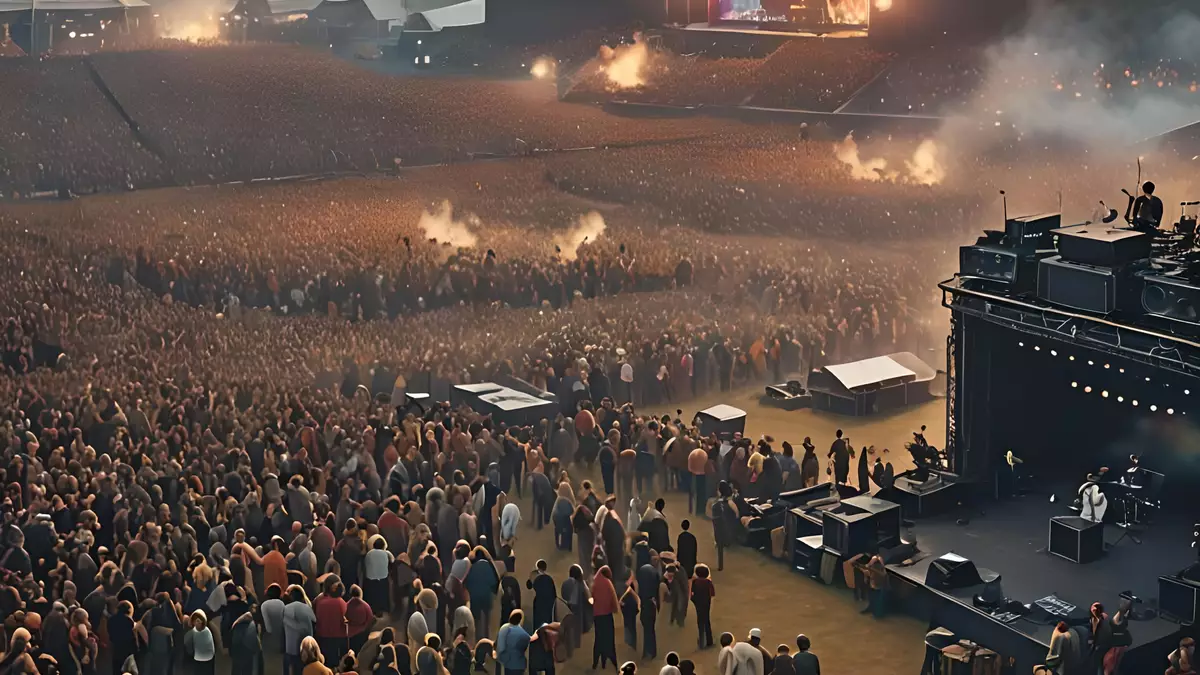
Green Day stand at a rare crossroads for any rock band: veterans with three decades of history behind them and a fresh wave of younger listeners discovering their most iconic albums for the first time.
From Dookie to American Idiot generations
For many US fans, the story of Green Day starts with the leap from the Bay Area punk underground to mainstream radio dominance. The band formed in the late 1980s in the East Bay scene around Berkeley, playing all-ages shows at legendary DIY venue 924 Gilman Street and releasing early material on indie label Lookout! Records. As outlets like Rolling Stone and NPR Music have often noted, that grassroots grounding remains central to how the trio see themselves, even after years of arena tours and Grammy trophies.
Their major-label debut Dookie, released on Reprise Records in 1994, became the catalytic moment that pushed pop-punk into the mainstream of US rock radio. Powered by singles like Longview, Basket Case, and When I Come Around, the album introduced Billie Joe Armstrong, Mike Dirnt, and Tré Cool to a wide American audience that was still in the aftermath of the grunge explosion. According to retrospective coverage in Billboard and other outlets, the record helped define the mid-1990s sound of alternative stations across the country.
Over time, a second generation of listeners would find their way to Green Day through a different touchstone: the 2004 concept album American Idiot. That politically charged rock opera, released in the shadow of the Iraq War, became a rallying point for a new wave of fans who heard in its story a sharp critique of media saturation and US culture. For younger listeners discovering the band on streaming platforms, the arc from Dookie to American Idiot now plays like a bridge between two different eras of rock radio and American politics.
That dual identity — skate-punk pranksters on one side, ambitious arena storytellers on the other — is part of why the group continues to resonate in the United States. As of June 3, 2026, Green Day sit comfortably in the zone where classic-rock legacy and contemporary relevance overlap, with playlists and festival lineups often placing them alongside both 1990s peers and younger alternative acts.
- Breakthrough major-label success with Dookie
- Concept-album reinvention on American Idiot
- Roots in the East Bay punk community
- Cross-generational audience in the US
Why Green Day matter to US rock fans
In the landscape of US rock and pop, Green Day occupy a distinctive space between punk credibility and mainstream accessibility. The band have consistently written songs with sharp hooks and sing-along choruses while keeping a guitar-driven sound that nods to the Ramones, the Clash, and classic power-pop. That balancing act has allowed them to connect with listeners who grew up on 1990s alternative radio as well as younger fans raised on streaming playlists.
The group are also central to how pop-punk itself is understood in the United States. Alongside peers like blink-182 and later Fall Out Boy, Green Day helped cement the idea that an underground-derived sound could thrive on the Billboard charts without entirely losing its bite. Coverage from publications such as Rolling Stone often points to records like Dookie and Insomniac as benchmarks for the genre, while American Idiot is treated as a rare example of a blockbuster rock opera in the 21st century.
At the same time, Green Day have regularly reappeared in wider US culture, whether through televised award-show performances, political commentary wrapped in anthemic choruses, or Broadway adaptations. The stage version of American Idiot brought their music into theaters across North America, exposing it to audiences who might not otherwise attend a punk or alternative show. That cross-medium presence reinforces their standing as more than a niche punk act; they are part of the broader US pop-rock conversation.
For American listeners, Green Day function as a kind of time bridge. Older fans hear their own history in early singles that sound like the soundtrack to 1990s mall culture and skate videos. Younger fans encounter a band that has already stood the test of several rock cycles but still writes about alienation, boredom, and political frustration in language that feels legible today. That tension between longevity and perpetual adolescence is one reason music critics still treat new Green Day releases as events worth contextualizing rather than mere nostalgia products.
East Bay origins and punk-club persistence
The origin story of Green Day is firmly rooted in the US punk tradition of regional DIY scenes. Billie Joe Armstrong and Mike Dirnt grew up in the working-class suburbs of the East Bay outside San Francisco, forming early versions of the band while still teenagers. Their early recordings for Lookout! Records, including 39/Smooth and the compilation 1,039/Smoothed Out Slappy Hours, reflected a tight but raw sound that owed as much to melodic punk as to classic rock.
Venues like 924 Gilman Street in Berkeley were crucial in shaping the band. The club enforced a strict all-ages, anti-corporate ethic, requiring participating bands to adhere to community guidelines that discouraged major-label involvement. As chronicled in documentaries and scene histories, Green Day faced criticism from some in that community after signing to Reprise Records for Dookie, but their time at Gilman left an imprint that still surfaces in the band s emphasis on inclusivity and connection from the stage.
By the time Dookie arrived in 1994, the trio had already done years of van touring around the United States, playing small clubs and squats. Those early runs developed a live reputation built on speed, humor, and the willingness to take risks in front of an audience — whether that meant pulling fans onstage, improvising between-song banter, or stretching out arrangements. US press at the time often highlighted this contrast: a band with bratty, youthful imagery but a work ethic built on relentless touring.
The commercial breakthrough of Dookie fed into a broader discussion in US rock media about what it meant for punk-rooted bands to sign to major labels. Green Day became one of the clearest examples of that tension, alongside contemporaries like The Offspring. Yet even as debate swirled, the band continued to frame their move as a practical step that allowed them to reach more listeners without abandoning their core songwriting approach.
Subsequent albums such as Insomniac and Nimrod found the group experimenting within their own template while still drawing on the adolescent energy of those East Bay years. Tracks like Good Riddance (Time of Your Life) broadened their appeal, turning up at US graduations, television finales, and other life-marker moments, while songs such as Hitchin a Ride and Nice Guys Finish Last kept one foot firmly planted in the punk tradition.
Concept albums, power chords and sing-along anthems
Over the decades, Green Day s sound has evolved while retaining some clear musical signatures: buzzing power chords, melodic bass lines, and drumming that toggles between breakneck punk tempos and midtempo rock swing. Billie Joe Armstrong s voice, combining nasal bite with surprising vulnerability, ties together the band s many stylistic shifts.
The mid-2000s marked a major reconfiguration with American Idiot. Rather than a collection of standalone singles, the album unfolded as a narrative about a character called Jesus of Suburbia navigating a media-saturated, politically charged America. The record blended high-velocity punk songs with multipart suites and ballads, embedding its storyline in hooks that still resonated on US radio. Critics from outlets like The New York Times and Rolling Stone described it as a rare 2000s rock album that felt both commercially potent and conceptually ambitious.
Later releases such as 21st Century Breakdown, ¡Uno!, ¡Dos!, and ¡Tré! continued to play with form. While not every experiment landed with the same impact, the band repeatedly returned to core elements that had always defined them: sharply drawn characters, three-chord catharsis, and choruses designed to be shouted back from the cheap seats of US arenas. Songs like Holiday, Boulevard of Broken Dreams, and Know Your Enemy became staples of American rock playlists, while deep cuts rewarded more engaged listeners.
In addition to studio recordings, Green Day s catalog has extended into live documents and side projects. Live releases capture the energy of their shows, which frequently feature fans brought on stage to play instruments or sing along, underscoring the group s interest in breaking down the barrier between performer and audience. On the songwriting side, Armstrong has occasionally stepped into different idioms, from side bands to acoustic-focused material, but Green Day remains the primary vessel through which these ideas reach mainstream US listeners.
Production-wise, the band have worked with recurring collaborators who understand how to balance their raw energy with radio-friendly clarity. Guitars are often layered to create a wall-of-sound effect, while vocals sit prominently in the mix, ensuring that lyrics about boredom, love, and political disillusionment remain intelligible even at high volume. That combination has helped keep their songs competitive on playlists that now sit alongside hip-hop, pop, and electronic music in US streaming ecosystems.
Influence on US pop-punk and beyond
Green Day s impact on the wider US music landscape extends beyond their own chart performance. Many of the bands that populated the late-1990s and early-2000s pop-punk and emo booms cite them as a key influence. Artists ranging from blink-182 and New Found Glory to later acts in the 2010s wave of pop-punk revival have pointed to Dookie and American Idiot as records that showed what was possible when underground energy met big hooks.
Cultural coverage in outlets like Rolling Stone, Spin, and Billboard regularly situates Green Day in conversations about political rock. While not every album has carried an overt political narrative, the group s willingness to tackle topics such as war, media saturation, and disaffection has made them recurring reference points whenever analysts discuss the state of socially engaged mainstream music in the United States.
The awards landscape reflects that position. Green Day have been honored at major US ceremonies, including the Grammys, and their songs frequently appear on lists of the most influential rock tracks of the last few decades. When publications assemble rankings of the greatest albums of the 1990s or 2000s, Dookie and American Idiot regularly feature, signaling not only critical respect but also the enduring presence of these records in US cultural memory.
Beyond formal accolades, the band s legacy shows up in more diffuse ways: in the continued popularity of guitar-centered rock among American teenagers, in the aesthetics of pop-punk fashion, and in the way US festivals still carve out space for acts that can deliver three-minute blasts of melody and distortion. Green Day s stage sets — full of confetti blasts, call-and-response sections, and old-fashioned rock showmanship — helped shape expectations of what a high-energy rock headliner should look like in the post-grunge, pre-festival-boom era.
As younger artists from pop, hip-hop, and alternative backgrounds continue to blur genre lines, Green Day occupy a role similar to classic-rock bands for earlier generations: a foundational reference that newer acts can echo, invert, or reject. Their songs are sampled, covered, and referenced across media, from television soundtracks to viral social media clips, ensuring that even listeners who might not name the band directly are still familiar with their melodies.
Key questions about Green Day today
How did Green Day first break through in the United States?
Green Day first gained major national attention in the United States with the release of their 1994 album Dookie on Reprise Records. The record s singles, including Basket Case and When I Come Around, received heavy rotation on rock and alternative radio and on music television, helping the band move from the Bay Area punk scene to a nationwide audience.
Why is the album American Idiot considered so important?
American Idiot, released in 2004, is widely regarded as a landmark because it reimagined Green Day as a politically charged, concept-driven rock band. The album told a story about life in a media-saturated, post-9/11 America while still delivering big, radio-ready choruses. Its success on the charts and eventual adaptation into a stage musical cemented it as one of the defining rock records of the 2000s in US culture.
What makes Green Day stand out from other pop-punk bands?
Green Day stand out for the combination of their East Bay punk roots, their longevity across several decades of US rock trends, and their willingness to take creative risks, such as releasing a fully fledged rock opera with American Idiot. Their songs balance direct, emotionally charged lyrics with simple but powerful arrangements, and their live shows emphasize connection with the audience, helping them remain relevant to multiple generations of listeners.
Green Day across platforms and playlists
Green Day s presence in US music culture today is reflected as much in digital behavior as in physical album sales. Their catalog performs consistently on streaming services, and classic tracks show up on curated playlists that sit alongside newer pop, rock, and hip-hop hits, keeping the band in circulation for listeners who were not yet born when Dookie first appeared.
Green Day – moods, reactions and trends across social media:
Further reading and official Green Day updates
More coverage of Green Day at AD HOC NEWS and in other media:
Read more about Green Day on the web ->Search all Green Day stories on AD HOC NEWS ->


