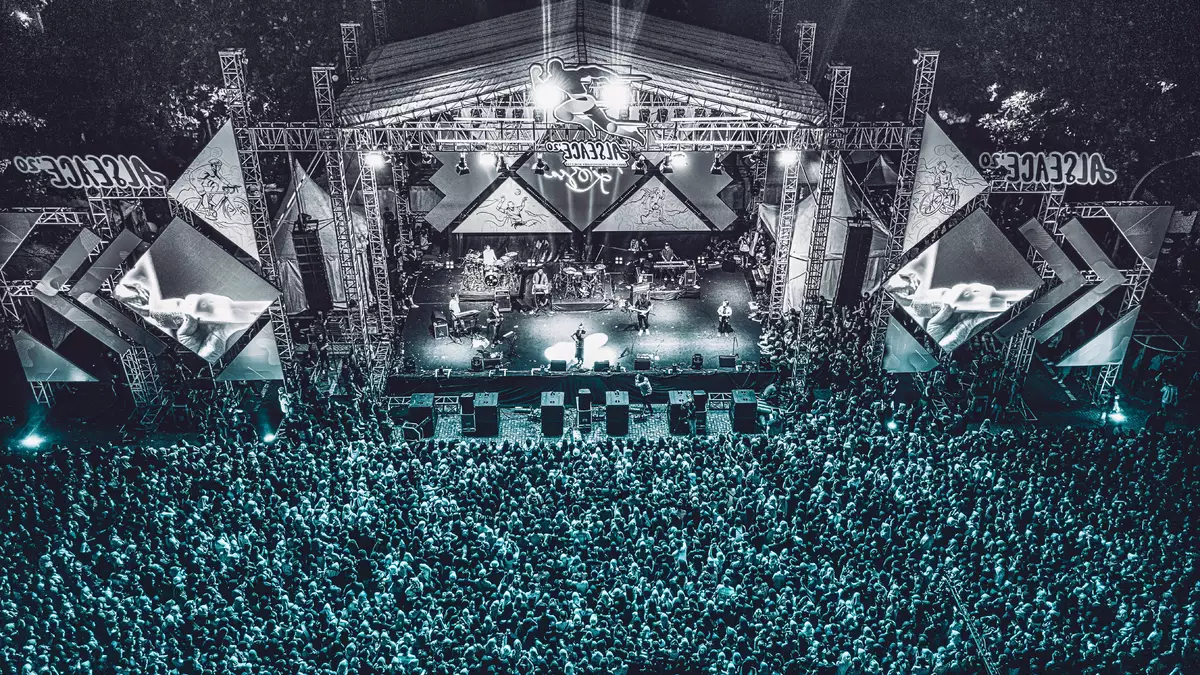
System of a Down ignite 2026 festival season with rare headline shows
17.06.2026 - 01:18:39 | ad-hoc-news.de
System of a Down remain one of rock's most in-demand live acts, even though the band have not released a new studio album since the mid-2000s. Their rare concert appearances around major festivals and one-off events still draw huge crowds, and their catalog of politically charged songs continues to resonate with a new generation of listeners discovering the group through streaming platforms.
Across the 2020s, the group have chosen a selective approach to touring, focusing on large festival bills and destination shows instead of continuous album cycles. That strategy has turned almost every appearance into an event, reinforcing the cult status of their four studio albums and keeping demand high for any hint of new activity from the Armenian-American quartet.
How System of a Down shaped modern metal
Background reports, chart moves and live impressions on System of a Down in the AD HOC NEWS archive.
More news on System of a Down at AD HOC NEWS ->System of a Down's Wednesday appeal: why midweek news still follows them
On any random Wednesday, System of a Down can trend on social media without a new single in sight. Clips from old shows, fan-made lyric videos and festival announcement posters circulate widely, reminding users how intense and theatrical the band are on stage. The combination of sharp riffs, unexpected tempo changes and Serj Tankian's elastic voice keeps the material feeling restless instead of nostalgic.
For programmers and festival bookers, that midweek buzz is more than a curiosity. It is a concrete signal that the band can still anchor a lineup and push day-ticket sales, even when they share the bill with younger metal and alternative acts. A rare headline appearance by System of a Down can often be marketed as a once-in-a-decade experience, especially in regions they have not visited regularly.
Outside of those spikes of attention, System of a Down's catalog has settled into a steady streaming rhythm that many legacy acts would envy. Their late-1990s and early-2000s releases still generate hundreds of millions of plays annually across platforms, driven both by algorithmic recommendations and by word-of-mouth among fans who present the group as a bridge between nu-metal, alternative rock and more progressive heavy music.
That long-tail popularity feeds back into festival deals. Promoters can look at real streaming and social numbers instead of relying only on memories of CD and MTV eras. The data show that System of a Down's songs do not just appeal to listeners who bought the original albums. Younger audiences discover them alongside contemporary heavy rock, which makes the band a multi-generational draw at open-air events.
From club stages to festival main stages: the rise of System of a Down
System of a Down formed in California in the mid-1990s, with Armenian heritage shaping the personal histories of the members and, later, the sociopolitical themes in their lyrics. In their early phase, they performed in smaller clubs around the Los Angeles area, building a reputation for unpredictable live shows that mixed hardcore energy, theatrical gestures and unusual song structures.
Those shows helped the band secure a record deal and enter a growing wave of heavy music acts gaining visibility on mainstream rock radio and music television. Their self-titled debut album introduced audiences to a sound that did not fit comfortably into one category. The band wove elements of thrash, punk, folk-influenced melodies and vocal harmonies into songs that jumped abruptly between moods.
As they moved on to their second and third albums, System of a Down sharpened both their songwriting and their political messaging. Tracks criticizing war, surveillance, media manipulation and corporate power arrived at the same time as global protests and debates about foreign policy. The songs' mixture of humor, rage and surreal imagery allowed fans to interpret them on several levels, from cathartic mosh-pit anthems to pointed commentaries on contemporary issues.
On stage, the band translated that complexity into performances that felt tightly rehearsed yet always on the verge of losing control. Serj Tankian would jump from a whisper to a piercing scream in a single bar, while guitarist Daron Malakian delivered backing vocals that sometimes clashed, sometimes blended with the lead line. Shavo Odadjian's bass and John Dolmayan's drumming pushed songs forward with a groove that owed as much to funk and punk as to classic metal.
This combination turned System of a Down into a staple of festival main stages by the early 2000s. They could close nights at metal-focused events and still hold their own at broader rock and alternative festivals, where the contrast between experimental song structures and instantly memorable choruses made them one of the most talked-about acts on any bill.
Albums that defined a generation of heavy rock fans
System of a Down's studio catalog is compact but influential. Their self-titled debut laid the groundwork, but it was the run of albums around the turn of the millennium that cemented their impact. Each release pushed the band's sound outward, introducing new dynamics, instrumentation and rhythmic approaches without abandoning the core sense of urgency.
Listeners often point to the second and third records as defining works of the era. These albums delivered a string of singles and deep cuts that still dominate setlists and streaming playlists. They balanced shocking lyrical images with hooks that stuck in the mind long after a song ended, creating an effect that many fans describe as addictive.
Another aspect of those records is their pacing. System of a Down organized tracklists in ways that refused predictable patterns. Short, explosive songs would sit next to more mid-tempo, moody tracks. Sudden tempo shifts inside songs blurred the line between verses and choruses, yet the band always circled back to a memorable motif or chant. That structure rewards repeat listening, as new details become audible on each spin.
In production terms, the albums captured a sound that was heavy but not muddy. Guitars remained sharp and percussive, vocals were pushed high in the mix, and drums hit with clarity. This approach helped the band stand out at a time when downtuned, heavily compressed guitar tones dominated heavy rock radio. The distinct sonic profile also makes the recordings travel well from physical formats to streaming platforms and headphones.
Beyond the studio, these albums function as the backbone of System of a Down's live sets. Fans come prepared to shout along to key lines, ride the dynamic build-ups and respond to sudden stops and restarts. The songs provide plenty of opportunities for crowd participation without relying on simple call-and-response structures, which keeps the performances feeling more like collective outbursts than staged sing-alongs.
Political voice and Armenian identity in System of a Down's work
One of the distinctive traits of System of a Down has always been their commitment to political and social themes, especially those related to Armenian history and human rights. The members have used their platform to draw attention to the Armenian Genocide and to advocate for recognition and justice. This focus set them apart from many peers who favored more personal or abstract lyrics.
Over the years, the band have participated in benefit shows, spoken at rallies and given interviews that explicitly connect their music to broader struggles against violence and oppression. They have framed their work as part of a larger cultural conversation, arguing that heavy music can be a space for education and solidarity without losing its intensity or sense of fun.
Listeners often discover these themes gradually. A fan might initially be drawn in by the frantic energy of a single track, only later looking up the context behind certain song titles, references or sample choices. In this way, System of a Down's catalog functions as a gateway to learning more about Armenian history and about the politics of war, displacement and media narratives.
The band's political stance is not limited to one era. Across their career, they have commented on different conflicts and policy decisions, frequently criticizing the use of force and the dehumanization of civilians. This consistent thread gives their work a sense of moral cohesion, even when individual songs lean heavily into satire or absurdist humor as a way of processing complex topics.
For many fans of Armenian descent, seeing a globally successful rock band with shared roots has been a powerful experience. System of a Down's visibility in mainstream rock media in the 2000s provided representation at a time when the genre's biggest acts were still overwhelmingly from a narrow range of backgrounds. That representation dimension still matters in the 2020s, as younger listeners searching for artists with similar heritage encounter the group through digital platforms.
System of a Down in the streaming age: algorithms, playlists and viral loops
The rise of streaming has given System of a Down's music a second life beyond the original CD and download era. Recommendation algorithms tend to pair their songs with both older metal classics and contemporary heavy artists, placing them in a central position within an evolving digital canon. This means that a listener starting from a modern metalcore or alternative playlist might quickly encounter one of their early-2000s tracks.
Short-form video platforms have also played a role in renewing interest. Fragments of riffs, screams and rhythmic breakdowns lend themselves to looping edits and meme formats. Fans have used the most explosive moments of System of a Down songs as soundtracks for everything from gaming highlights to political commentary clips. These viral loops encourage users to seek out full tracks on streaming services.
As a result, some songs that were not originally released as major singles have gained fresh prominence online. Deep cuts can become fan favorites decades after their first appearance, reshaping perceptions of the band's catalog. This effect illustrates how streaming-era listening de-emphasizes release-year hierarchies and allows tracks to compete on their own energy and shareability.
For System of a Down, whose songs often compress multiple sections and moods into a short runtime, this environment is especially favorable. A 30-second clip might showcase a theatrical vocal line, a sudden tempo switch or an unexpected melodic turn. Each of these elements can serve as a hook in its own right, drawing curious listeners into albums that reward a full playthrough from start to finish.
The band's presence on official playlists curated by platforms and editors further reinforces their status. Inclusion in metal, rock and workout-themed playlists exposes them to audiences who may not follow rock history closely but respond immediately to high-intensity music. Over time, this exposure translates into sustained monthly listener numbers, keeping System of a Down firmly in the conversation about influential heavy acts.
Live reputation: why a rare System of a Down show still feels like an event
In recent years, System of a Down have adopted a selective approach to touring, focusing on major festivals and regional one-off shows instead of lengthy world tours. This scarcity has transformed each appearance into a talking point. Fans often travel across borders to catch a single headline set, treating it as a destination experience rather than just another night out.
On stage, the band still emphasize intensity and contrast. Setlists draw heavily from their classic albums, with songs arranged to maximize emotional peaks and abrupt shifts. The musicians lean into the theatricality of the material. Tankian moves between pointed speeches and ironic gestures, Malakian energizes the crowd with sharp guitar stabs and animated movements, while Odadjian and Dolmayan anchor the chaos with a muscular rhythm section.
Even at festivals where pyrotechnics and elaborate stage designs are common, System of a Down can command attention simply through performance and pacing. Many fans describe the shows as a rollercoaster, with the band refusing to settle into one mood for too long. Heavy grooves, shouted chants and slower, almost hymn-like passages appear side by side, creating an emotional arc that feels unpredictable yet carefully calibrated.
Because new songs have been rare, the concerts also serve as communal revisits of a shared catalog. Older fans relive memories of discovering the band in the early 2000s, while younger attendees experience the tracks live for the first time. That mix of generational perspectives adds depth to the crowd response, especially during songs whose lyrics address war, loss or systemic injustice.
The band's decision to balance live work with other creative and personal projects has also influenced expectations. Rather than measuring them against artists who tour annually, fans understand that a System of a Down show is something that might not be repeated soon in the same region. That understanding shapes the atmosphere in front of the stage, where the energy often feels closer to a reunion than to a routine festival slot.
Collaborations, side projects and solo work around System of a Down
While System of a Down's collective activity has slowed compared to their early years, individual members have remained busy with side projects and solo endeavors. These projects range from experimental rock and orchestral compositions to visual arts and activism, expanding the creative universe associated with the band.
Serj Tankian has pursued solo albums and collaborations that explore genres beyond metal, including classical-leaning works and soundtrack pieces. His solo output often retains the political focus present in System of a Down, but the arrangements and vocal approaches can be more nuanced or genre-fluid, reflecting his broad set of influences.
Daron Malakian has led his own band projects, using them as platforms to channel some of the heavy, riff-driven songwriting that fans associate with System of a Down while allowing for a different lyrical and visual identity. These projects demonstrate how central his guitar style and melodic instincts are to the recognizable System of a Down sound, even when the context changes.
Bassist Shavo Odadjian has involved himself in music production, DJ sets and cross-genre collaborations. He often embraces hip-hop, electronic and experimental elements, underlining the rhythmic sensibility that informs his playing in the main band. These ventures help keep his profile active in scenes that intersect with, rather than duplicate, System of a Down's core audience.
Drummer John Dolmayan has appeared in various projects and has drawn attention for his precise, hard-hitting style, which blends metal, rock and more groove-oriented influences. His approach underpins the sudden stops and complex accents that make System of a Down songs feel both chaotic and tightly organized. Away from the band, he has worked in business and entrepreneurship, showing a different side of his professional life.
Together, these individual paths illustrate how System of a Down function not only as a fixed entity with a legendary catalog, but also as a hub from which multiple creative directions branch out. For fans, following the members' separate ventures offers additional music to explore while they wait for potential new activity under the System of a Down name.
Fan culture, memes and the endurance of a metal cult favorite
System of a Down's fan culture has adapted smoothly to the social media era. Online communities share deep-cut recommendations, exchange interpretations of lyrics and document live experiences with photos and videos. Memes built around iconic vocal lines, riffs and stage moves keep the band's image visible on timelines where new content competes for attention every second.
Part of the appeal lies in how quotable many of the songs are, even when listeners do not know the full verses. Short exclamations, fragmented phrases and distinctive rhythmic patterns make excellent raw material for in-jokes and remixes. Fans use these hooks as shorthand for feelings of frustration, absurdity or resistance, turning the band's catalog into a toolbox of emotional signals.
At the same time, there is a strong archival instinct in the fan base. Long-time followers digitize and upload old interviews, concert footage and behind-the-scenes material, preserving the band's history in a way that newer fans can access. This collective documentation effort has helped maintain interest during years when official releases and tours have been sparse.
Merchandise culture plays its part as well. Classic System of a Down logo designs and album-cover artwork remain popular on shirts, hoodies and accessories. Wearing the band's imagery can function as a signal, helping fans recognize each other at festivals or in everyday settings. This visual identity contributes to a sense of community that extends beyond individual listening habits.
The interplay between humor and seriousness in fan spaces mirrors the mood of the music itself. Discussions can move quickly from jokes about song structures to detailed breakdowns of political references, all within the same thread. This elasticity makes the community welcoming to casual listeners while offering depth for those who want to dig deeper into the context around the songs.
Charts, certifications and System of a Down's long-term impact
During their peak release years, System of a Down achieved significant chart success in multiple countries, with albums entering high positions and singles receiving heavy rotation on rock radio. Over time, many of these releases have earned certifications that mark substantial sales milestones, reflecting both physical purchases and later equivalent units from digital streams.
The numbers tell one part of the story, but the band's impact goes beyond statistics. Countless younger artists in metal, punk, hardcore and experimental rock name System of a Down as a key influence. They cite not only the heavy sound and unusual structures, but also the willingness to tackle political themes without sacrificing musical ambition or theatrical flair.
Music critics frequently place System of a Down's early-2000s albums high on lists of the most important metal and rock records of their era. These rankings often emphasize how the band managed to innovate within a commercial context, bringing complex rhythms and abrupt mood swings into songs that still worked as singles. The group thus demonstrated that mainstream heavy music could be both challenging and accessible.
In academic and journalistic discussions about protest music, System of a Down appear alongside acts from punk, hip-hop and folk traditions. Analysts point to their ability to embed commentary on war, media and state power into tracks that did not read as lectures. Instead, the songs invite listeners into a surreal, sometimes sarcastic universe where serious topics are refracted through unusual metaphors and sonic collisions.
Looking at the broader picture, the band's career helps map a transitional phase in rock and metal history. They emerged at the tail end of the 1990s alternative boom, navigated the early-2000s nu-metal wave and then stepped back just as social media and streaming began reshaping music consumption. That timing means their catalog now serves as a case study in how a concentrated burst of creativity can echo for decades.
Why System of a Down still matter for new rock and metal listeners
For someone starting to explore heavy music today, System of a Down offer a compact but rich discography that can serve as both an entry point and a benchmark. The songs showcase the power of contrast: quiet and loud passages, serious themes and absurd humor, tight grooves and sudden tempo shifts. This balance can help new listeners understand how dynamic the genre can be.
The band's focus on global politics and Armenian identity also provides an early lesson in how rock and metal can engage with real-world issues. Many younger fans encounter these topics for the first time through the band's lyrics and later seek out additional information. That learning pathway demonstrates how art can open doors to historical and contemporary knowledge.
At a time when genre boundaries blur, System of a Down's willingness to incorporate diverse influences feels especially relevant. They show that a band can draw from folk, punk, metal and experimental traditions without losing a coherent identity. For emerging artists, this example can be liberating, encouraging them to experiment with structures and textures beyond standard verse-chorus frameworks.
The continued presence of the band on festival lineups and in editorial playlists means that their songs keep meeting fresh ears in communal contexts. Whether blasting from a main-stage sound system or appearing between newer tracks on a curated playlist, their catalog stands up to contemporary production standards while retaining a distinct early-2000s character.
As long as there is demand for heavy, politically aware music that does not fit into simple genre boxes, System of a Down are likely to remain a reference point. Their selective live activity and the absence of an overlong discography have helped preserve a sense of rarity around the band. That rarity, combined with the accessibility of their songs on digital platforms, is a major reason they still matter to new listeners.
System of a Down at a glance
- Act: System of a Down
- Genre: Alternative metal, hard rock
- Origin: Los Angeles, California, USA
- Active since: mid-1990s
- Key works: self-titled debut, Toxicity, later early-2000s albums
- Label: major-label releases in the 2000s
- Charts / certifications: Multiple high-charting albums and certified releases in North America and Europe
FAQ: System of a Down
How did System of a Down get their name?
The band name references a poem by guitarist Daron Malakian that included the phrase system of a down, reflecting themes of societal decline and control. The phrase captured the group's interest in exploring how systems of power affect individuals.
What makes System of a Down's sound unique?
Their sound blends heavy metal riffs, punk energy, unconventional song structures and Armenian-influenced melodies. Sudden tempo changes, theatrical vocals and sharp dynamic contrasts give the tracks a jarring but memorable character that stands apart from many peers.
Why do System of a Down shows feel so special?
Because the band tour selectively, each concert tends to attract fans who are willing to travel and treat the performance as a major event. The intensity of the setlists, combined with the communal energy of crowds hearing beloved songs together, makes the shows feel like rare celebrations of a shared catalog.
This article was created with a.i. assistance and reviewed by editors. All information without guarantee.