Addo Elephant National Park and its wide open landscapes
Published on 08/08/2026 at 15:03 | Editorial responsibility: Rafael Müller, Editor-in-Chief AD HOC NEWS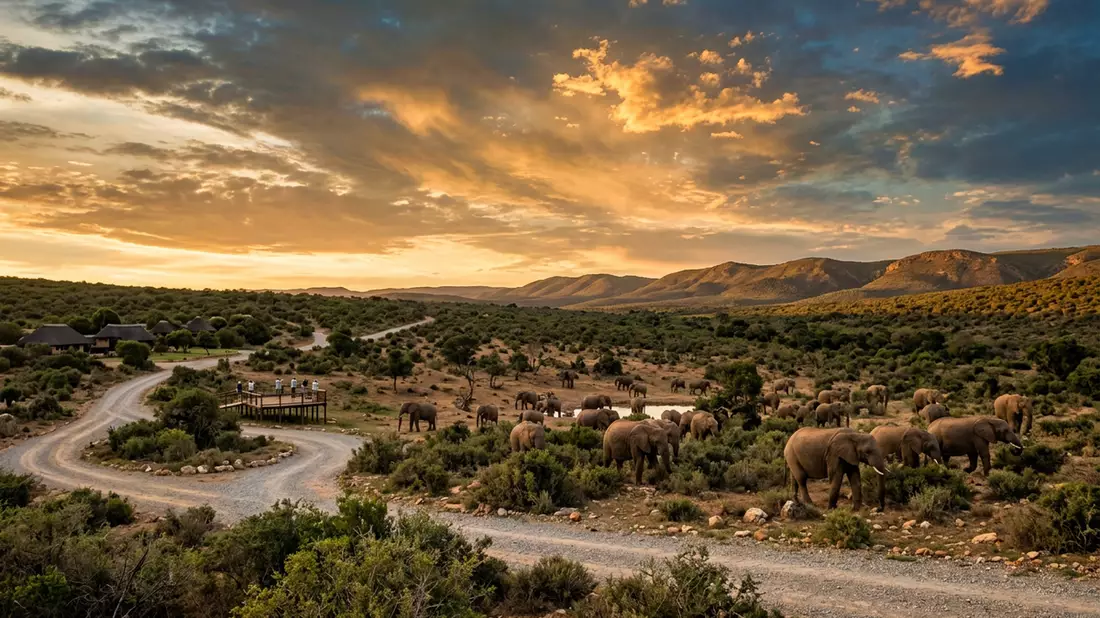
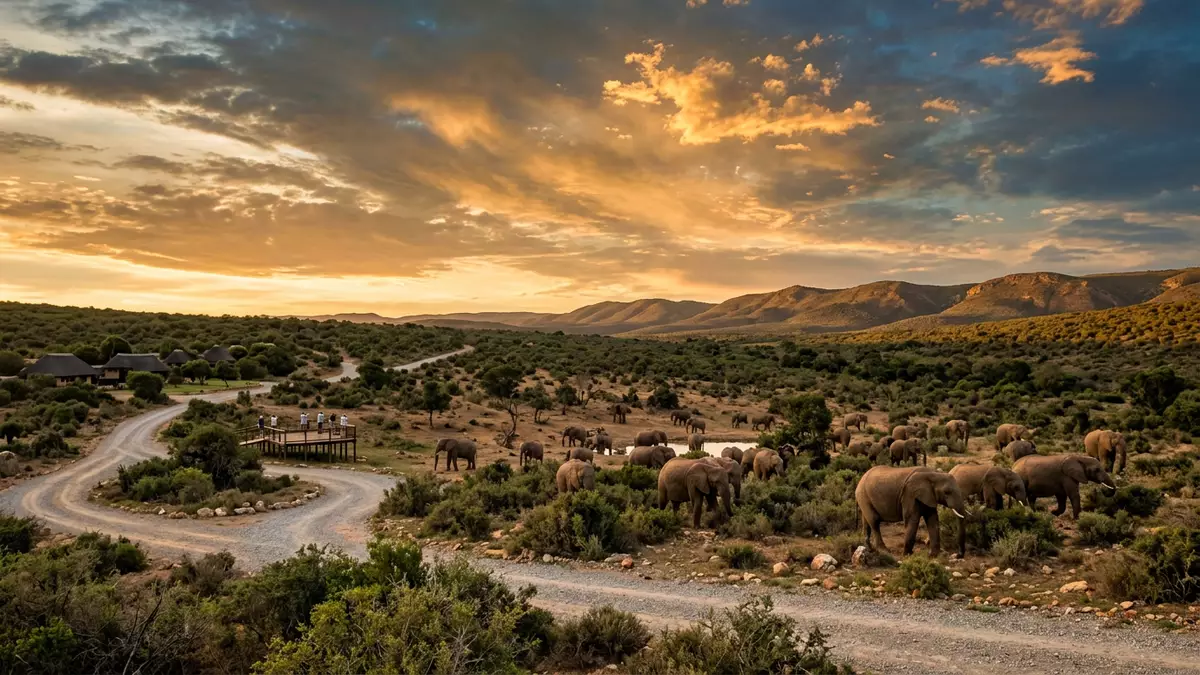
Addo Elephant National Park near Addo in South Africa is a landscape of broad bushveld, low hills and scattered elephant herds. The park began in 1931, when seven elephants were protected in an area created around the remaining animals of the Eastern Cape.
Addo’s elephant country and varied terrain
The park is known for its mixture of thicket, plains and mountain scenery. That range gives Addo Elephant National Park a more varied look than a single open savannah, with dense vegetation in one place and wider views in another.
Elephants remain the park’s defining presence, but the setting also includes other large mammals, birds and coastal habitats. The best-known route through the park is not a single vista, but a sequence of different habitats that shift across the reserve.
From protection of elephants to a wider reserve
Addo Elephant National Park began as a small protected area for a dwindling elephant population. It has since become a major conservation landscape in the Eastern Cape, with a name that still reflects its original purpose and its strongest association.
The park’s history belongs to South African conservation in the early twentieth century. Its creation underlines how a local protection effort became a national park with a broader ecological reach, while the elephant remains its most recognisable animal.
What visitors see inside the park
Roads, viewpoints and driving routes make the reserve accessible as a self-directed wildlife landscape. Visitors move between thicket, open sections and ridges, with elephants often providing the most immediate visual focus.
The park’s appeal lies in its scale and variety rather than in a single monument. Addo Elephant National Park reads as a living reserve, where vegetation, animal movement and terrain shape the experience together.
Visiting Addo Elephant National Park: what travellers from Western Europe should know
- Addo Elephant National Park is reached from Addo and the wider Eastern Cape by road.
- Admission arrangements and opening hours are set by the site's operator and change with the season; the official website is the only binding source.
- The dry months are often clearer for wildlife viewing, while the green season brings fuller vegetation.
- The park covers rough ground, long drives and uneven surfaces in places, so comfortable walking shoes help.
- South Africa uses the rand, and English is widely used in tourism settings; card payment is accepted in many places, but cash can still be useful.
- Entry requirements depend on your nationality. UK travellers should check the FCDO travel advice at gov.uk/foreign-travel-advice; Irish travellers the Department of Foreign Affairs at ireland.ie; EU and EEA citizens their own national foreign ministry.
Searching for Addo Elephant National Park on social platforms
These links open searches for Addo Elephant National Park on each platform.
Frequently asked questions about Addo Elephant National Park
Where is Addo Elephant National Park?
It lies near Addo in South Africa’s Eastern Cape. The park is part of a broader conservation landscape rather than a city park or a small reserve.
What should a visit feel like?
Expect a driving safari through varied habitats, with elephants as the main draw and changing vegetation across the reserve. The scale is large enough for long routes, but the setting remains rooted in bush and low hills.
What makes it distinctive?
Its identity rests on elephants, conservation history and the contrast between dense thicket, open ground and higher terrain. The park’s name, layout and wildlife all point to that combination.