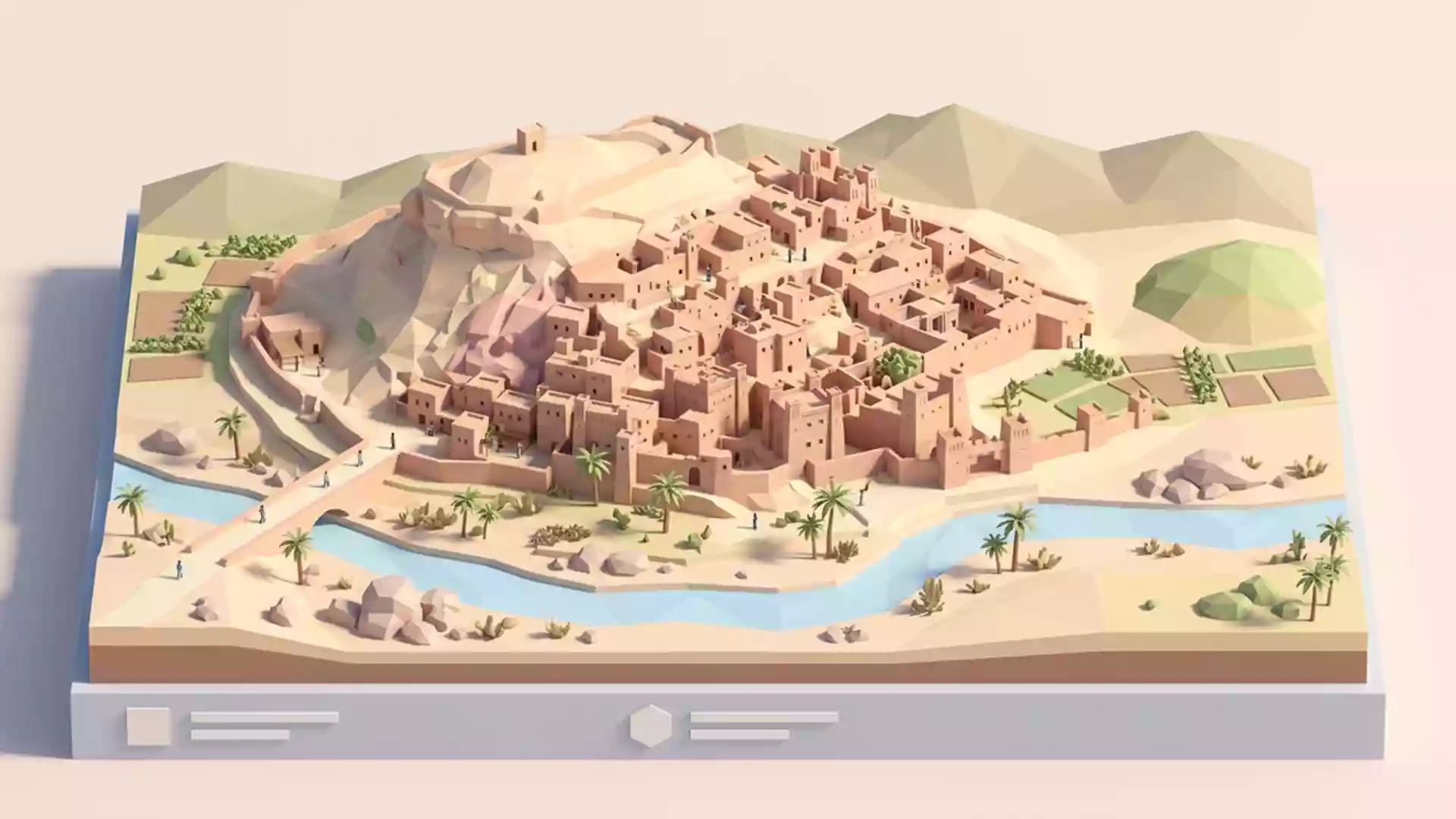
Ait Ben Haddou and its ochre kasbah on the hillside
Published on 08/11/2026 at 15:06 | Editorial responsibility: Rafael Müller, Editor-in-Chief AD HOC NEWS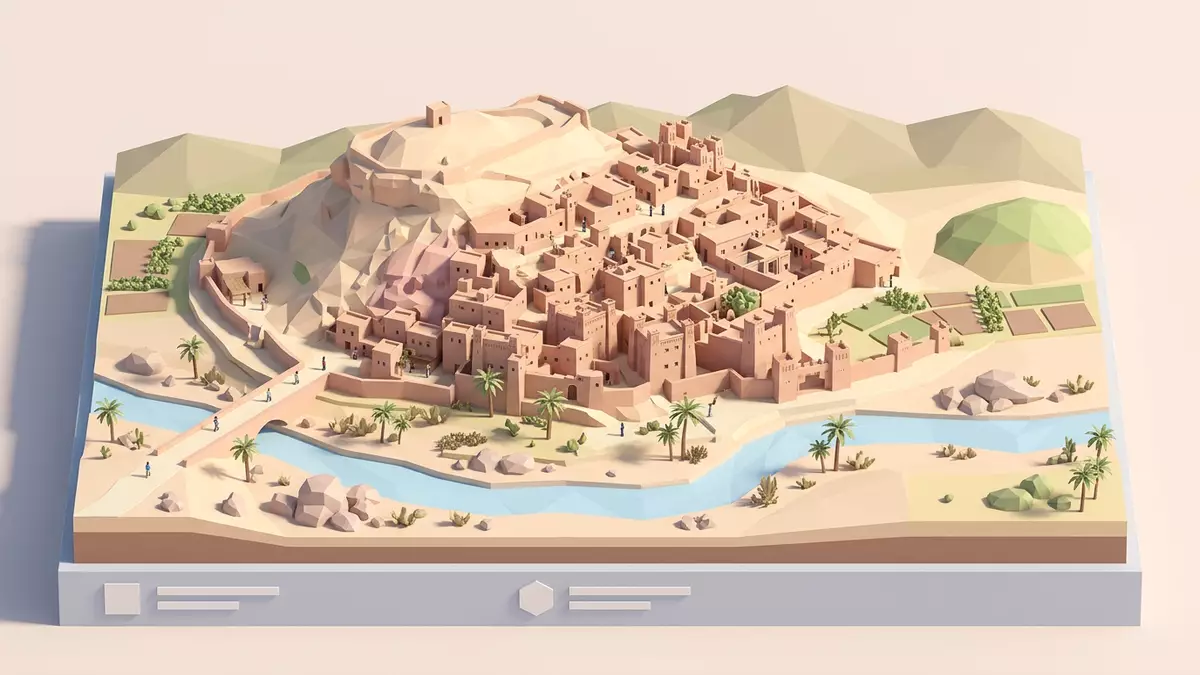
Ait Ben Haddou is a ksar of earthen buildings near Ouarzazate in southern Morocco. Its stacked walls, terraced lanes and fortified outline make the settlement itself the main attraction.
A mud-brick ksar on the edge of the Atlas
The site sits on a hillside above the Ounila Valley, with houses, towers and defensive walls built in earth-toned materials. The whole ensemble has the compact look of a fortified village, with narrow passages between the buildings and ramps rising through the settlement.
Ait Ben Haddou is one of the best-known examples of traditional southern Moroccan earthen architecture. The form links domestic space with protection, and the visible massing of the walls gives the place a strong silhouette against the surrounding landscape.
Caravan routes and Moroccan building traditions
The ksar is associated with the trans-Saharan trade routes that crossed this region for centuries. Its earthen fabric reflects building practices used across pre-Saharan Morocco, where clay, mud brick and timber were common materials.
The name ksar refers to a fortified village, while a kasbah is a fortified house or citadel. Ait Ben Haddou contains both types of form, and that mix helps explain why the place reads as a settlement rather than a single monument.
From residence to heritage landscape
Many of the buildings are no longer occupied in the way they once were, and the settlement has taken on a heritage role. Its walls, gates and rooftop levels remain the main visual features, with the cluster of buildings still dominating the slope.
The site gained international recognition through film and television productions, but its architectural value stands on its own. The place remains most compelling as a living example of earthen construction, where the geometry of walls and towers is visible from the valley below.
Visiting Ait Ben Haddou: what travellers from Western Europe should know
- Ait Ben Haddou is near Ouarzazate in southern Morocco and is reached by road.
- Admission arrangements and opening hours are set by the site's operator and change with the season; the official website is the only binding source.
- Late afternoon brings softer light on the earthen walls, while early morning can be quieter for photography.
- The visit involves slopes, steps and uneven ground, with more walking once inside the ksar.
- Facilities on the ground are basic, and cash is useful for small purchases and local services.
- Entry requirements depend on your nationality. UK travellers should check the FCDO travel advice at gov.uk/foreign-travel-advice; Irish travellers the Department of Foreign Affairs at ireland.ie; EU and EEA citizens their own national foreign ministry.
Searching for Ait Ben Haddou on social platforms
These links open searches for Ait Ben Haddou on each platform.
Frequently asked questions about Ait Ben Haddou
Where is Ait Ben Haddou?
It is a fortified earthen settlement near Ouarzazate in southern Morocco. The site stands on a hillside above the Ounila Valley.
What should I expect on a visit?
Expect slopes, steps and uneven surfaces, with a walk through earthen lanes and around towers and walls. The experience is architectural rather than museum-like.
What makes Ait Ben Haddou distinctive?
Its stacked earth buildings and fortified form give a clear picture of a ksar in southern Morocco. The setting and materials make the whole settlement read as one coherent landscape.