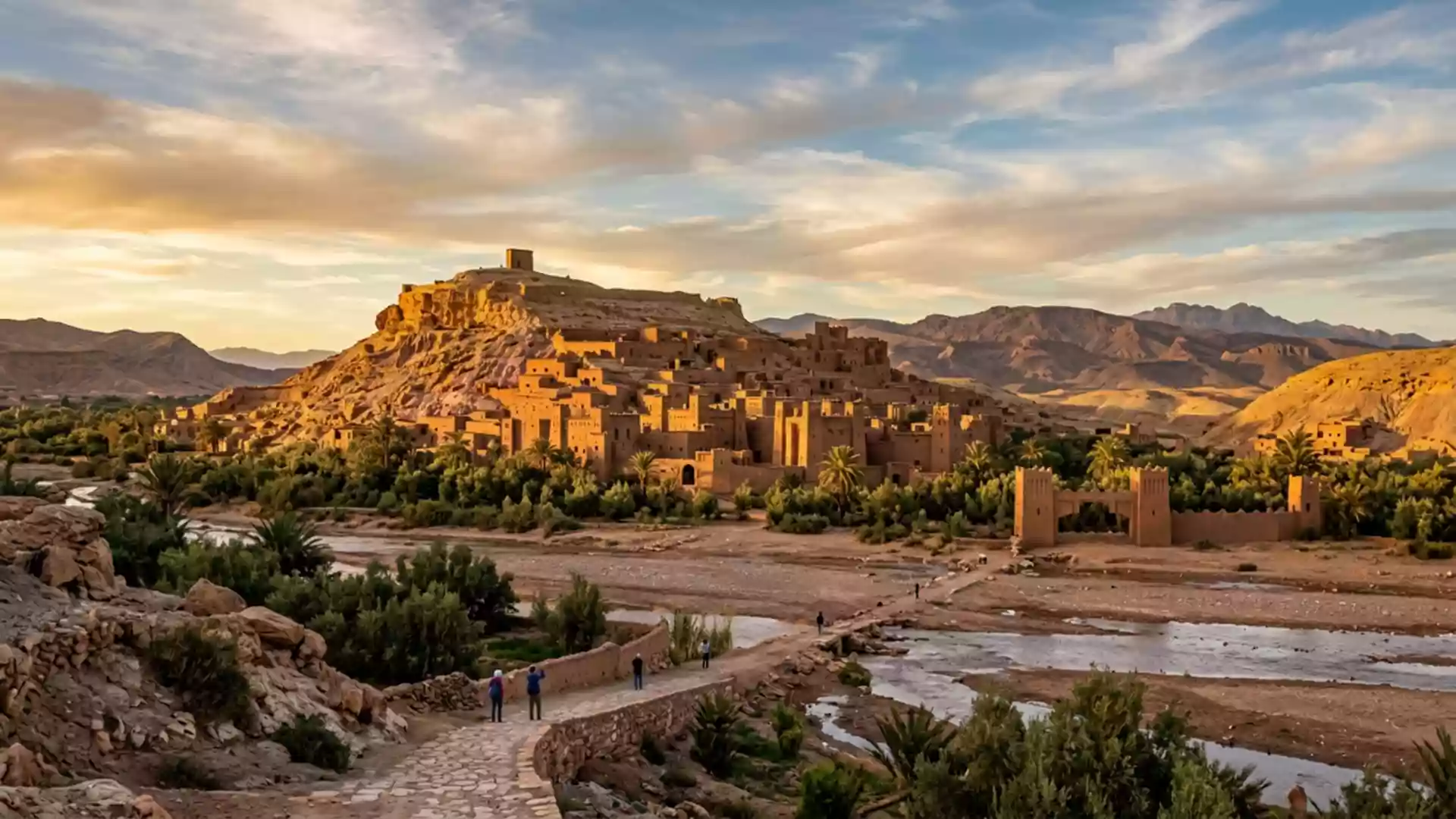
Ait Ben Haddou’s mudbrick walls on the hill
Published on 08/09/2026 at 15:11 | Editorial responsibility: Rafael Müller, Editor-in-Chief AD HOC NEWS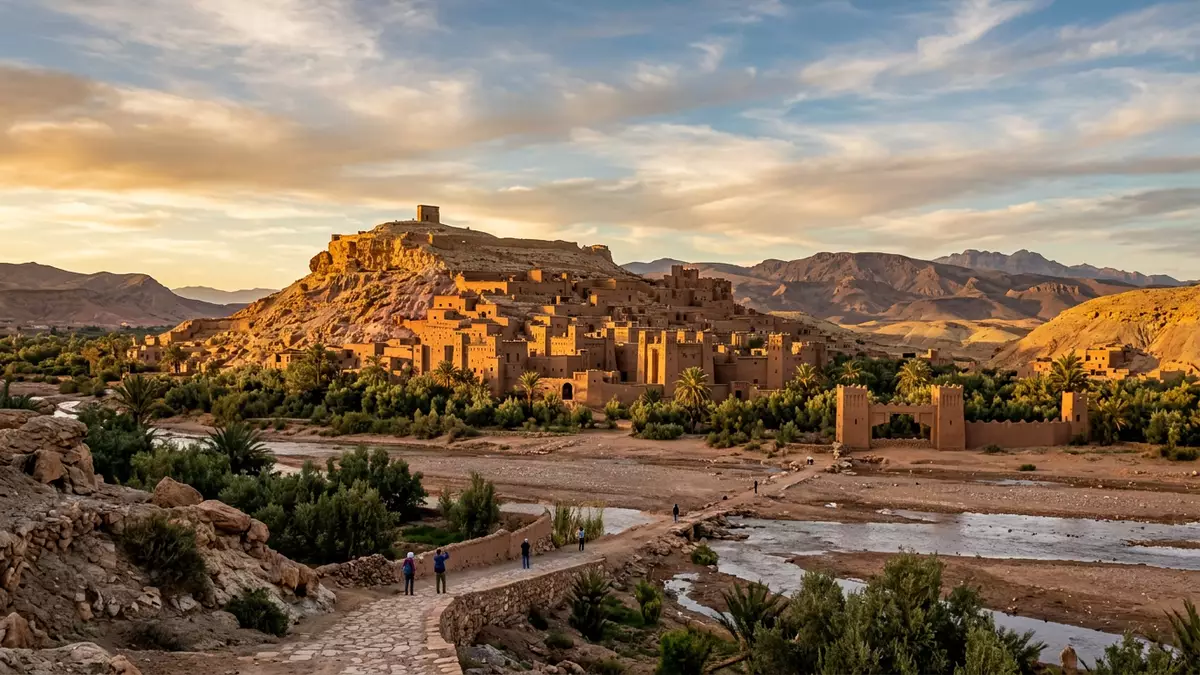
Ait Ben Haddou rises as an earthen ksar on a hillside near Ouarzazate in southern Morocco. Its mudbrick walls, towers and stepped lanes make the site legible from a distance before any detail comes into view.
A hillside ksar in earthen brick
The site is a compact fortified settlement made from rammed earth and adobe. Its massing follows the slope, with blocks of houses, defensive walls and narrow passages climbing the hill together.
Ait Ben Haddou belongs to the pre-Saharan building tradition of southern Morocco, where earth construction remains part of the region’s architectural identity. The material gives the walls a warm, sandy tone that blends with the surrounding landscape.
Almoravid and later Moroccan layers
The ksar is traditionally dated to the Almoravid period, with later rebuilding and use over generations. That long history is visible in the mixture of domestic rooms, towers and enclosed paths rather than in one single monumental façade.
Among the structures associated with the site is the fortified granary, a reminder that Ait Ben Haddou was more than a village of houses. The settlement form links domestic life, storage and defence within the same earthen fabric.
Crossings, towers and the river edge
The ksar sits beside the Ounila River, with access over a footbridge from the modern approach. From below, the outline of towers and terraces dominates the ridge, while the interior passages remain tightly folded into the slope.
That relationship between riverbank and hill gives the place its lasting character. The visitor sees a settlement arranged in layers, with the outer walls, inner lanes and upper rooms forming one continuous build.
Visiting Ait Ben Haddou: what travellers from Western Europe should know
- The site is reached from Ouarzazate by road, with the final approach on foot across the river crossing.
- Admission arrangements and opening hours are set by the site's operator and change with the season; the official website is the only binding source.
- Late afternoon brings softer light on the earthen walls, while the hotter part of the day can make the climb less comfortable.
- The route includes uneven ground, stepped lanes and slopes, and some parts of the ksar require a steady walk uphill.
- French and Arabic are both useful on site, and small purchases are often handled in cash.
- Entry requirements depend on your nationality. UK travellers should check the FCDO travel advice at gov.uk/foreign-travel-advice; Irish travellers the Department of Foreign Affairs at ireland.ie; EU and EEA citizens their own national foreign ministry.
Searching for Ait Ben Haddou on social platforms
These links open searches for Ait Ben Haddou on each platform.
Frequently asked questions about Ait Ben Haddou
Where is Ait Ben Haddou?
Ait Ben Haddou lies near Ouarzazate in southern Morocco, on a hillside above the Ounila River. It is one of the best-known earthen ksar settlements in the region.
What should visitors expect?
Expect steep lanes, uneven ground and a walk across the river approach before the earthen buildings open up in front of you. The best known parts are the towers, walls and clustered houses on the slope.
What makes it distinctive?
Its identity comes from the combination of mudbrick construction, fortified form and hillside setting. The settlement reads as a single earthen mass, rather than as separate streets and isolated buildings.