
Akagera National Park’s lakes and savannahs east of Kayonza
Published on 08/29/2026 at 13:19 | Editorial responsibility: Rafael Müller, Editor-in-Chief AD HOC NEWS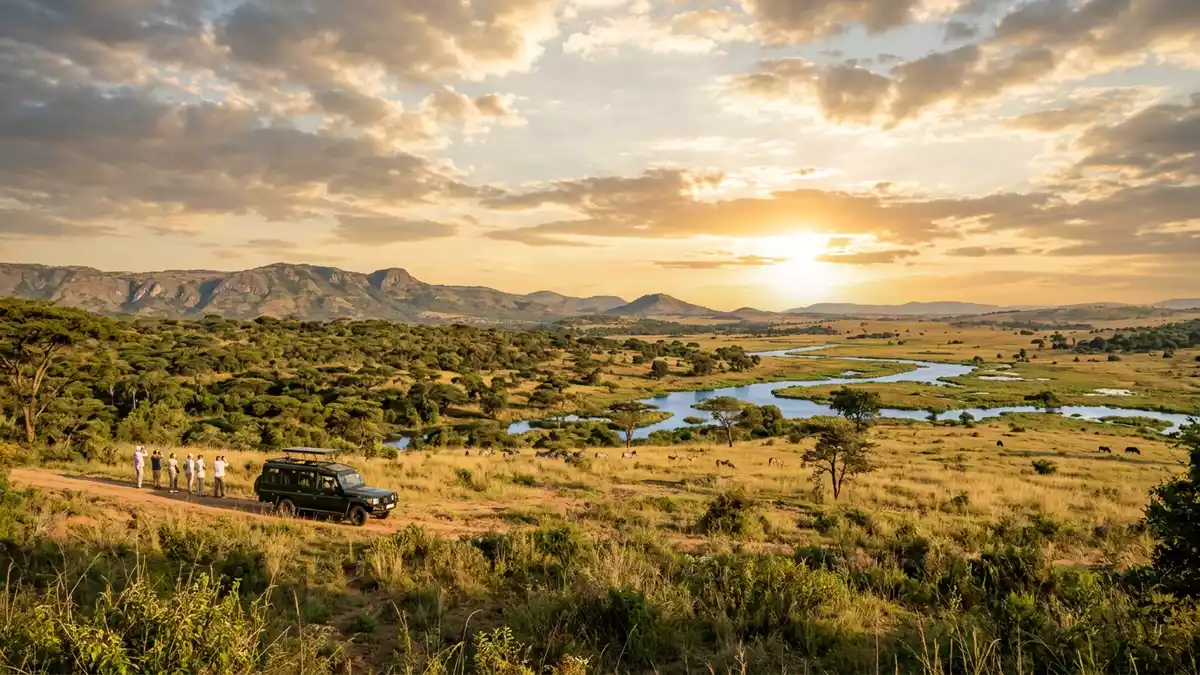
Akagera National Park in eastern Rwanda is a protected mosaic of lakes, marshes, woodland and open savannah, laid out along the border with Tanzania and reached from the town of Kayonza. Established as a national park in 1934, it protects a landscape where papyrus swamps fringe long waterways and drier ridges rise above them, bringing a wide range of wildlife into one connected reserve.
A lakeshore savannah shaped by the Akagera River
Akagera National Park stretches along the course of the Akagera River, which forms much of Rwanda’s eastern frontier and feeds a chain of lakes strung through the park’s low hills and plains. The protected area covers about 1,122 km² (433 sq mi), making it Rwanda’s largest savannah reserve and one of Central Africa’s largest safeguarded wetlands.Central Africa’s largest protected wetland The landscape ranges from grassy plains dotted with acacia to wooded slopes and extensive papyrus swamps along the lake margins.savannah, wetlands and woodlands
The park lies in Rwanda’s Eastern Province, with its entrance reached on roads running north-east from Kigali through towns such as Rwamagana towards Kayonza and the southern gate. The lakes and wetlands sit at relatively low altitude for Rwanda, creating warmer plains than the country’s high interior and offering a different feel from the montane forests and volcanoes that define many other Rwandan landscapes.
From early protection to a modern conservation partnership
Akagera was declared a protected area in 1934, when colonial authorities set aside a large tract of land for wildlife and vegetation, initially covering more than 2,500 km² of savannah, woodland and wetland. Later in the twentieth century, following civil conflict in Rwanda, the park’s area was reduced and wildlife populations declined, with more than half of its land lost to human resettlement.a protected area since 1934 In 2010, management shifted to a partnership between the Rwanda Development Board and African Parks, beginning a long-term conservation effort focused on restoring habitats and re-establishing key species.co-management with African Parks
As part of that programme, lions were reintroduced to Akagera in 2015 after being absent from Rwanda for many years, and eastern black rhinoceroses arrived in 2017, followed by additional individuals moved from European zoos in 2019.reintroduction of lions and rhinos These additions, alongside established populations of elephants and other large mammals, give Akagera the full Big Five within Rwanda’s only savannah national park. Over 500 bird species have been recorded, reflecting the mix of open plains, woodland and wetland habitats.
Wildlife encounters among water, grass and woodland
Much of Akagera’s character lies in the way wildlife is seen against water. Lakes such as Ihema sit within the park, forming wide surfaces broken by peninsulas and marsh belts, where hippos and crocodiles inhabit the shallows and birdlife gathers along the papyrus.lakes and papyrus swamps Inland from the shorelines, savannah areas support antelope, zebras and giraffes, with predators now present again after their reintroduction. Woodland strips and thickets add cover and variety, so a single drive can pass through open grass, dense bush and lakeshore reeds.
The park is reached and explored by vehicle, either with a guide or as a self-drive visit, following tracks that thread between lakes and climb ridges for wider views.vehicle-based exploration Boat excursions on certain lakes offer a different angle on the wetlands, bringing sights of aquatic birds and the profiles of hippos in the water. Together, these routes give visiting wildlife enthusiasts access to both the open plains that many associate with East African safaris and the quieter, more enclosed scenes of a wetland reserve.
Visiting Akagera National Park: what travellers from Western Europe should know
- Akagera National Park lies in Rwanda’s Eastern Province on the Tanzanian border, reached by road from Kigali through Rwamagana towards Kayonza and the park’s southern entrance.
- Inside the park, most wildlife viewing takes place from vehicles on unpaved tracks, with some routes involving uneven surfaces, gradients and sections near water where careful driving is required.
- Boat trips on certain lakes involve boarding small vessels at simple jetties, where access can mean stepping between structures and moving over potentially wet surfaces.
- The terrain combines low hills, lakeshores and open plains, so conditions range from exposed sun on the savannah to more sheltered stretches beside woodland.
- The official language is Kinyarwanda, alongside French and English, and the currency is the Rwandan franc.
Searching for Akagera National Park on social platforms
These links open searches for Akagera National Park on each platform.Frequently asked questions about Akagera National Park
Where is Akagera National Park and what sort of landscape does it protect?
Akagera National Park lies in Rwanda’s Eastern Province along the Tanzanian border, safeguarding a mix of savannah plains, woodland, wetlands and lakes fed by the Akagera River.
What can visitors expect when exploring Akagera?
Visitors travel mainly by vehicle along unpaved tracks between lakes, hills and open grassland, with opportunities to see large mammals, birdlife and wetland scenery from both roads and boats.
What makes Akagera distinct among Rwanda’s protected areas?
Akagera is Rwanda’s only savannah national park, part of Central Africa’s largest protected wetland, and hosts the Big Five alongside extensive papyrus swamps and a chain of lakes.


