
Akropolis in Athen: a stone plateau of classical temples
Published on 09/21/2026 at 11:59 | Editorial responsibility: Rafael Müller, Editor-in-Chief AD HOC NEWS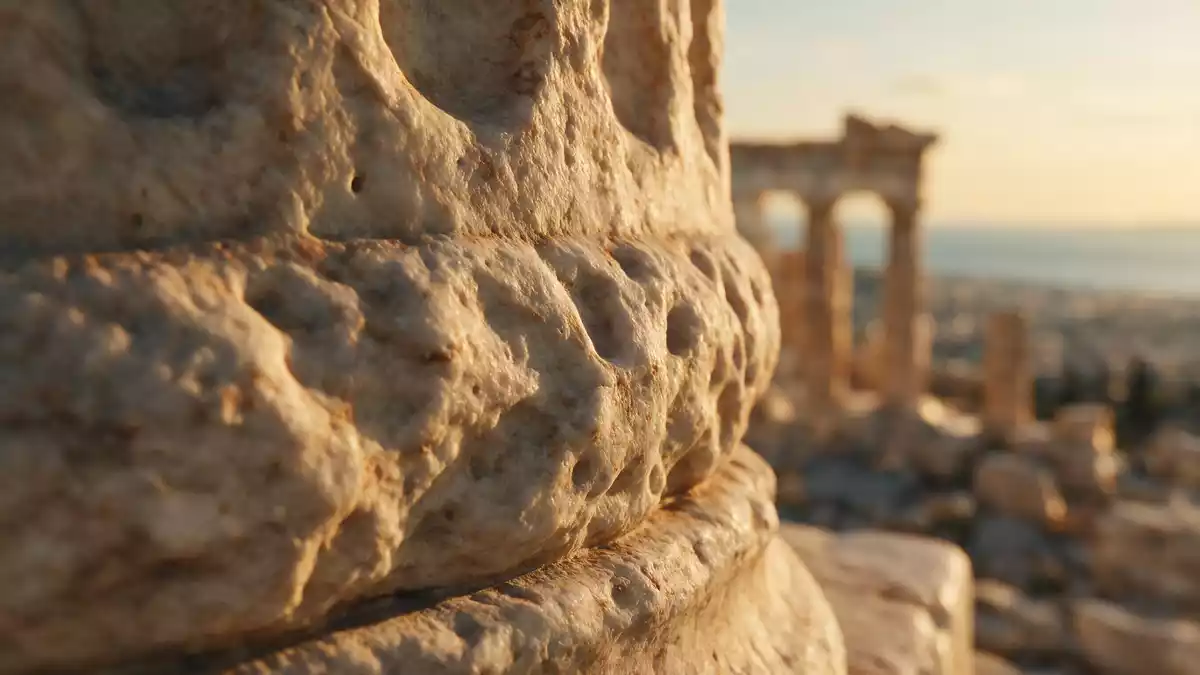
Akropolis in Athen rises as a rocky plateau crowned by classical temples, forming a compact sacred precinct above the modern city. The hill’s stone surface and enclosing walls frame a sequence of ancient structures that anchor Athen’s identity in the landscape.
A rocky citadel above the city
Akropolis is an ancient citadel set on a limestone hill that lifts sharply from the basin of Athen, with steep sides and a broad, nearly level summit. The plateau runs roughly along an elongated rectangle, and strong fortification walls encircle the summit and follow the contours of the rock.Strong fortification walls have surrounded this height for more than 3,300 years, giving the site a continuous defensive character.
The hill lies within the urban fabric of Athen in the region of Attica and stands about 156 m (512 ft) above sea level, rising clearly over the surrounding streets.The Acropolis of Athens is described as an ancient monumental complex set on this natural height, its overall dimensions reaching roughly 170 m by 350 m (558 ft by 1,148 ft). From the summit, the city spreads in all directions, while the rock itself forms the boundary of the sanctuary.
Temples, gates and the age of Perikles
Akropolis developed from a Mycenaean fortified residence into the chief sanctuary of the city, dedicated primarily to Athena, the patron goddess of Athen. The oldest fortification wall on the summit dates to the thirteenth century BC, and the hill acquired a marked religious character from the eighth century BC, when the cult of Athena became central to the city.The sanctuary reached its peak in the archaic period of the mid-sixth to early fifth century BC.
The ensemble of monuments that visitors recognise on the plateau belongs largely to the ambitious building programme led by the Athenian statesman Perikles in the fifth century BC.Most of the existing buildings were constructed in the second half of that century, in the age of Classical Athens. The Parthenon dominates the summit as a Doric temple with Ionic elements, built between 447 and 432 BC under the architects Iktinos and Kallikrates, with sculpture by Pheidias.The Propylaia gate complex was begun in 437 BC under Mnesikles, forming the ceremonial entrance to the plateau; nearby stand the small temple of Athena Nike and the Erechtheion, constructed in the later fifth century BC, which incorporates multiple shrines and striking Caryatid figures on one of its porches.
World heritage and stone architecture
Akropolis is recognised as a World Heritage Site, inscribed on the UNESCO list in 1987 for its outstanding universal value.The site was inscribed in 1987 as “Acropolis, Athens”, noted for the way its architecture adapts to the natural rock and for the completeness of its classical ensemble. The core group of fifth?century BC buildings—the Parthenon, Propylaia, temple of Athena Nike and Erechtheion—form a sequence of masterpieces arranged across the plateau in carefully judged relationships of axis, level and view.This ensemble of masterpieces is cited as an ultimate expression of architecture adapted to a natural site.
Stone is the dominant material, from the massive retaining walls to the fluted columns and carved mouldings of the temples. The Parthenon and its companions are set on stylobates and platforms that step with the rock, and the overall composition reads as a continuous stone landscape shaped to receive colonnades and cellas. The combination of structural precision, sculptural detail and the plateau’s edges offers visitors clear sightlines over Athen and towards surrounding hills, while within the precinct the buildings themselves define smaller courts and passages.
Visiting Akropolis: what travellers from Western Europe should know
- Akropolis rises above central Athen in the region of Attica in Greece, and the main access route for visitors follows the western slope, where paths lead to the historic Propylaia entrance.
- The terrain involves sustained walking on stone surfaces and ancient steps, including sections with gradients and uneven rock, and the approach to the summit requires a climb over several levels.
- The archaeological area lies near other ancient sites such as the Areopagus hill and the Agora of Athens, which are visible from the plateau and reached on foot via surrounding streets.
- The official language is Greek and the currency is the euro.
Searching for Akropolis on social platforms
These links open searches for Akropolis on each platform.
Frequently asked questions about Akropolis
Where is Akropolis located?
Akropolis stands on a rocky hill within Athen in the region of Attica in Greece, rising above the surrounding urban basin as a distinct stone plateau.
What should visitors expect on a visit?
Visitors encounter ancient stone paths, steps and terraces leading through gates and temples, with extensive views over Athen and closely spaced classical structures on the summit.
What makes Akropolis distinctive among ancient sites?
Akropolis combines a natural limestone hill with a concentrated ensemble of fifth?century BC temples and gates, recognised as a UNESCO World Heritage Site for its classical architectural composition.


