
Akropolis in Athens and the marble citadel above the city
Published on 09/05/2026 at 22:40 | Editorial responsibility: Rafael Müller, Editor-in-Chief AD HOC NEWS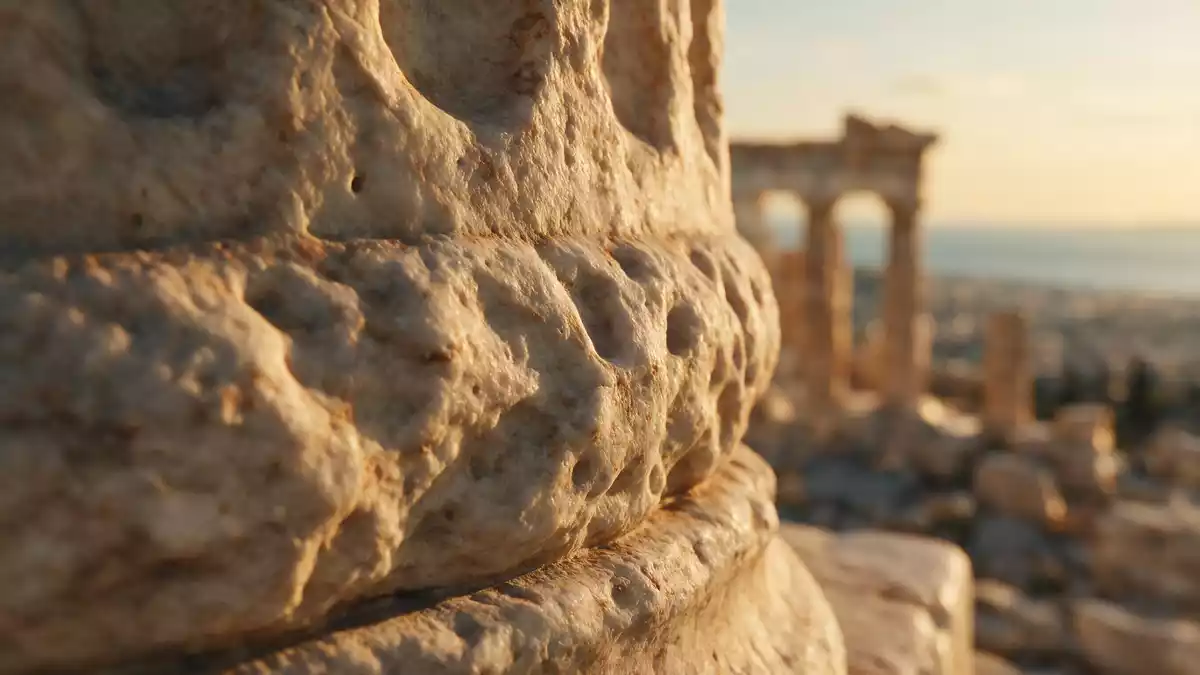
Akropolis in Athen is the ancient limestone citadel that rises above the modern city and carries the remains of classical temples, gates and fortifications in Greece’s historic heart.
A rocky plateau turned marble sanctuary
Akropolis occupies a limestone plateau that stands above the basin of Athen, with a relatively flat summit that once formed the upper city of classical times. The rock carries traces of settlement reaching back to the Bronze Age, when a Mycenaean citadel with massive fortification walls stood on this height and marked it as a strategic core of the region.Mycenaean citadel Long before the surviving temples of marble, Akropolis was a defended stronghold that watched over approaches to the city.
By the fifth century BCE the plateau had been reshaped as a sanctuary dedicated above all to Athena, the patron goddess of Athens, under the leadership of the statesman Pericles.second half of the 5th century BCE The ancient citadel became a carefully planned architectural ensemble of temples, stoas and monumental gateways arranged along the summit and southern edge. The entire complex belongs to the classical period of Greek architecture and contributes to its designation as part of the UNESCO World Heritage list.UNESCO World Heritage
Parthenon and the classical buildings on the summit
The most prominent building on Akropolis is the Parthenon, a Doric temple constructed in the mid?fifth century BCE and dedicated to Athena Parthenos.Parthenon in the 5th century BCE It stands near the centre of the plateau and is built of white Pentelic marble taken from quarries in Attica, giving the structure its characteristic pale surface.Pentelic marble from Mount Pentelicus The temple is defined by a peristyle of marble columns surrounding an inner chamber, and its architectural refinements, including subtle curvature and proportion, have made it a reference point for classical design.
Other major structures share the summit of Akropolis alongside the Parthenon. The Erechtheion stands to the north, distinguished by its asymmetrical plan and the famous porch supported by sculpted female figures known as Caryatids.Erechtheion with Caryatids At the western edge, the Propylaia forms the monumental gateway to the sanctuary, combining central halls with flanking wings aligned to the approach path.Propylaia gate Close by, the small temple of Athena Nike occupies a bastion above the entrance, marking the route onto the rock with a compact Ionic shrine. The combination of large and small buildings arranged along the summit gives Akropolis its layered profile when seen from the city below.
Layers of history on a citadel above Athen
Akropolis bears traces of successive periods beyond its classical appearance, and many of its buildings have changed function over the centuries. In late antiquity and the Byzantine era the Parthenon was converted into a church, and later, in the Ottoman period, it served as a mosque within a fortified compound on the rock.Byzantine and Ottoman uses Fortifications and structures from these periods overlaid the classical remains, turning the sanctuary once again into a defended site that reflected the needs of successive rulers.
Akropolis also carries the marks of damage and loss. During a seventeenth?century conflict between Venetian and Ottoman forces, an explosion inside the Parthenon caused extensive destruction to its walls and sculptural decoration.severe damage in 1687 In the nineteenth century a significant portion of the temple’s sculptural reliefs was removed and transported to Britain, a transfer that triggered ongoing debates about the future of these works. Akropolis nevertheless remains a concentrated ensemble of classical architecture, and conservation measures have aimed to stabilise the structures and present the plateau as a readable sequence of ancient buildings.Acropolis Museum
Visiting Akropolis: what travellers from Western Europe should know
- Akropolis rises above the centre of Athen in Attica, with access routes from the surrounding streets and nearby districts leading to the entrance on the western side of the rock.
- The ascent onto Akropolis involves climbing paths and stairways up the limestone slope and crossing through the Propylaia, with sections of uneven stone underfoot on the summit.
- The official language in Greece is Greek and the currency is the euro.
Searching for Akropolis on social platforms
These links open searches for Akropolis on each platform.Frequently asked questions about Akropolis
Where is Akropolis located?
Akropolis stands on a limestone hill above the centre of Athen in the region of Attica in Greece, forming a prominent landmark in the city’s skyline.
What should visitors expect on the summit?
Visitors encounter the remains of classical temples such as the Parthenon, the Erechtheion and the temple of Athena Nike, connected by paths, terraces and stairways on the rocky plateau.
What makes Akropolis distinctive among ancient sites?
Akropolis is distinctive as a compact citadel where a Mycenaean fortress, a fifth?century BCE marble sanctuary and later Christian and Ottoman layers all occupy the same rocky summit above Athen.


