
Akropolis: the sacred rock above Athen
Published on 09/18/2026 at 22:55 | Editorial responsibility: Rafael Müller, Editor-in-Chief AD HOC NEWS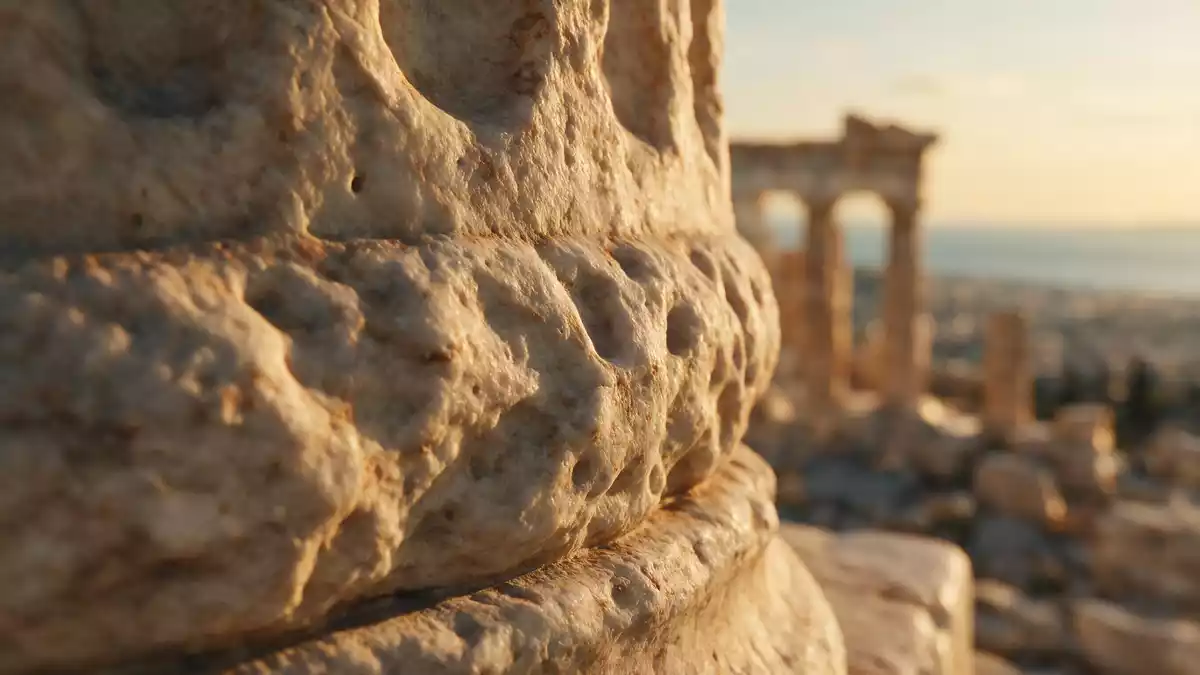
High above the streets of Athen, the Akropolis forms a rocky plateau carrying a dense ensemble of ancient temples, gateways and sanctuaries dedicated above all to Athena.
The rocky citadel above the city
The Akropolis of Athens is an ancient citadel on a limestone outcrop that rises over the basin of the city, forming a distinct flat-topped hill that dominates the surrounding urban landscape.ancient Greek monumental complex The plateau measures roughly 170 m by 350 m (558 ft by 1,148 ft), with steep slopes falling away on most sides and a more gradual western approach where the main gateway stands.
From the summit the view stretches across Athen, with other hills such as Filopappou Hill and the wider Attic plain visible beyond the line of defensive walls and terraces.situated on a hill that dominates Athens The combination of natural rock and constructed platforms makes the Akropolis a clearly defined landmark, even when seen from distant neighbourhoods.
Classical temples in marble
The most prominent building on the Akropolis is the Parthenon, a Doric temple built in the fifth century BC and dedicated to Athena Parthenos, the patron goddess of the city.built between 447 and 432 BCE Constructed largely from Pentelic marble, it stands on the southern side of the plateau with a colonnaded exterior and a long rectangular plan that once enclosed inner chambers and cult statues.
Other major structures occupy the summit alongside the Parthenon, including the Erechtheion, the Temple of Athena Nike and the monumental gateway known as the Propylaea.Parthenon, Erechtheion, Temple of Athena Nike and Propylaia Together these Classical buildings form a coherent architectural ensemble from the age of Pericles, laid out along terraces and open spaces that follow the contours of the rock.
From ancient sanctuary to World Heritage
The Akropolis has long been associated with the religion and civic identity of ancient Athens, serving as the sacred precinct where myths of the city and rites for Athena converged.ancient citadel dedicated to Athena In the fifth century BC, under the statesman Pericles, a major building programme reshaped the plateau with new marble temples and gateways that celebrated the city’s power and victories in the Greco-Persian conflicts.decision initiated by Pericles in 448 B.C.
In the centuries that followed, buildings on the Akropolis took on new roles: the Parthenon served as a treasury for the Delian League and later the Athenian Empire, and in late antiquity it was converted into a Christian church and, at a later stage, a mosque.treasury and later church and mosque In 1987 the Akropolis of Athens was inscribed on the UNESCO World Heritage List as an ensemble of Classical monuments of outstanding universal value.inscribed in the World Heritage List in 1987
Visiting Akropolis: what travellers from Western Europe should know
- The Akropolis rises above central Athen in the Attica region of Greece and is reached on foot along streets and paths that climb towards the western entrance.
- The summit area is laid out as a series of stone terraces and open spaces, with approaches that involve walking up sloping paths and flights of stone steps.
- The archaeological site stands near the Akropoli Metro station and the pedestrian street Dionysiou Areopagitou, placing it within a wider area of monuments and museums.
- The official language is Greek and the currency is the euro.
Searching for Akropolis on social platforms
These links open searches for Akropolis on each platform.
Frequently asked questions about Akropolis
Where is the Akropolis located?
The Akropolis stands on a rocky hill above central Athen in the Attica region of Greece, overlooking the surrounding city.
What can visitors expect on the Akropolis?
Visitors find a plateau edged by fortification walls, with marble temples such as the Parthenon, gateways, sanctuaries and broad stone terraces.
What makes the Akropolis distinctive among ancient sites?
The combination of natural rock, Classical marble architecture from the fifth century BC and its recognised World Heritage status gives the Akropolis a distinctive character.


