
Amboseli National Park and the Kilimanjaro backdrop
Published on 09/18/2026 at 10:51 | Editorial responsibility: Rafael Müller, Editor-in-Chief AD HOC NEWS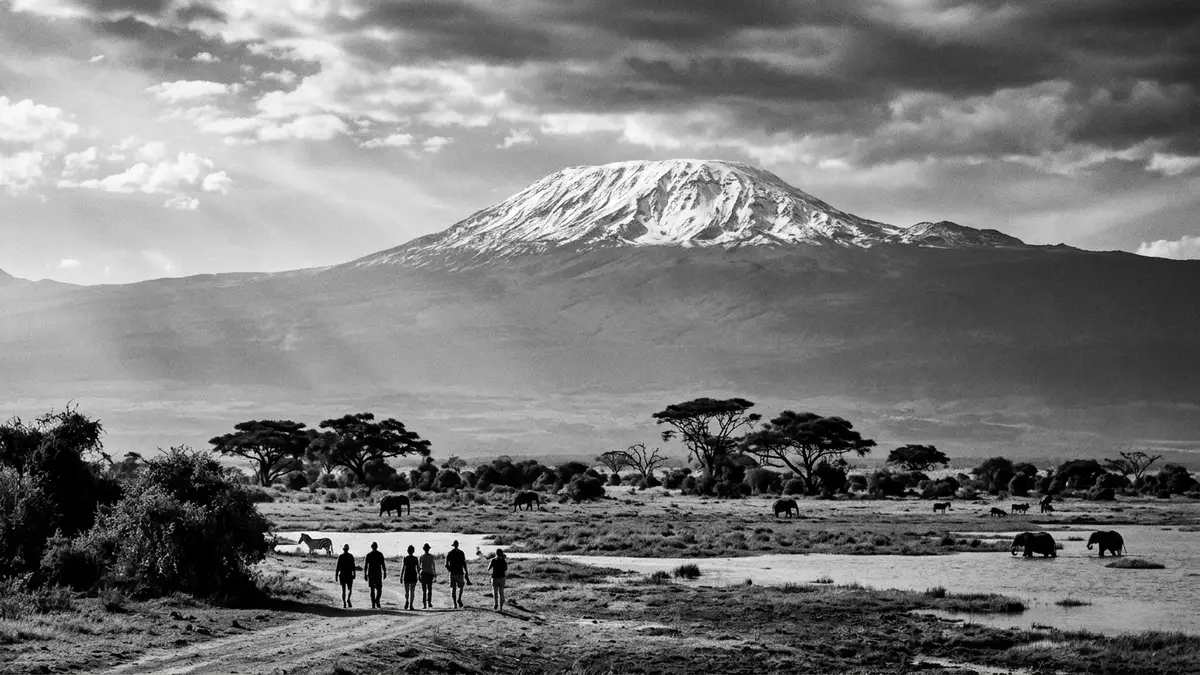
Amboseli National Park in southern Kenya is a low, open landscape of plains, wetlands and acacia country beneath Mount Kilimanjaro. Its long, horizontal profile is the first thing that defines it, not any single road or gate.
Plains, swamps and the Kilimanjaro line
The park sits in Kajiado County near the Tanzania border and lies within the wider Amboseli ecosystem. It was gazetted as a national park in 1974, and UNESCO identified the area as a biosphere reserve in 1991.
1974 and 1991 belong to the park’s recorded history, while the setting remains anchored by the mountain and the lowlands below it. The result is a place where water, dry ground and distant snow line up in one wide view.
Amboseli is also tied to large-scale wildlife research and conservation work. A well-known part of that story is the long-running elephant study associated with the park, and the elephant herds remain central to its identity.
Amboseli’s place in Kenya’s conservation story
The park’s formal status reflects a landscape that extends beyond its boundary. The core area covers 39,206 ha, and the surrounding ecosystem spreads across the Kenya-Tanzania border.
39,206 ha and the Kenya-Tanzania border frame that larger setting without turning it into scenery alone. The park’s habitats include open grassland, swampy ground and drier stretches, so the visual rhythm changes as the land opens and closes around the water.
The name Amboseli is closely linked to Maasai country and to a landscape shaped by seasonal water and dry soils. That combination gives the park its distinctive mix of broad views and concentrated wildlife activity around the wetter ground.
Wildlife, wetlands and open horizons
Elephants are the animals most closely associated with Amboseli National Park, and they are visible against the flat land and the mountain backdrop. The park is also known for birds, with wet areas supporting a rich mix of species.
permanent wetlands and the Mount Kilimanjaro backdrop are the two elements that most strongly shape the park’s visual character. The land reads as open and level, with wetter pockets interrupting the drier surface.
That contrast makes Amboseli easy to recognise in photographs and in memory. The mountain sits beyond the park rather than inside its boundary, while the foreground remains dominated by plains and water-fed ground.
Visiting Amboseli National Park: what travellers from Western Europe should know
- Amboseli National Park is in southern Kenya, in Kajiado County near the Tanzania border. It is reached by road from the Nairobi side, and Kajiado links the park to the wider southern route.
- The land is flat and open, with swampy sections and dusty stretches. The same low profile that shapes the views also shapes movement across the park.
- The park’s English name is widely used alongside the Maasai-linked place name Amboseli. The national park status dates from 1974.
- The setting includes Kilimanjaro views, wetland edges and broad grassland. That mix makes the park visually varied without becoming complicated in layout.
Searching for Amboseli National Park on social platforms
These links open searches for Amboseli National Park on each platform.
Frequently asked questions about Amboseli National Park
Where is Amboseli National Park?
It lies in southern Kenya, in Kajiado County near the Tanzania border. Mount Kilimanjaro forms the most recognisable landmark on the horizon.
What does a visit to Amboseli look like?
Expect open ground, swampy sections and long views across a low landscape. The park’s shape makes the mountain, wetlands and wildlife easy to take in at once.
What makes Amboseli distinct?
The combination of elephants, wetlands and Kilimanjaro views gives the park its identity. Its 1974 national park status and 1991 biosphere reserve recognition place it firmly in Kenya’s conservation landscape.


