
Ananda Pahto, Bagan’s cruciform temple of four Buddhas
Published on 08/17/2026 at 14:24 | Editorial responsibility: Rafael Müller, Editor-in-Chief AD HOC NEWS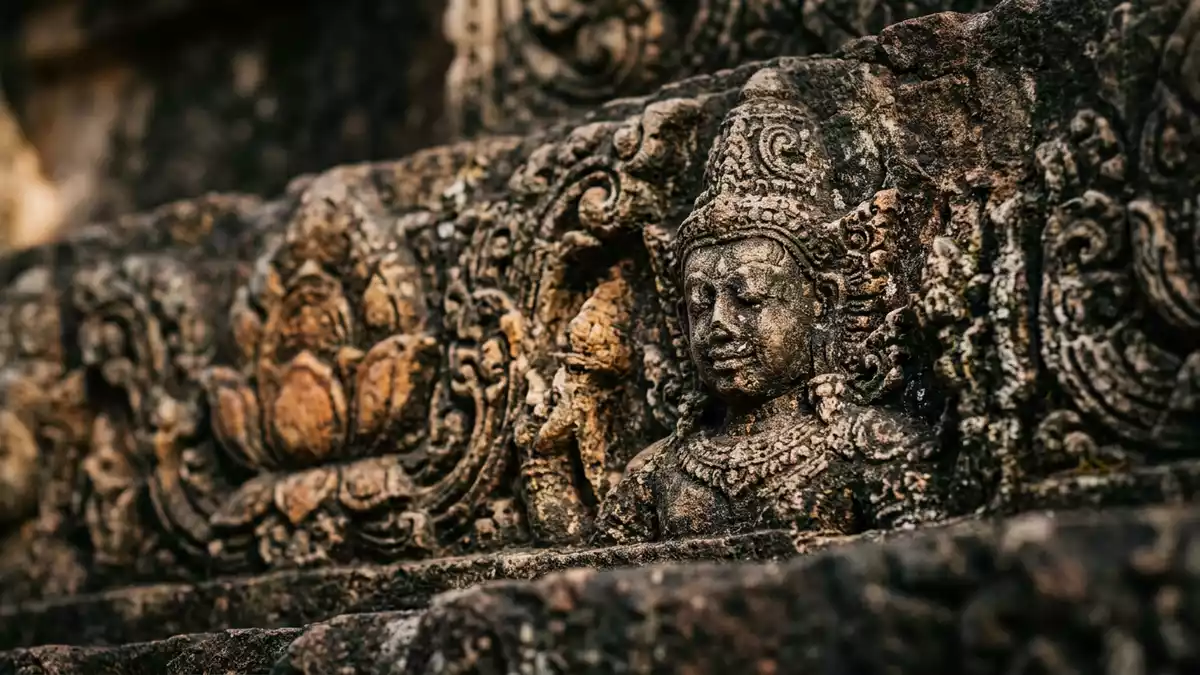
Ananda Pahto in Bagan is a Buddhist temple from the Pagan Dynasty, laid out on a cruciform plan and centred on four towering standing Buddha images at its core. Constructed in the early twelfth century under King Kyanzittha, its white stucco exterior and soaring central tower make it one of the most distinctive large temples in the Bagan Archaeological Zone.
King Kyanzittha’s early twelfth?century temple
Ananda Pahto was built under King Kyanzittha of the Pagan Dynasty, whose reign in Bagan ran from the 1080s into the early twelfth century.King Kyansittha of the Pagan Dynasty The temple is dated to around 1105 CE, placing it at the transition between the Early and Middle Bagan periods, when brick monument building on the plain reached a mature phase.built around 1105 Located just outside the walls of Old Bagan, near Tharabar Gate, it stands within the wider ensemble of stupas and temples that line the eastern side of the Ayeyarwady River plain.southeast of Tharabar Gate in Old Bagan
The name “Ananda” recalls one of the Buddha’s principal disciples, while “pahto” is a local word for temple or shrine.pahto means temple or shrine The building is constructed from brick masonry, coated in white stucco that catches the strong dry?season light on the Bagan plain.brick masonry with lime mortar and stucco exterior Rising from a square core, its superstructure steps up through diminishing terraces to a prominent shikhara?like tower whose outline shows clear influence from North Indian Nagara temple forms.Nagara?style shikhara above the square core
Cruciform plan and the four standing Buddhas
The plan of Ananda Pahto is cruciform, with four broad vestibules projecting from a central square mass towards the cardinal points.ground plan in the form of a cross Inside, corridors run around the heart of the building, turning the interior into a layered sequence of passageways, devotional halls and niches. The central focus of the temple is the group of four large standing Buddha statues, each placed in a vaulted hall facing one of the four directions and representing Kakusandha, Konagamana, Kassapa and Gautama of the present world age.four standing Buddhas for the present world age
Two of these standing Buddhas, those facing north and south, are original to the temple’s early twelfth?century construction, while the figures in the eastern and western halls follow later Mandalay?period sculptural styles.north and south Buddhas are originals The statues rise well above human height, filling their spaces so that visitors standing close to the base look up into serene faces framed by gilded elements and stucco ornament.four tall standing Buddha statues in gilded stucco Around them, the temple’s corridor walls carry terracotta tiles and reliefs depicting jataka tales, forming a visual cycle of stories from the Buddha’s previous lives that stretches along many metres of brickwork.hundreds of jataka tiles on the terraces
Architecture, restoration and Bagan’s landscape
Ananda Pahto is frequently described as one of the finest surviving examples of Mon?influenced temple architecture in Bagan, blending local Burmese building traditions with imported Indian forms.one of the finest Mon?influenced temples The central square measures just over 50 m along each side, and the superstructure climbs in stages to a height of just over 50 m above the ground, giving the building a compact but strongly vertical presence on the temple plain.central square and 51?metre superstructure Stucco ornament, niches and mouldings cover the exterior, and on the upper terraces further religious structures once provided spaces for learning and meditation.
Like many Bagan monuments, Ananda Pahto has experienced damage from earthquakes, notably in 1975, followed by extensive restoration campaigns that repaired masonry, reinstated lost stucco and stabilised the shikhara tower.earthquake damage in 1975 and restoration In 1990, its spires were gilded to mark nine centuries since construction, and gold continues to pick out parts of the upper structure against the white surfaces.gilding of the spires in 1990 The temple stands within Bagan’s recognised cultural landscape in central Myanmar, surrounded by other brick stupas and pagodas, with the broad river valley and distant low hills framing the horizon.
Visiting Ananda Pahto: what travellers from Western Europe should know
- Ananda Pahto stands in Old Bagan within the wider Bagan Archaeological Zone in central Myanmar’s Mandalay Region, south?west of Mandalay itself.
- The temple interior is reached by walking through brick?paved approaches and then up shallow steps into the cruciform corridors, where floors and passageways can be uneven.
- The Ayeyarwady River runs west of the temple plain, and other major monuments such as Shwezigon Pagoda and Dhammayangyi Temple lie within a short distance across the archaeological landscape.
- The official language is Burmese and the currency is the kyat.
- Entry requirements depend on your nationality; UK travellers can check the FCDO travel advice at gov.uk/foreign-travel-advice, Irish travellers the Department of Foreign Affairs at ireland.ie.
Searching for Ananda Pahto on social platforms
These links open searches for Ananda Pahto on each platform.Frequently asked questions about Ananda Pahto
Where is Ananda Pahto located in Bagan?
Ananda Pahto is in Old Bagan within the Bagan Archaeological Zone in central Myanmar’s Mandalay Region, near the surviving Tharabar Gate of the city walls.
What can visitors expect inside Ananda Pahto?
Visitors walk through cruciform corridors lined with stucco and terracotta reliefs and encounter four tall standing Buddhas, two of them original to the early twelfth century.
What makes Ananda Pahto distinctive among Bagan’s temples?
Its combination of a cruciform plan, four directional standing Buddhas, white stucco exterior and Indian?influenced shikhara tower gives Ananda Pahto a form that is immediately recognisable on the Bagan plain.


