Angkor Wat and the concentric world of the Khmer empire
Published on 08/18/2026 at 14:05 | Editorial responsibility: Rafael Müller, Editor-in-Chief AD HOC NEWS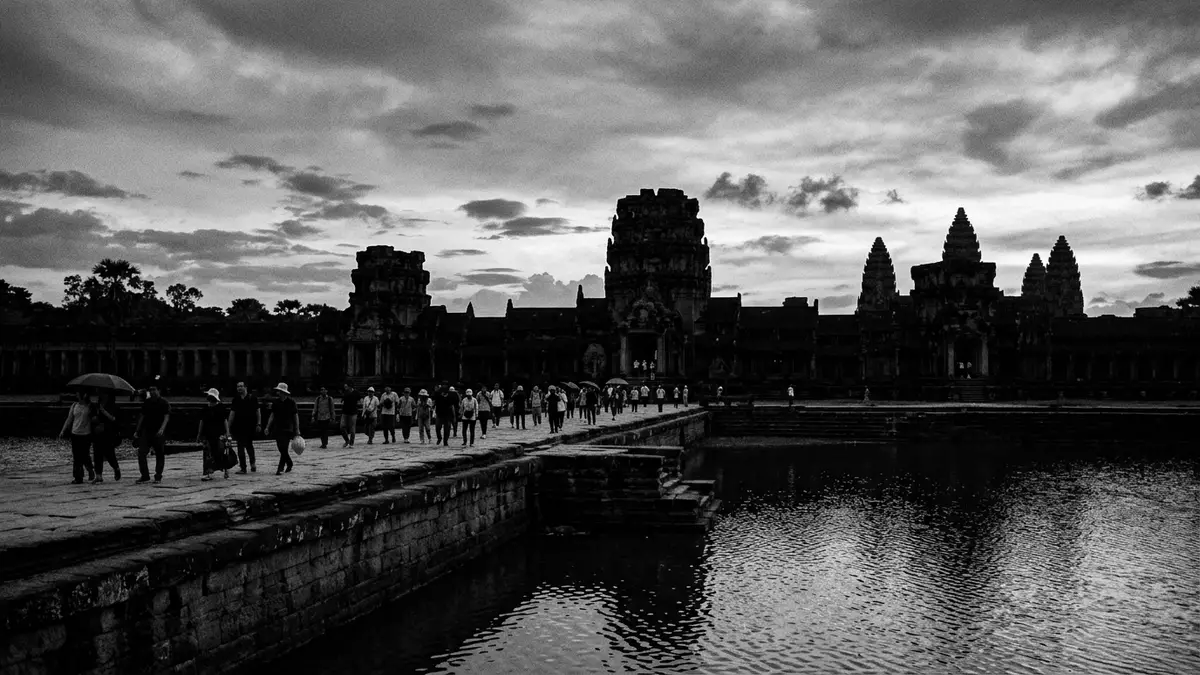
Angkor Wat near Siem Reap in northern Cambodia is a vast temple complex where Hindu cosmology is translated into sandstone, towers and a broad surrounding moat. Built in the first half of the twelfth century under the Khmer king Suryavarman II as a state temple dedicated to Vishnu, it stands within the wider archaeological landscape of Angkor, which was the capital of the Khmer Empire from the ninth to the fifteenth century and is inscribed as a UNESCO World Heritage Site.
A temple mountain within a moat
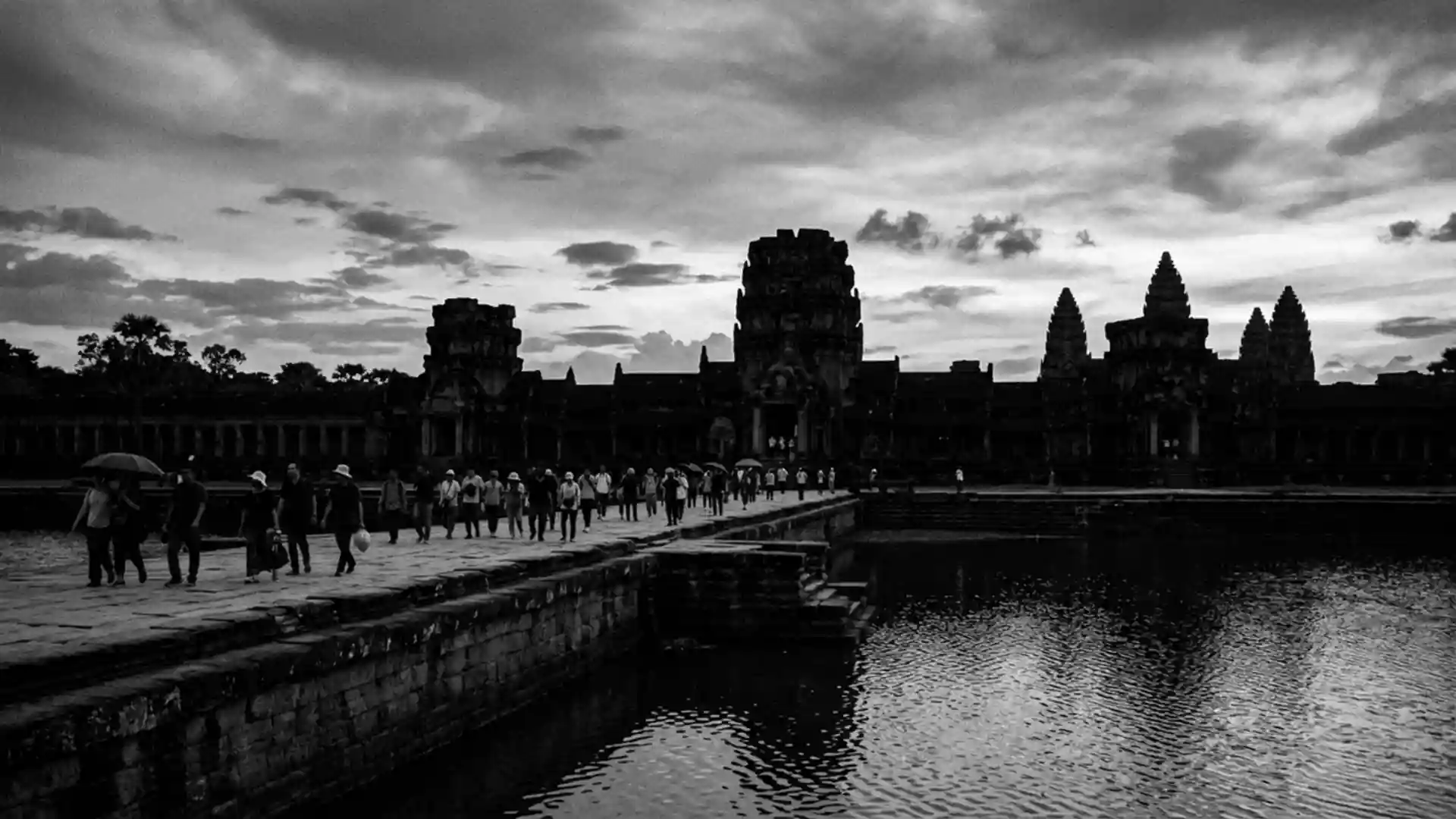
Angkor Wat stands a short distance north of Siem Reap, within the archaeological park that preserves the remains of several Khmer capitals and their temples. The complex forms a large rectangle enclosed by an outer wall and a wide moat, creating a distinct island of stone and water within the flat Cambodian plain.The whole, including the moat, forms a huge rectangle The moat acts as a broad water barrier around the temple precinct, while causeways lead across it to monumental entrances on the edges of the enclosure.
Inside the outer wall, Angkor Wat rises as a series of concentric galleries and terraces that step up towards a central sanctuary. Khmer builders combined the idea of a temple mountain with a later galleried temple plan, arranging three rectangular levels one inside the other and lifting each above the last.Angkor Wat combines the temple mountain and galleried temple forms At the centre stands a group of towers that mark the highest point of the complex and the symbolic summit of the temple mountain.
Twelfth-century Khmer sandstone and sacred imagery
Construction of Angkor Wat began during the reign of King Suryavarman II, who ruled from 1113 to about 1150, and the temple is a major work of the twelfth century Khmer Empire.The complex was built by Suryavarman II in the twelfth century The temple was originally dedicated to the Hindu god Vishnu and incorporates imagery from Indian religious traditions within a distinctly Khmer architectural language. Over time, Angkor Wat became associated with Theravada Buddhism as well, and Buddhist elements now sit alongside the older Hindu iconography across the site.Angkor Wat is linked with both Vaishnava Hinduism and Theravada Buddhism
The material of Angkor Wat is predominantly sandstone, cut into massive blocks that form walls, columns and decorative elements, with laterite used in parts of the core structure. Builders carved narrative scenes and ornamental patterns directly into these sandstone surfaces, so that structural walls become continuous picture fields rather than plain supports.The bas-reliefs are carved from the same sandstone blocks that form the gallery walls This stone carving, together with the distinctive lotus-bud forms of the towers, gives Angkor Wat its recognisable silhouette and dense surface detail.
The outer gallery bas-reliefs and the Angkor landscape
One of the most striking features of Angkor Wat is the continuous band of bas-reliefs that runs around the outer gallery of the first enclosure. These stone panels extend for hundreds of metres and stand several metres high, forming long corridors where walls are covered by carved scenes from Hindu mythology and episodes from Khmer royal history.The bas-reliefs line the outer gallery in a continuous band Among the subjects are the Churning of the Ocean of Milk, the Battle of Kurukshetra and representations of heavenly and infernal realms, each rendered with detailed figures, ornament and inscriptions.
Angkor Wat belongs to the wider Angkor Archaeological Park, which covers a large area of forest and former urban land and contains the remains of several Khmer capitals from the ninth to the fifteenth century.Angkor Archaeological Park contains the remains of different Khmer capitals Nearby lie other major temples, including the Bayon at Angkor Thom, with its towers of sculpted faces, and groups of smaller sanctuaries scattered along ancient roads and reservoirs. Angkor as a whole was recognised as a World Heritage Site in 1992, and Angkor Wat is one of the best-known expressions of the architectural and artistic achievements of this Khmer period.Angkor was inscribed on the UNESCO World Heritage List in 1992
Visiting Angkor Wat: what travellers from Western Europe should know
- Angkor Wat lies in Angkor Archaeological Park north of Siem Reap in north-western Cambodia, reached by road from the town and by paths within the park.
- The temple interior involves climbing steep stone stairways and walking along elevated terraces and galleries with uneven paving and narrow passages.
- The wider Angkor area includes other major temples such as Angkor Thom and the Bayon, which are within reach of Angkor Wat and share the same forested archaeological landscape.
- The official language in Cambodia is Khmer and the currency is the Cambodian riel.
- Entry requirements depend on your nationality; UK travellers can check the FCDO travel advice at gov.uk/foreign-travel-advice, Irish travellers the Department of Foreign Affairs at ireland.ie.
Searching for Angkor Wat on social platforms
These links open searches for Angkor Wat on each platform.Frequently asked questions about Angkor Wat
Where is Angkor Wat located?
Angkor Wat is part of the Angkor Archaeological Park in Siem Reap Province in north-western Cambodia, a short distance north of the town of Siem Reap.
What should visitors expect at Angkor Wat?
Visitors encounter a large stone temple complex with a surrounding moat, concentric galleries, steep stairways and extensive bas-reliefs carved into sandstone walls.
What makes Angkor Wat distinctive among temple sites?
Angkor Wat is distinctive for its temple-mountain form combined with long narrative bas-reliefs, its twelfth-century Khmer construction under King Suryavarman II and its position within the wider Angkor World Heritage landscape.