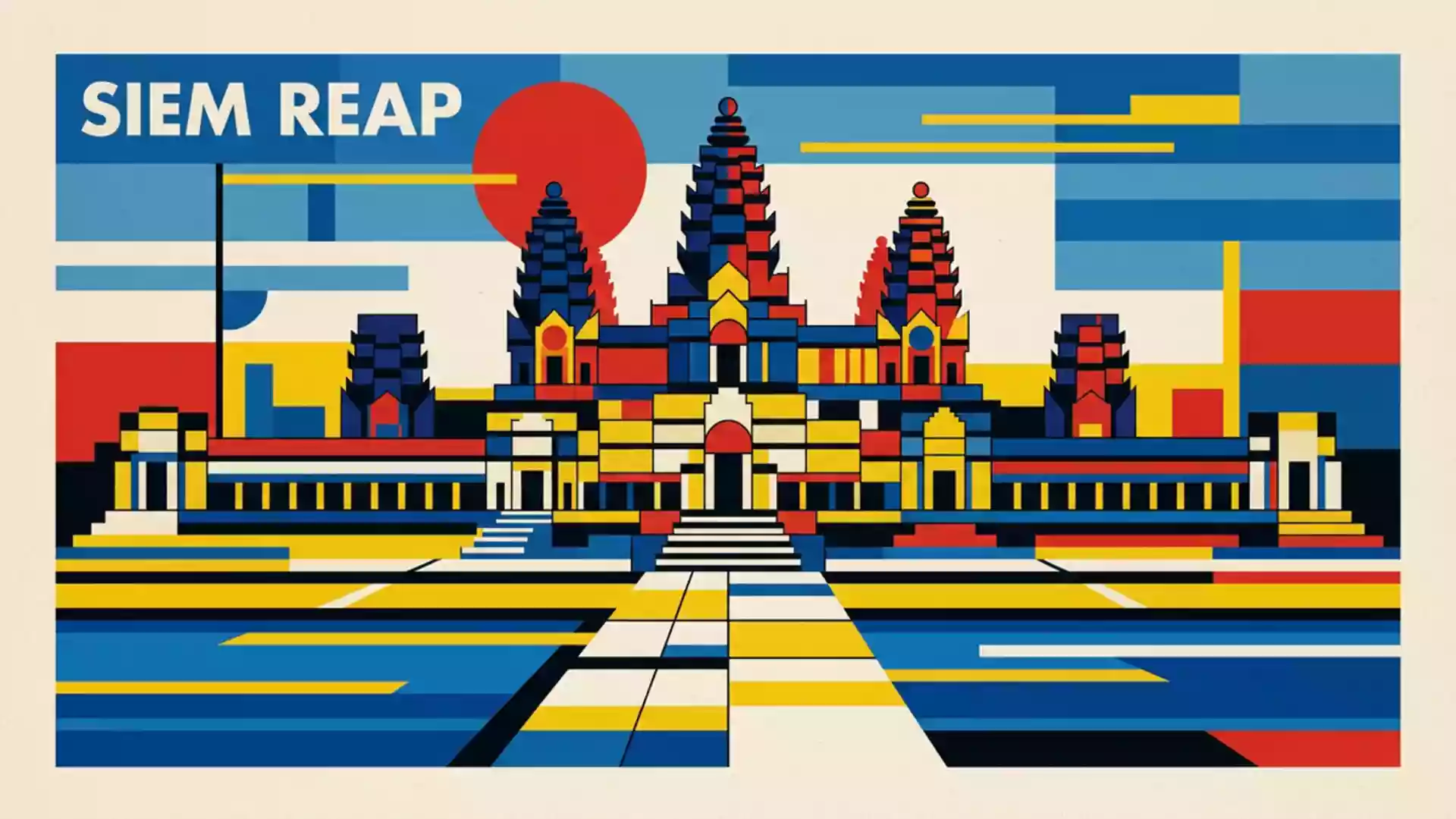
Angkor Wat and the stone cosmos of the Khmer empire
Published on 09/03/2026 at 12:31 | Editorial responsibility: Rafael Müller, Editor-in-Chief AD HOC NEWS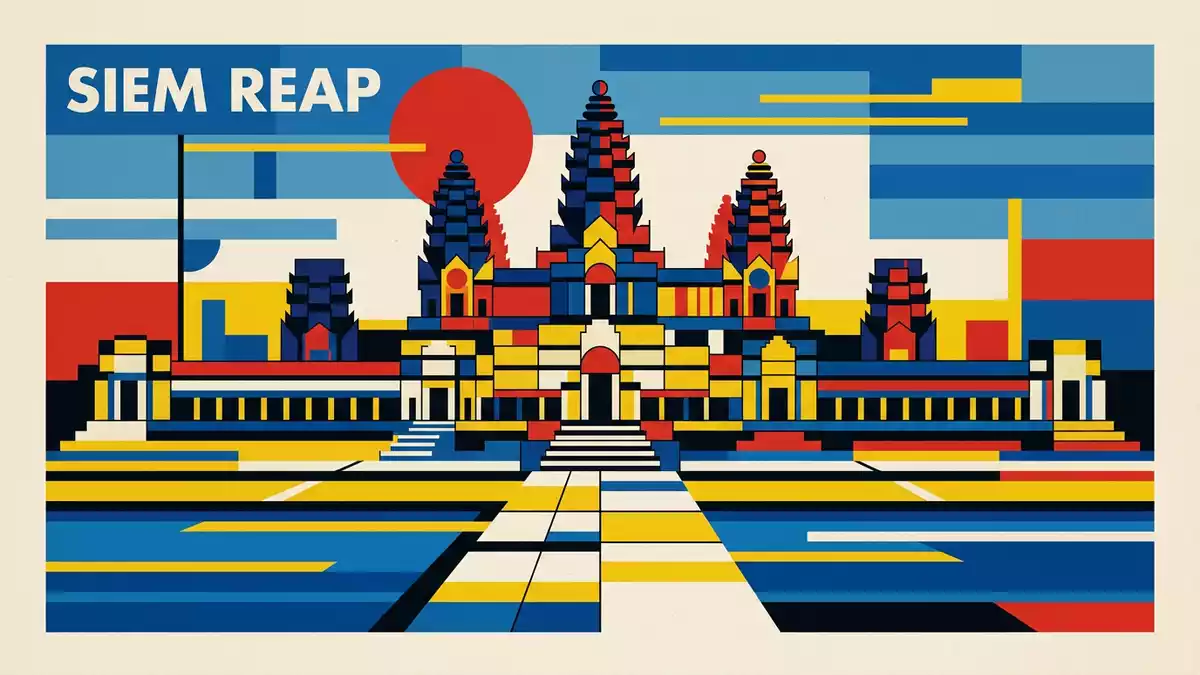
Angkor Wat near Siem Reap in Cambodia is a vast stone temple complex where architecture and cosmology merge in a single monumental landscape. Built in the twelfth century under King Suryavarman II of the Khmer empire as a Hindu state temple dedicated to Vishnu, it later became a major Theravada Buddhist sanctuary and remains one of the largest religious structures ever raised in stone.
A temple laid out as a stone universe
Angkor Wat forms part of the wider Angkor archaeological area in north-western Cambodia, a region of forest and farmland that preserves the remains of successive Khmer capitals between the ninth and fifteenth centuries.Angkor archaeological area The temple complex stands a short distance north of modern Siem Reap, enclosed within a broad moat and outer wall that define its rectangular footprint.rectangular moat and wall
The composition follows a “temple-mountain” plan that evokes Mount Meru, the mythological axis of the Hindu cosmos. Within the moat and outer enclosure, raised galleries and terraces climb inwards towards a central sanctuary crowned by a tall main tower surrounded by smaller towers, their forms characteristic of classical Khmer architecture.temple-mountain composition Stone causeways lead across the water and into a sequence of courtyards, axial galleries and cruciform terraces, so that movement through the complex has the feel of a gradual ascent through layers of the imagined universe.
Khmer craftsmanship in sandstone and bas-relief
Angkor Wat is largely built from sandstone, a material the Khmer builders handled with striking assurance. Blocks were quarried and transported to the site in vast quantities, then laid with tight joints that give long galleries and platforms a remarkably even finish.sandstone construction The towers rise in tiers, their profiles tapering in lotus bud-like forms that have become shorthand for the temple in countless photographs and drawings.
Along the inner walls, bas-relief friezes carve scenes from Hindu mythology and historical processions into the stone, with repeated figures of apsaras or devatas set among floral motifs and narrative episodes.bas-reliefs and devatas These carved surfaces line long corridors and frame doorways, so that walking the galleries means passing an extended sequence of sculpted stories. Later Buddhist images and shrines appear within the same architectural framework, reflecting the shift in religious use that began towards the end of the twelfth century and continued under succeeding rulers.transition to Buddhist use
From royal temple to World Heritage landscape
Construction of Angkor Wat took place in the first half of the twelfth century during the reign of Suryavarman II, whose rule is generally dated from 1113 to around 1150.reign of Suryavarman II The temple formed part of the wider city of Angkor, then known as Yasodharapura, and served both as royal foundation and religious centre. Its alignment and axial layout reflect its original dedication to Vishnu, a choice that distinguishes it from other nearby temples with different orientations and deities.
In 1992 the Angkor area, including Angkor Wat, was inscribed on the UNESCO World Heritage List as a cultural site of outstanding universal value.World Heritage inscription in 1992 The listing recognises both the scale of the archaeological landscape and the architectural achievements embodied in complexes like Angkor Wat, whose extensive terraces, towers and sculpted galleries continue to define understandings of Khmer art and urbanism.
Visiting Angkor Wat: what travellers from Western Europe should know
- Angkor Wat stands within the Angkor Archaeological Park in north-western Cambodia, a few kilometres north of Siem Reap, reached by road from the town and its airport.
- The main approaches involve stone causeways across the moat and long galleries and stairways inside the complex, with repeated flights of steps leading between terraces and towards the central sanctuary.
- The wider Angkor area includes other major temple sites such as Angkor Thom and the Bayon, which lie within the same archaeological landscape and can be reached on the same network of roads.
- The official language is Khmer and the currency is the Cambodian riel.
- Entry requirements depend on your nationality; UK travellers can check the FCDO travel advice at gov.uk/foreign-travel-advice, Irish travellers the Department of Foreign Affairs at ireland.ie.
Searching for Angkor Wat on social platforms
These links open searches for Angkor Wat on each platform.
Frequently asked questions about Angkor Wat
Where is Angkor Wat located?
Angkor Wat stands within the Angkor Archaeological Park in Siem Reap Province in north-western Cambodia, a short distance north of the town of Siem Reap.
What should visitors expect when exploring the complex?
Visitors encounter long stone causeways, enclosed courtyards, axial galleries lined with bas-reliefs and stairways that climb towards the central sanctuary and its surrounding towers.
What makes Angkor Wat distinctive among temple sites?
Angkor Wat combines a temple-mountain plan representing Mount Meru with extensive sandstone construction and carved narratives, reflecting both its twelfth-century Hindu foundation and later Buddhist continuity.