
Anping Gubao and the brick layers of Tainan
Published on 09/17/2026 at 12:30 | Editorial responsibility: Rafael Müller, Editor-in-Chief AD HOC NEWS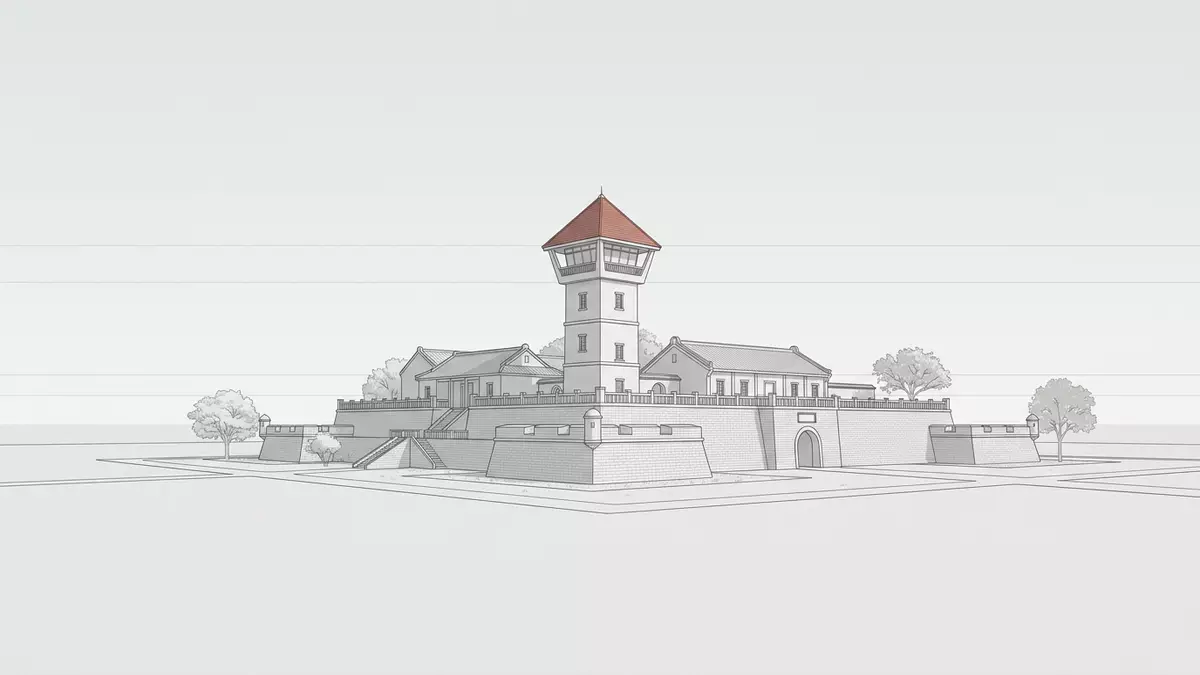
Anping Gubao in Tainan is a compact coastal fort whose brick walls, terraces and layered history remain visible in one place. Built as Fort Zeelandia in 1624 under the Dutch East India Company, it connects the Anping District to the opening chapter of colonial Taiwan.
Anping Gubao and the Dutch coastal base
The earliest phase belongs to the Dutch East India Company and Fort Zeelandia, the name used for the fortress before its later Chinese names. The fort was completed in 1634 and became a Dutch administrative base on Taiwan’s south-western coast.
The surviving form is not a single untouched block, but a sequence of brick, earth and later repairs. Zheng Chenggong, known in the West as Koxinga, captured the fort in 1662, and the site passed through Qing and Japanese periods after that.
Brick walls, terraces and later layers
Anping Gubao presents a fort that reads as architecture and palimpsest at the same time. Its surviving walls and elevated terraces stand with later additions around them, and the structure belongs to a broader heritage landscape in Anping District.
The Chinese name Anping Gubao means Anping Old Fort, and that name suits the place’s layered identity. The site is listed as a Grade 1 historic monument, placing it among Tainan’s formally protected landmarks.
Koxinga, Qing rule and the changing role of the fort
The fort’s later history is marked by changing rule rather than a single fixed function. Under Koxinga and later Qing administration, it moved from European stronghold to a place used within new political orders.
That change is still visible in the site’s mixture of materials and in the way the old fortress sits among urban streets. The Dutch phase, the Koxinga period and the later imperial layers remain readable in the structure’s surviving fabric.
Visiting Anping Gubao: what travellers from Western Europe should know
- Anping Gubao stands in Anping District on the western side of Tainan, close to the harbour area and reached by city buses and urban roads from the centre.
- The site includes brick platforms, raised terraces and surviving walls, so the ground level changes within the complex.
- The fort is linked to Fort Zeelandia, the Dutch phase that began in 1624 and was completed in 1634.
- Chinese names around the site include Anping Castle and Anping Old Fort, both reflecting later historical layers.
Searching for Anping Gubao on social platforms
These links open searches for Anping Gubao on each platform.
Frequently asked questions about Anping Gubao
Where is Anping Gubao?
It stands in Anping District, on the western side of Tainan in south-western Taiwan. The fort lies near the harbour area and belongs to the city’s historic coast.
What does a visit involve?
Expect brick walls, terraces and a raised heritage complex rather than a single enclosed hall. The terrain changes within the fort, and the site reads as an open-air historic landscape.
What makes Anping Gubao distinctive?
Its Dutch origin, Koxinga connection and later Chinese and Japanese layers are all part of the same place. The surviving name Anping Gubao sits on top of a much older Fort Zeelandia identity.


