
Antigua Guatemala and its grid of Baroque ruins
Published on 09/23/2026 at 22:49 | Editorial responsibility: Rafael Müller, Editor-in-Chief AD HOC NEWS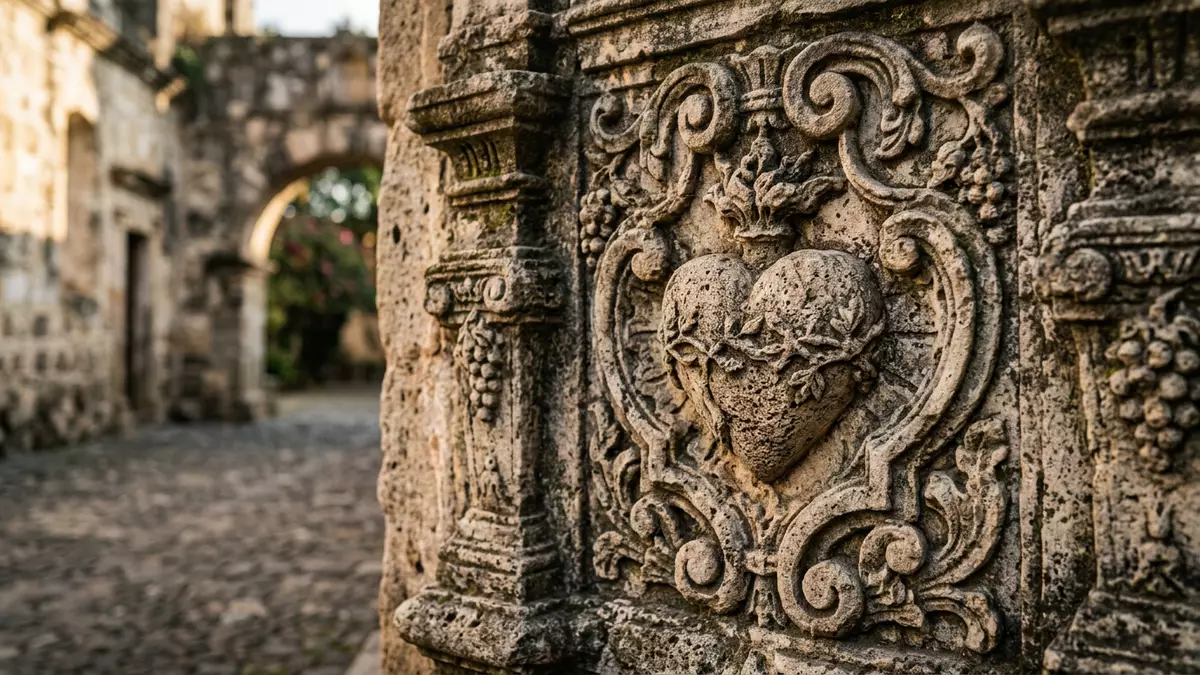
Antigua Guatemala is a highland city where straight colonial streets meet churches, courtyards and monumental ruins. Its visible character comes from the contrast between an ordered urban grid and buildings marked by earthquakes, especially the destruction of 1773.
Antigua Guatemala: a Renaissance grid in the highlands
Antigua Guatemala lies in the Valley of Panchoy, in the central highlands of Guatemala, at roughly 1,500 metres above sea level. The city was founded as Santiago de Guatemala in 1524, and its third location was inaugurated in March 1543. It served as the capital of the Captaincy-General of Guatemala for 230 years.
The historic centre follows a grid of north–south and east–west streets with a central square. This plan reflects Italian Renaissance principles, while the surviving buildings belong largely to the seventeenth and eighteenth centuries. The city’s scale makes the relationship between street, plaza, church and civic building easy to read on foot.
The UNESCO World Heritage listing dates from 1979. It recognises the urban plan, colonial monuments and ruins as parts of a single historic landscape.
Barroco antigueño in churches and civic buildings
Antigua Guatemala’s architecture is associated with Barroco antigueño, a regional form of Spanish Baroque. Decorative stucco, substantial walls, broad façades and low bell towers appear across the historic centre. Churches and convents stand beside residences, fountains and government buildings.
La Merced has a richly ornamented façade and a strong yellow-and-white colour scheme. Its church was inaugurated in 1767, and its form belongs to the mature Baroque tradition of colonial Guatemala. San Francisco El Grande combines a working church with the ruins of a Franciscan complex and the chapel associated with Pedro de San José de Betancur.
The Cathedral of Saint James faces the central square. A cathedral building was begun in 1545, while a later sanctuary was inaugurated in 1680. Its surviving façade and damaged interior record the repeated rebuilding of a major religious monument.
Las Capuchinas adds another architectural type to the city. The convent was consecrated in 1736, and its rooms, courtyards and circular arrangement of cells form a distinct part of Antigua Guatemala’s historic fabric. The Palace of the Captain General and the former University of San Carlos extend the story beyond churches.
Ruins, volcanoes and the city’s second life
The earthquakes of 1773 damaged much of Antigua Guatemala. The capital moved to the site of present-day Guatemala City, while the old capital retained its street plan, residences, churches and monumental ruins. The destruction is visible in broken vaults, open courtyards, exposed masonry and façades standing without their original interiors.
That mixture of use and ruin defines the city. Some buildings remain places of worship, while others contain museums, cultural spaces or hotels within historic structures. The streets retain cobbles, low buildings and painted façades, with churches and arches appearing at the ends of long sightlines.
Santa Catalina Arch crosses the street beside the former convent complex. The arch belongs to the seventeenth century, and a clock tower was added in the nineteenth century. It is a compact example of how Antigua Guatemala places a single architectural element within the wider geometry of its grid.
Volcán de Agua rises south of the city, while Acatenango and Volcán de Fuego form part of the wider volcanic landscape. The mountains give the urban ruins a clearly defined highland setting. Inside the city, however, the strongest visual rhythm remains the repeated meeting of straight streets, painted façades and Baroque stonework.
Visiting Antigua Guatemala: what travellers from Western Europe should know
- Antigua Guatemala is in Sacatepéquez Department, west of Guatemala City. Road transport from Guatemala City and La Aurora International Airport connects the capital region with the historic city.
- The streets are frequently cobbled, and many historic buildings contain uneven paving, steps and courtyards. The city lies at about 1,500 metres above sea level.
- Volcán de Agua rises south of the city, with Acatenango and Volcán de Fuego visible in the surrounding landscape.
- The official language is Spanish and the currency is the Guatemalan quetzal.
- Entry requirements depend on your nationality; UK travellers can check the FCDO travel advice at gov.uk/foreign-travel-advice, Irish travellers the Department of Foreign Affairs at ireland.ie.
Searching for Antigua Guatemala on social platforms
These links open searches for Antigua Guatemala on each platform.
Frequently asked questions about Antigua Guatemala
Where is Antigua Guatemala?
Antigua Guatemala is in Guatemala’s central highlands, in Sacatepéquez Department and the Valley of Panchoy. It lies west of Guatemala City, with volcanic peaks surrounding the urban area.
What can visitors expect in the historic centre?
The centre combines cobbled streets, colonial residences, churches, convents, civic buildings, plazas and earthquake-damaged monuments. Walking routes pass between active buildings and preserved ruins.
What makes Antigua Guatemala distinctive?
Its defining combination is a sixteenth-century Renaissance street grid with Spanish Baroque architecture and ruins shaped by the earthquakes of 1773. The city’s churches, arches and mountain setting reinforce that visual character.


