
Apartheid Museum turns Johannesburg architecture into memory
Published on 09/24/2026 at 03:16 | Editorial responsibility: Rafael Müller, Editor-in-Chief AD HOC NEWS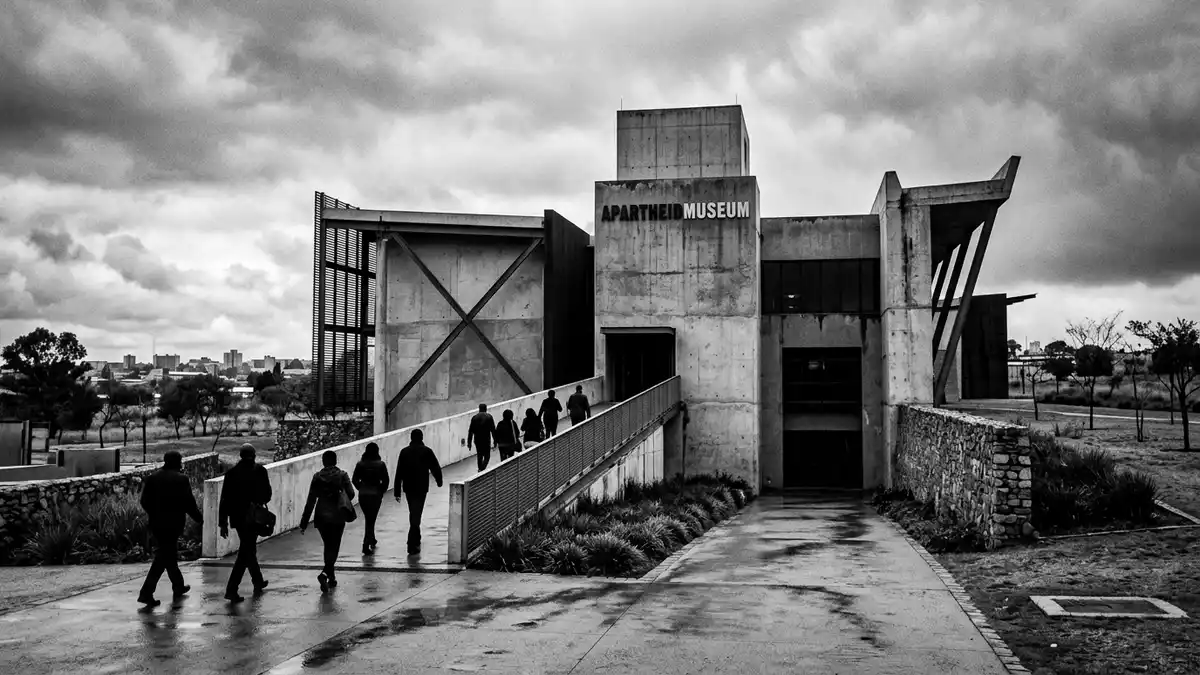
Apartheid Museum in Johannesburg is a low, expansive complex where raw concrete, red brick, steel and stone frame the history of apartheid. Opened in 2001, it connects the political story of twentieth-century South Africa with an architectural route through courtyards, galleries and open ground.
Concrete, brick and stone across a Johannesburg landscape
The museum stands in Ormonde, south of Johannesburg, beside the Gold Reef City complex. Its architecture was developed by a consortium including GAPP Architects and Urban Designers, Mashabane Rose Associates, Britz Architects and Linda Mvusi Architecture.
The building uses rock-filled gabion walls, dry-stacked stone, raw plaster, off-shutter concrete and slim red face-brick. These surfaces remain visible across the complex, giving the museum a material language connected with Johannesburg’s industrial and mining landscape.
The museum is spread across a seven-hectare site. Its buildings are largely low and linear, with planted areas, gravel paths, courtyards and enclosed exhibition spaces forming a connected architectural setting.
A museum built around apartheid’s lived systems
The permanent exhibition follows the rise, operation and dismantling of apartheid. It examines racial classification, segregated public life, pass laws, forced removals, political repression, resistance and the transition towards democracy.
Photographs, newspaper material, film, objects and personal accounts place legislation beside its consequences. The exhibition addresses housing, education, employment, family life and movement, showing how apartheid reached into ordinary routines and public institutions.
Apartheid became the governing system of South Africa after the National Party came to power in 1948. The Population Registration Act of 1950 classified people by racial categories, while other laws separated communities and regulated residence, work, education and movement.
The museum also presents the pass system, under which Black South Africans were required to carry documents controlling movement. The exhibition’s separate entrance classifications introduce the history through a physical distinction before the galleries develop the wider political narrative.
Nelson Mandela, resistance and democratic transition
Nelson Mandela has a dedicated place within the museum’s presentation of South African history. The Mandela exhibition follows his political work, imprisonment, release and role in negotiations that led to democratic elections.
Mandela joined the African National Congress in 1943 and became a leading figure in the struggle against apartheid. He was imprisoned for 27 years and released on 11 February 1990. The museum records the political changes that followed his release, including the 1994 election and his presidency.
The Mandela exhibition sits within a wider account of organised resistance, state violence, negotiation and reconciliation. Other displays address figures and movements that shaped the country’s political history, including the Truth and Reconciliation Commission.
The permanent exhibition includes a section on Mandela’s presidency, linking the political settlement of the 1990s with the institutional beginnings of democratic South Africa.
Visiting Apartheid Museum: what travellers from Western Europe should know
- The museum is in Ormonde, at the corner of Northern Parkway and Gold Reef Road, beside Gold Reef City. Road access connects with Johannesburg’s M1 motorway.
- The complex combines indoor galleries with outdoor paths, courtyards, planted embankments and changes between enclosed and open sections.
- The exhibition contains documentary photographs, film footage, newspaper clippings, historic objects and dedicated displays about Nelson Mandela.
- The official language is English and the national currency is the South African rand.
- Entry requirements depend on your nationality; UK travellers can check the FCDO travel advice at gov.uk/foreign-travel-advice, Irish travellers the Department of Foreign Affairs at ireland.ie.
Searching for Apartheid Museum on social platforms
These links open searches for Apartheid Museum on each platform.Frequently asked questions about Apartheid Museum
Where is Apartheid Museum?
Apartheid Museum is in Ormonde, south of Johannesburg, at the junction of Northern Parkway and Gold Reef Road beside Gold Reef City.
What can visitors expect inside?
The galleries combine photographs, film, documents, objects and personal accounts covering apartheid, resistance, Nelson Mandela and democratic transition.
What makes the museum distinctive?
Its historical displays are integrated with a low architectural landscape of concrete, red brick, gabions, stone, courtyards and open paths.


