
Art Nouveau district Riga and its sculpted streets
Published on 09/18/2026 at 14:03 | Editorial responsibility: Rafael Müller, Editor-in-Chief AD HOC NEWS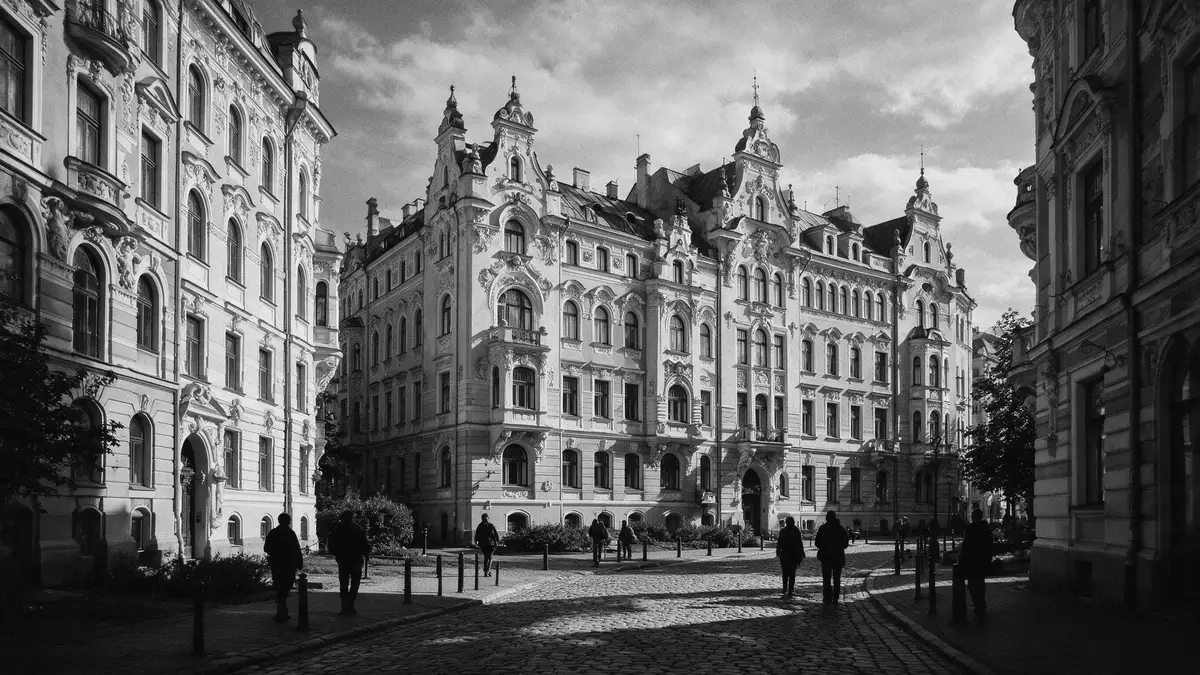
Art Nouveau district Riga lies just north of the medieval centre of Riga, where early twentieth-century apartment houses line calm streets with facades covered in sculpted ornament. In this compact area, especially along Alberta iela and Elizabetes iela, the work of architect Mikhail Eisenstein and contemporaries such as Konstant?ns P?kš?ns and Eižens Laube defines a streetscape that belongs to the city’s Art Nouveau boom in the years around 1900. The district forms part of the Historic Centre of Riga, inscribed as a UNESCO World Heritage Site for the quantity and quality of its Art Nouveau architecture.
Streets where Art Nouveau runs uninterrupted
The core of Art Nouveau district Riga lies in the so?called Quiet Centre, a neighbourhood of broad streets laid out in the late nineteenth century north-east of the Old Town. Alberta iela, a short residential street in this area, is known for its continuous run of Art Nouveau apartment buildings on both sides, with almost every facade showing some variant of the style. Several houses here were designed by Mikhail Eisenstein at the beginning of the twentieth century, giving one block an especially dense sequence of sculpted fronts.Alberta iela in central Riga Parallel to Alberta iela, Elizabetes iela is longer and more varied, mixing Art Nouveau with other historicist styles; together, these streets anchor the district as a compact ensemble of early twentieth-century urban housing.Riga Art Nouveau district overview
Alberta iela runs between Str?lnieku iela and Elizabetes iela, forming a quiet corridor of masonry facades and inner courtyards. The houses line up in a row with high fronts, bay projections and elaborate portals, their upper floors rising above street trees that soften the view. Around the corner, Elizabetes iela carries heavier traffic but still presents a sequence of substantial stone and brick buildings, some with strong corner towers that anchor street junctions. Smaller side streets such as Antonijas iela and Str?lnieku iela extend the pattern, combining decorated fronts with pavements, stairways and recessed doorways that hint at the apartments inside.
Architects, dates and sculptural programmes
Most of the district’s Art Nouveau housing was built between about 1899 and 1914, when Riga expanded as a major Baltic port of the Russian Empire and prosperous residents commissioned new apartment blocks. Within this period, Alberta iela played a particular role: several of its apartment houses were designed by Mikhail Eisenstein, whose fronts stand out for their high-relief stucco, expressive masks and dense symbolic imagery.Alberta Street by Mikhail Eisenstein Other architects active in the area included Konstant?ns P?kš?ns and Eižens Laube, whose work ranges from decorative to so?called National Romantic and Perpendicular variants of Art Nouveau.Latvian Art Nouveau architects
The UNESCO listing for the Historic Centre of Riga emphasises that the city achieved one of the highest concentrations of Art Nouveau architecture in Europe, with hundreds of buildings of the style within the wider centre.Historic Centre of Riga inscription In Art Nouveau district Riga this takes the form of decorative facades where mythological figures, goddess sculptures, plant motifs and geometric patterns frame windows and doors. On Eisenstein’s houses along Alberta iela and at Elizabetes iela 10b, female masks, sphinxes and helmeted figures appear amid scrolls and reliefs, while buildings by P?kš?ns and Laube introduce corner turrets, stylised folk ornaments and vertically emphasised window groupings. The combination of stone, stucco and metal balconies gives the streets a strong sense of depth and texture.
Quiet Centre atmosphere and the Art Nouveau Museum
Art Nouveau district Riga is primarily a residential area, and the apartment houses still form stacked layers of homes above ground-floor entrances. Courtyards behind the fronts bring light into the interior wings, while staircases and lift halls organise access from street to flat. The overall atmosphere in the Quiet Centre contrasts with the medieval lanes of the Old Town: here, straight streets, consistent cornice lines and broad pavements give a more regular grid, yet the facades themselves are among the most elaborate in Riga. Street trees, small gardens by the entrances and occasional cafe terraces on corners add another layer of detail to the urban fabric.
One building on Alberta iela houses the Riga Art Nouveau Museum, set within an apartment originally designed by Konstant?ns P?kš?ns.Alberta iela 12 Art Nouveau building Inside, period furnishings, decorative ceilings and original detailing present an intact early twentieth-century home, giving a sense of how the architecture functioned in everyday life. Outside the museum, the same block continues with Eisenstein facades and other Art Nouveau variants, making it possible to see interiors and exteriors from the same era within a short walk. Together with Elizabetes iela and the wider Historic Centre, this gives Art Nouveau district Riga a coherent identity as a district where turn?of?the?century design is present in both public streets and domestic spaces.
Visiting Art Nouveau district Riga: what travellers from Western Europe should know
- Art Nouveau district Riga lies in the Quiet Centre of Riga, north of the Old Town, with Alberta iela and Elizabetes iela forming the main streets of the ensemble.
- The terrain consists of level urban streets with pavements, and access to the apartment houses generally involves stairways or entrance steps from street to doorway.
- Nearby, the medieval centre of Riga with its riverfront is within walking reach, and the wider Historic Centre forms part of the UNESCO World Heritage Site listing.
- Latvia’s official language is Latvian and the national currency is the euro.
- Entry requirements depend on your nationality; UK travellers can check the FCDO travel advice at gov.uk/foreign-travel-advice, Irish travellers the Department of Foreign Affairs at ireland.ie.
Searching for Art Nouveau district Riga on social platforms
These links open searches for Art Nouveau district Riga on each platform.Frequently asked questions about Art Nouveau district Riga
Where is Art Nouveau district Riga located within the city?
Art Nouveau district Riga is in Riga’s Quiet Centre, north of the medieval Old Town, with Alberta iela and Elizabetes iela as its best-known streets.
What can visitors expect when walking through the district?
Visitors encounter early twentieth-century apartment houses with richly decorated Art Nouveau facades, inner courtyards, stairways and a generally calm, residential streetscape.
What makes Art Nouveau district Riga distinctive compared with other areas?
The district concentrates work by architects such as Mikhail Eisenstein, Konstant?ns P?kš?ns and Eižens Laube, creating a rare ensemble of varied Art Nouveau styles within a compact urban grid.


