
Ashinoko: a volcanic lake shaped by Hakone’s caldera
Published on 09/24/2026 at 12:21 | Editorial responsibility: Rafael Müller, Editor-in-Chief AD HOC NEWS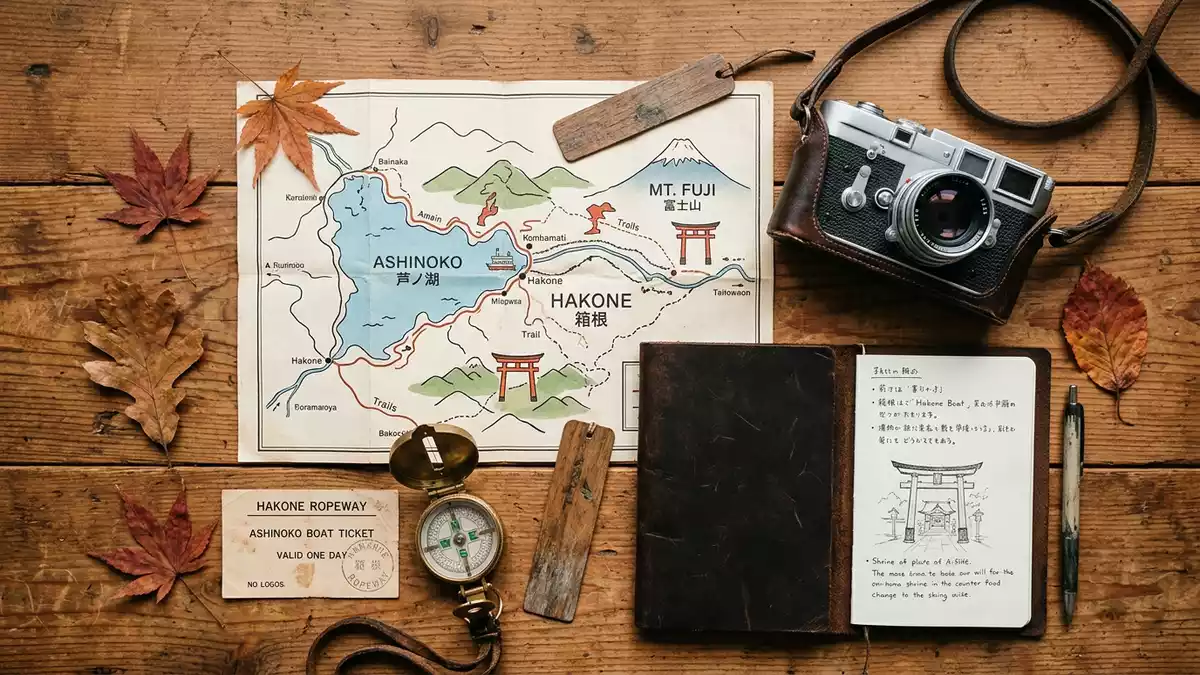
Ashinoko is a caldera lake in Hakone, Kanagawa Prefecture, where water occupies part of the volcanic landscape of Mount Hakone. Its broad surface, forested shores and mountain backdrop form a scene closely tied to Hakone’s geography and culture.
The lake’s visible character begins with its setting: a water basin surrounded by the outer rim and central cone of the Hakone volcano. The shoreline measures about 21 km, while the lake covers roughly 7 square kilometres. On clear days, Mount Fuji appears beyond the blue surface.
Ashinoko and the volcanic landscape of Hakone
Ashinoko took its present form about 3,000 years ago. An explosive eruption on the north-western slope of Mount Kamiyama caused a large slope collapse, sending rock debris towards the lower parts of Hakone.
The debris blocked the Hayakawa River inside the volcanic basin. Water collected behind the natural barrier, creating the lake known as Ashinoko. This origin places the lake within the continuing geological story of the Hakone volcano, rather than beside it as an unrelated body of water.
The lake surface lies at about 723 m (2,372 ft) above sea level. The western shore shows the steep caldera wall, while lava flows from Mount Komagatake shape parts of the eastern landscape. These contrasting landforms remain visible around the water.
The surrounding recreation forest covers broad areas of woodland and mountain terrain. Japanese cedar, cypress, beech and other trees occupy the slopes, while reeds and aquatic plants grow in shallow sections of the lake. The shoreline therefore combines open water with dense vegetation and volcanic relief.
From volcanic basin to sacred lake
Ashinoko has a religious history linked with Hakone-jinja Shrine. Mangan Shonin, a Buddhist priest associated with the shrine’s foundation, belongs to the lake’s traditional history in the eighth century.
Hakone-jinja Shrine treats Ashinoko as a sacred lake, and its red torii gate stands in the water at Moto-Hakone. The gate provides a clear visual connection between the lake, the shrine and the religious traditions of the surrounding mountains.
Mount Komagatake rises on the eastern side of Ashinoko. Its summit is associated with Hakone-jinja Shrine’s inner shrine, Hakone-jinja Shrine Mototsumiya, and with older mountain worship connected to Mount Kamiyama.
The shoreline also carries traces of travel through the Edo period, from the early seventeenth to the late nineteenth century. The Hakone Sekisho highway checkpoint stood beside the route across the mountains, linking the lake with the historic road between Kyoto and Tokyo.
Onshi-Hakone Park occupies a former imperial villa site from the Meiji period. The park’s trees and open views belong to the cultural landscape around the lake, where historical routes, religious places and mountain scenery share the same shores.
Water, woodland and views around Ashinoko
The lake’s depth reaches about 43.5 m (143 ft). Groundwater, springs and rainfall contribute to its water, while the surrounding volcanic slopes contain forests with different tree communities.
Japanese cedar and cypress are especially visible along parts of the western shore. Broad-leaved woodland grows around the central volcanic cone and outer rim, with beech among the trees associated with the higher mountain slopes.
Ashinoko also has a distinctive submerged landscape. Ancient cedar trunks known as Sakasa-sugi lie beneath the water in standing positions. Their presence connects the lake with earlier forested conditions and with the geological changes that affected the slopes around it.
Fish and aquatic species form part of the lake’s cultural and ecological history. Japanese dace, eel and yamame are associated with the water, while other fish were introduced through later fisheries programmes. Wakasagi, a small freshwater fish, is raised in local fisheries.
The lake’s name is linked with ashi, the Japanese word for reed. Reeds and other plants grow around sections of the shore, while aquatic vegetation occupies shallow water. The result is a landscape of volcanic rock, forest, open water and wetland growth.
Ashinoko also forms part of a wider heritage landscape. Lake Ashinoko and Hakone-jinja Shrine were recognised as a Japan Heritage site in 2018, within the theme of a perilous mountain pass on the Kyoto–Tokyo highway.
Visiting Ashinoko: what travellers from Western Europe should know
- Ashinoko lies in central Hakone, in Kanagawa Prefecture. Moto-Hakone and Hakone-machi are shoreline settlements, with buses connecting the lake to other parts of Hakone.
- The Hakone Sightseeing Cruise operates on the lake, with piers at shoreline settlements including Moto-Hakone and Hakone-machi.
- The shoreline is shaped by volcanic slopes and caldera walls. Walking routes can include uneven ground, gradients and woodland paths.
- Mount Komagatake rises beside the lake, and the Hakone Komagatake Ropeway connects the lakeside area with the mountain summit.
- The official language is Japanese and the currency is the Japanese yen.
- Entry requirements depend on your nationality; UK travellers can check the FCDO travel advice at gov.uk/foreign-travel-advice, Irish travellers the Department of Foreign Affairs at ireland.ie.
Searching for Ashinoko on social platforms
These links open searches for Ashinoko on each platform.
Frequently asked questions about Ashinoko
Where is Ashinoko?
Ashinoko lies in Hakone, Kanagawa Prefecture, on Honshu in Japan. The lake occupies part of the caldera of Mount Hakone.
What can visitors expect around the lake?
Visitors find mountain scenery, woodland, shoreline settlements, historic sites, shrine architecture and boat routes across the water.
What makes Ashinoko distinctive?
Ashinoko combines a three-thousand-year volcanic origin with a sacred lake tradition, a torii gate in the water and forested caldera shores.


