
Ayeyarwady River bending past the temple plain of Bagan
Published on 09/18/2026 at 09:02 | Editorial responsibility: Rafael Müller, Editor-in-Chief AD HOC NEWS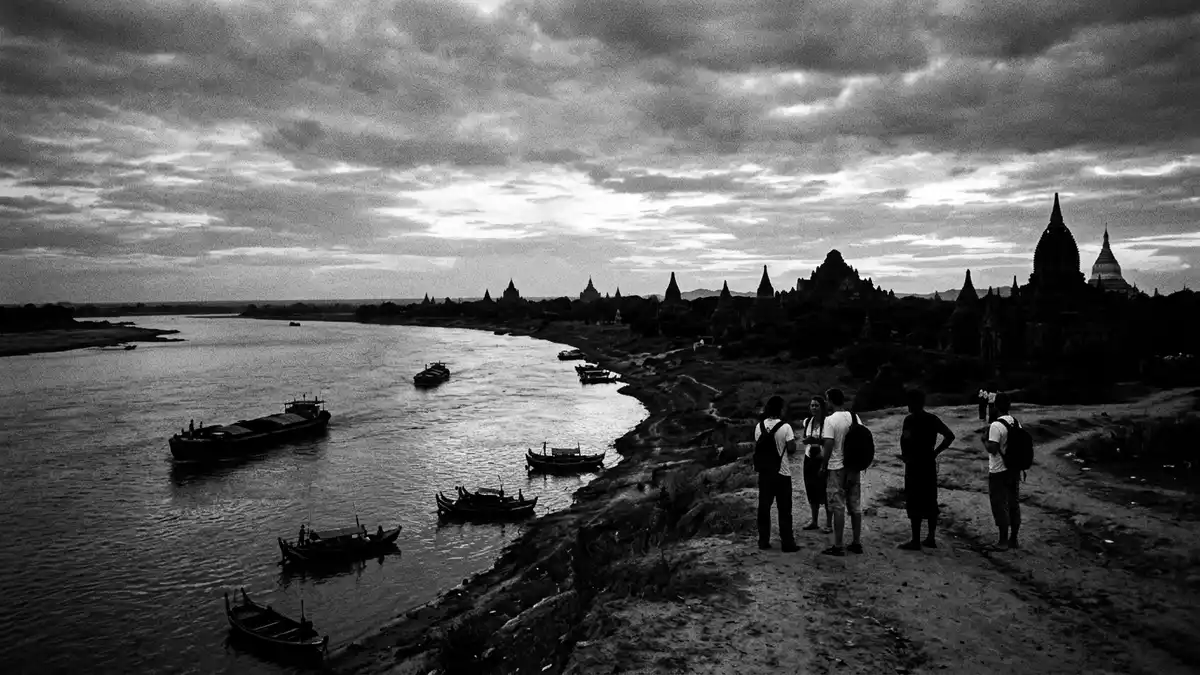
Ayeyarwady River, historically known in English as the Irrawaddy River, is the principal river of Myanmar and at Bagan it forms a broad bend beside one of Asia’s most distinctive temple plains. The city of Bagan stands on the eastern bank in the country’s central dry zone, so that the river and the expanse of Buddhist monuments share the same open landscape and define each other across the terraces that drop towards the water.
The great river of Myanmar and its course past Bagan
Ayeyarwady River runs from the far north of Myanmar to the Andaman Sea, forming a north–south backbone that shapes much of the country’s geography and settlement. It begins where the N’mai and Mali rivers meet in Kachin State and then flows through major towns such as Myitkyina, Mandalay and Bagan before dispersing into a wide, marshy delta on its way to the coast.principal river of Myanmar This long course means that at Bagan the river carries water from Himalayan foothills and upland valleys to the relatively low, dry plain of central Myanmar.
The total length of Ayeyarwady River is around 2,000 km (1,240 mi) from northern mountains to the Andaman Sea, and its drainage basin extends over much of Myanmar’s interior.route and basin size Along the way, the river passes Bagan on a reach where the channel is broad and gently curving rather than confined, helping to create a wide margin of alluvial ground beside the temple plain. Bagan itself lies roughly mid-way along the river’s course, closer to Mandalay than to the northern confluence or the southern delta.
River and temple plain: Bagan on the eastern bank
Bagan is an ancient city in central Myanmar, known for its dense concentration of Buddhist temples, pagodas and stupas dating largely from the eleventh and twelfth centuries.temple concentration and dating The Bagan Archaeological Zone stretches across a broad plain on the eastern side of Ayeyarwady River, with Old Bagan close to the embankment and newer settlements such as Nyaung U and New Bagan spreading inland. From many vantage points among the monuments, the river appears as a pale ribbon at the edge of the dry landscape, marking a clear boundary between the pagoda plain and the opposite bank.
The terrain at Bagan slopes gently down towards Ayeyarwady River in terraces and low bluffs, with earthen tracks and simple steps descending from the higher temple ground to boat landings and sandy margins.eastern bank and river landings This layered descent gives many of Bagan’s monuments an outlook over the water, so that visitors standing near a pagoda or stupa can look past brick towers and spires to the wide channel beyond. The western bank remains largely lower and less built up in this reach, emphasising the contrast between the river margin and the raised temple plain.
Waterway, dry zone and everyday life along the bend
Central Myanmar around Bagan is known as the dry zone, a region of scrub vegetation, scattered trees and reddish soils where rainfall is less abundant than in the coastal and delta areas. Ayeyarwady River provides a permanent watercourse through this landscape, and its banks near Bagan support patches of cultivation, small riverside settlements and landing points for local boats.river and temple plain description The river’s seasonal variations in water level remain visible on the slopes and sandbars, even when the temple terraces above feel comparatively arid.
Ayeyarwady River has long been an important commercial waterway for Myanmar, with transport and trading taking place along its navigable stretches and ports serving towns further north and south from Bagan.commercial waterway and ports At Bagan, river craft range from small wooden boats to larger vessels that follow longer routes along the water. From the temple plain, these boats appear as moving points on the broad surface, connecting the archaeological landscape to wider patterns of life along the river corridor.
Visiting Ayeyarwady River: what travellers from Western Europe should know
- Ayeyarwady River passes beside Bagan in central Myanmar, with the Bagan Archaeological Zone spread along the eastern bank and Old Bagan closest to the river margin.
- Approaches to the river at Bagan often follow earthen tracks or simple flights of steps down from higher temple ground, with uneven surfaces and changes in level between the plain and boat landings.
- The area around Bagan lies in Myanmar’s central dry zone, so paths across the temple plain and down to the river can be exposed, with little shade away from groves and built structures.
- The official language is Burmese and the currency is the Myanmar kyat.
- Entry requirements depend on your nationality; UK travellers can check the FCDO travel advice at gov.uk/foreign-travel-advice, Irish travellers the Department of Foreign Affairs at ireland.ie.
Searching for Ayeyarwady River on social platforms
These links open searches for Ayeyarwady River on each platform.
Frequently asked questions about Ayeyarwady River
Where is Ayeyarwady River in relation to Bagan?
Ayeyarwady River runs through central Myanmar and at Bagan it forms a bend beside the temple plain, with the city occupying the eastern bank along the river margin.
What can visitors expect when they reach the river at Bagan?
Visitors encounter a broad river channel edged by terraces and sandy ground, reached by earthen tracks and steps that descend from the higher temple plain to simple boat landings.
What makes the stretch of Ayeyarwady River at Bagan distinctive?
The river’s bend beside Bagan is distinctive because a major waterway lies directly alongside a vast concentration of Buddhist monuments, so pagodas and stupas rise above the terraces that overlook the channel.


