
Banaue Rice Terraces, a living staircase of fields in Banaue
Published on 09/18/2026 at 20:36 | Editorial responsibility: Rafael Müller, Editor-in-Chief AD HOC NEWS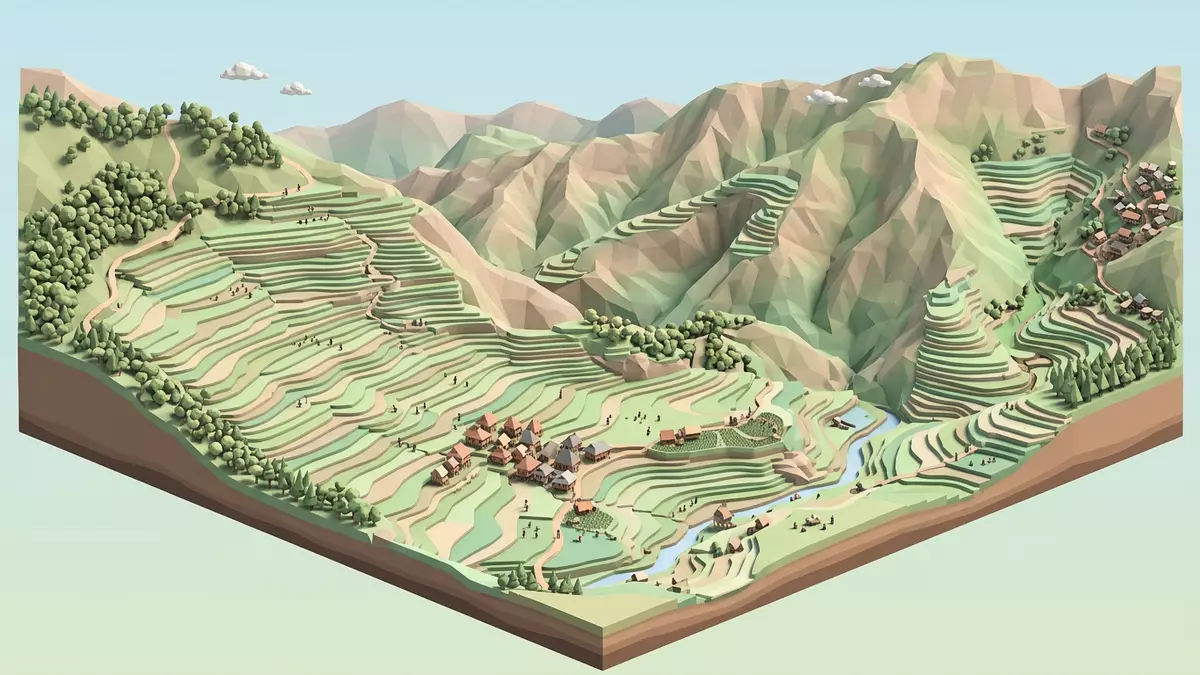
The Banaue Rice Terraces rise above the town of Banaue in the Cordillera mountains of northern Luzon, forming a vast staircase of irrigated fields carved into steep slopes by Ifugao farmers over many generations. Set within Ifugao Province in the Philippines, they belong to a wider landscape of rice terraces recognised internationally for its cultural and environmental significance and officially protected as a National Cultural Treasure.
A mountain landscape shaped into fields
The Banaue Rice Terraces occupy the high flanks of the Cordillera mountain range, where ridges and valleys run across north-central Luzon and rainfall from upland forests feeds streams and rivers. The terraces form successive levels of cultivated ground, held in place by earthen and stone walls that trace the contours of the hillsides around Banaue poblacion, the main settlement of the municipality.Cordillera mountain range From viewpoints above the town, these cultivated steps appear in long bands of green or brown depending on the season, stacked one above another and following the natural folds of the terrain.
In Banaue and neighbouring municipalities, rice terraces reach elevations that can be around 1,500 m (4,921 ft) above sea level, placing irrigated fields on slopes where clouds often drift through the upper levels and river valleys lie far below.terraces at elevations around 1,500 m Water flows to these terraces through channels that draw from forested catchments higher in the Cordilleras, sustaining rice paddies in a setting that would otherwise be too steep for conventional agriculture.
Ifugao heritage and a wider terrace network
The terrace systems of Banaue are part of a broader network collectively known as the Ifugao Rice Terraces, created by the Ifugao people whose ancestors shaped the mountain slopes into irrigated fields over many centuries. Archaeological and historical research links these terraces to pre-colonial farming traditions on Luzon, with some parts of the wider Cordillera terrace landscape dated to around 2,000 years ago.created more than 2,000 years ago In official heritage registers, the Ifugao Rice Terraces are listed as a National Cultural Treasure of the Philippines, recognising both their age and their continuing agricultural use.National Cultural Treasure listing
Internationally, selected terrace clusters in Ifugao form the UNESCO World Heritage Site known as “Rice Terraces of the Philippine Cordilleras”, inscribed in 1995 as a cultural landscape.1995 World Heritage inscription Within Banaue municipality, the Batad and Bangaan rice terrace clusters are part of this inscription, while the extensive terraces immediately overlooking Banaue town are recognised under the national cultural treasure designation rather than as a World Heritage property.Batad and Bangaan clusters in Banaue Together, these clusters show variations in terrace form, village layout and wall construction, yet they share common Ifugao farming practices and irrigation systems.
Form, construction and daily use
The Banaue Rice Terraces consist of narrow fields arranged on successive levels, each held by retaining walls built from compacted earth and stone and linked by paths and steps that climb between terrace edges. In many places the walls curve gently along the hillside, giving the terrace bands a flowing outline that follows the land rather than imposing a rigid grid. Fields are flooded through channels that carry water along terrace rims and spill into paddies, creating mirrored surfaces when the water is clear and textured patterns when rice plants grow high.
Farming on these terraces relies on coordinated work by local communities in and around Banaue, who maintain walls, reinforce edges and keep irrigation channels clear. Traditional Ifugao houses and granaries stand near terrace clusters, especially in villages associated with World Heritage-listed terraces such as Batad and Bangaan, linking dwelling spaces directly to cultivated slopes.traditional houses and granaries The overall impression from valley roads and viewpoints is of human-made structures that blend with rugged mountain topography, showing how rice culture has adapted to highland conditions rather than lowland plains.
Visiting Banaue Rice Terraces: what travellers from Western Europe should know
- The Banaue Rice Terraces are in Banaue municipality in Ifugao Province on the northern island of Luzon in the Philippines, within the wider Cordillera Administrative Region.
- Approaches commonly follow mountain roads that climb above Banaue town towards viewpoints and villages; gradients can be steep and sections may consist of concrete or packed earth.
- Footpaths around terrace clusters often involve uneven steps and narrow ledges along terrace walls, requiring sure footing on sloping ground.
- The official language is Filipino alongside regional languages such as Ifugao, and the currency is the Philippine peso.
- Entry requirements depend on your nationality; UK travellers can check the FCDO travel advice at gov.uk/foreign-travel-advice, Irish travellers the Department of Foreign Affairs at ireland.ie.
Searching for Banaue Rice Terraces on social platforms
These links open searches for Banaue Rice Terraces on each platform.
Frequently asked questions about Banaue Rice Terraces
Where are the Banaue Rice Terraces located?
The Banaue Rice Terraces are in Banaue municipality in Ifugao Province on Luzon, within the Cordillera mountain range of northern Philippines.Banaue in Ifugao Province
What should visitors expect on a visit?
Visitors encounter steep mountain terrain, extensive stair-like terrace walls, irrigated rice paddies and village paths that pass close to working fields and retaining walls.
What makes the Banaue Rice Terraces distinctive?
The terraces form part of the Ifugao Rice Terraces cultural landscape, with high-elevation fields carved into Cordillera slopes and associated clusters recognised through national and UNESCO heritage listings.Rice Terraces of the Philippine Cordilleras


