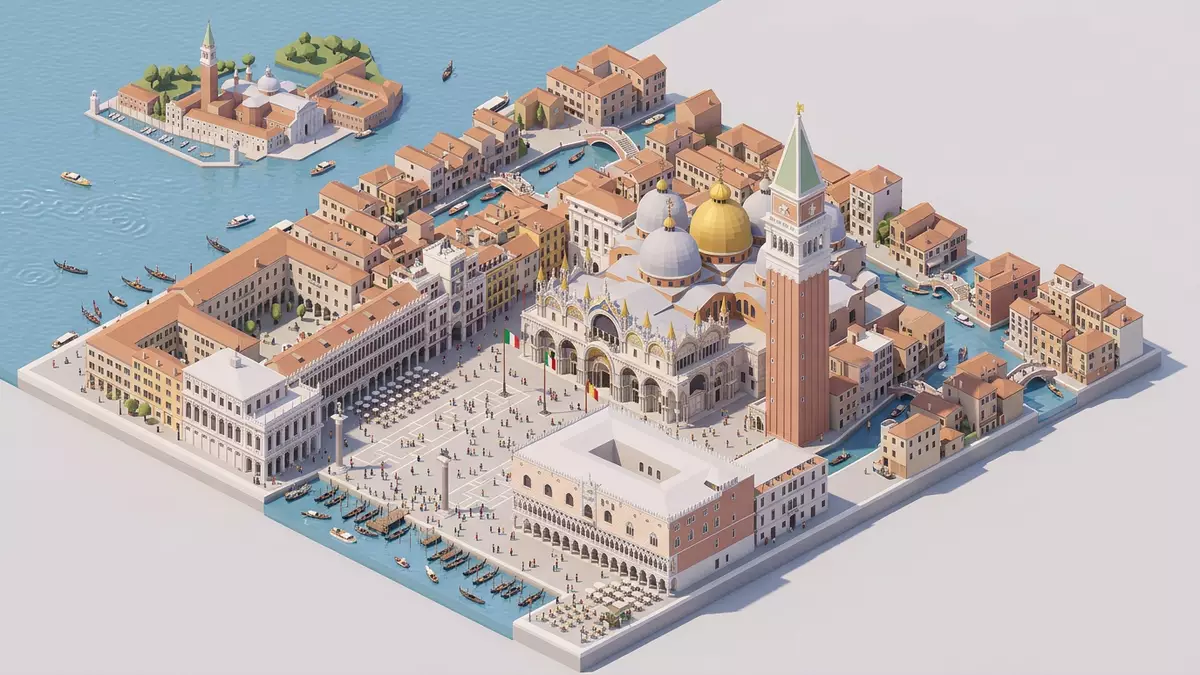
Basilica di San Marco and its mosaics in Venedig
Published on 08/07/2026 at 15:04 | Editorial responsibility: Rafael Müller, Editor-in-Chief AD HOC NEWS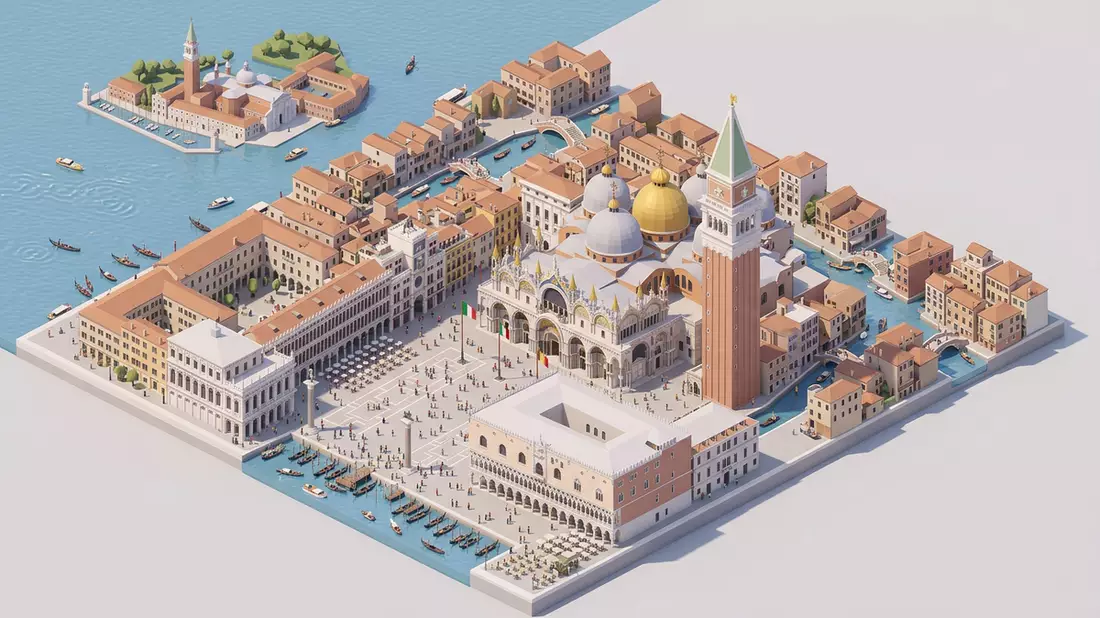
Basilica di San Marco in Venedig is a Byzantine church of domes, marble, and gold-ground mosaics, with the Pala d’Oro among its best-known interior treasures. Built from the early eleventh century and later expanded, it is inseparable from the civic history of the Venetian Republic.
Golden surfaces and domes at San Marco
The first impression is the interior’s golden sheen, created by mosaics that cover vaults, arches, and walls. Against that background, the domes and arcades read as part of a layered liturgical space rather than a single open hall.
San Marco sits beside St Mark’s Square and the Doge’s Palace, and its exterior combines brick structure with marble facing and sculptural fragments. The west front presents a dense arrangement of arches, columns, and reliefs that reward slow looking.
Byzantine form in Venice
The basilica’s plan follows the Greek cross type associated with Byzantine church architecture, with a centralised composition under domes. Venice absorbed eastern forms through trade and diplomacy, and San Marco reflects that connection in stone and glass.
The building was begun in 1063 and consecrated in 1094, then enriched in later centuries with new decoration and spolia brought from elsewhere. The result is not a single-phase monument but a church that records Venetian ambition through its accumulated surfaces.
Relics, ritual, and the Pala d’Oro
San Marco is closely linked to the relics of Saint Mark the Evangelist, whose presence gave the basilica its role as the city’s principal church. The interior also contains the Pala d’Oro, a gold altarpiece set with enamel and precious stones, together with richly worked bronze and marble details.
The building’s many layers include pavements, screens, and side chapels that bring together different periods of Venetian workmanship. That mixture makes the basilica read as both church and historical record, with every surface carrying another phase of devotion and display.
Visiting Basilica di San Marco: what travellers from Western Europe should know
- It stands in Piazza San Marco in Venedig, and the usual approach is on foot from the surrounding bridges and waterfront paths.
- Admission arrangements and opening hours are set by the site's operator and change with the season; the official website is the only binding source.
- The best light for the mosaics is often the softer part of the day, when the interior details are easier to read.
- Expect steps, stone floors, and crowded approaches around the square, with limited space for long pauses inside.
- Local services in the city operate in Italian and English in many tourist areas, and card payment is common in much of central Venedig.
- Entry requirements depend on your nationality. UK travellers should check the FCDO travel advice at gov.uk/foreign-travel-advice; Irish travellers the Department of Foreign Affairs at ireland.ie; EU and EEA citizens their own national foreign ministry.
Searching for Basilica di San Marco on social platforms
These links open searches for Basilica di San Marco on each platform.
Frequently asked questions about Basilica di San Marco
Where is Basilica di San Marco?
It is in Piazza San Marco, the main ceremonial square of Venedig, beside the Doge’s Palace. The basilica faces the open space at the heart of the city’s historic centre.
What should visitors expect?
Visitors should expect a church with mosaics, domes, marble facing, and a strongly layered interior. The floor, steps, and crowd flow around the square can make the visit feel compact.
What makes it distinctive?
Its blend of Byzantine form, Venetian decoration, and the Pala d’Oro gives it a visual character that is easy to recognise. The building also preserves the memory of the Venetian Republic in its architecture and ritual setting.