
Basilica di San Pietro and its vast Renaissance interior
Published on 09/19/2026 at 21:55 | Editorial responsibility: Rafael Müller, Editor-in-Chief AD HOC NEWS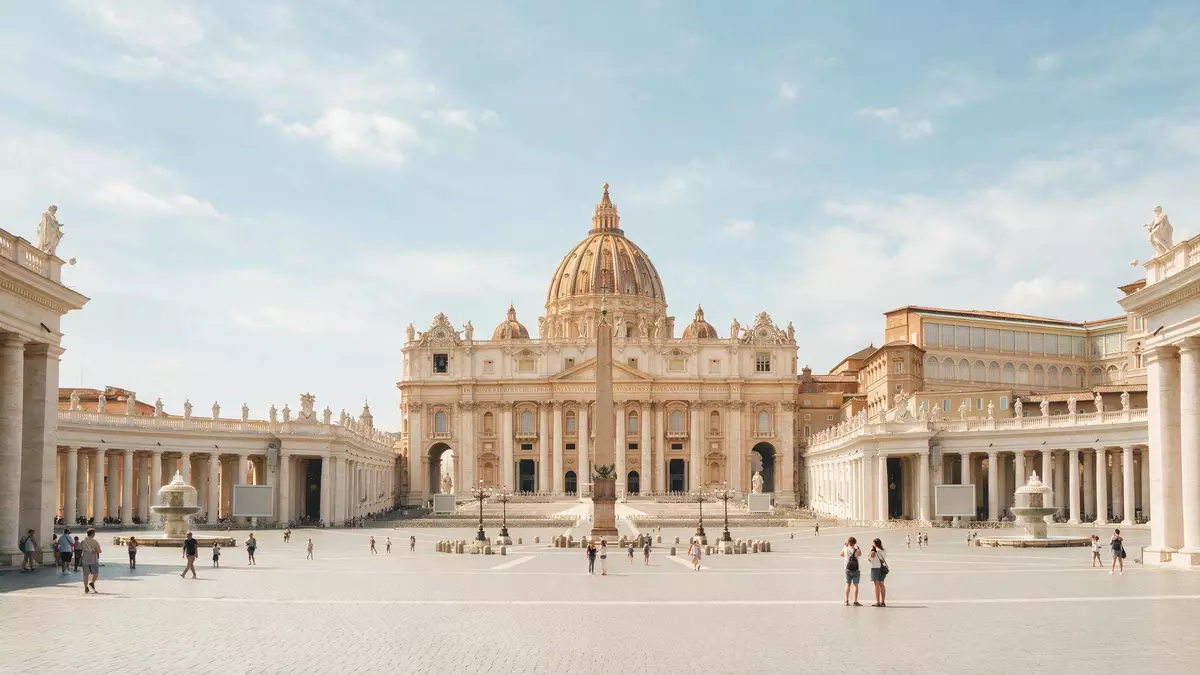
Basilica di San Pietro in Vatikanstadt is a monumental Renaissance church built over the tomb of Saint Peter and completed in the early seventeenth century. Its immense nave, towering dome and ceremonial square together form a single architectural ensemble that defines the skyline of the small independent state.
A papal basilica shaped by many architects
The present Basilica di San Pietro stands on Vatican territory, an enclave within the city of Rome in Italy, and serves as one of the principal churches of the Catholic world.Papal Basilica of Saint Peter in the Vatican Construction of the current basilica began in 1506 under Pope Julius II and the church was consecrated in 1626 during the papacy of Pope Urban VIII.construction of the Basilica began April 18, 1506
The building project drew in a succession of leading architects of the Italian Renaissance and Baroque. Donato Bramante prepared an early centralised plan; Raphael and Antonio da Sangallo the Younger reworked the design; Michelangelo Buonarroti simplified the structure and took charge of the main mass of the church, including the drum of the dome.Michelangelo designed the dome, crossing and exterior After Michelangelo’s death, Giacomo della Porta and Domenico Fontana oversaw the completion of the cupola, while Carlo Maderno extended the church with a long nave and a grand façade, giving Basilica di San Pietro the elongated interior visitors encounter.
The dome, nave and altar aligned over Saint Peter’s tomb
The most striking feature of Basilica di San Pietro is its vast dome, which rises above the crossing and dominates the silhouette of Vatikanstadt.the dome of Saint Peter’s Basilica was conceived and built up to the drum by Michelangelo Conceived by Michelangelo and completed by Giacomo della Porta and Domenico Fontana between 1588 and 1590, it rests on a high drum pierced by windows and carries a lantern that accentuates its height. The internal space beneath the dome centres on the crossing and the high altar, framed by colossal piers and arches that emphasise the vertical thrust of the structure.
Beneath the main altar lies the tomb venerated as the resting place of Saint Peter, aligning liturgical focus with the historical origin of the site.the tomb of Saint Peter is located beneath the main altar From the crossing, the nave extends towards the façade in a long sequence of barrel-vaulted bays, side chapels and richly decorated architectural members shaped by Carlo Maderno. At the far end, the façade presents tiers of columns and pilasters, large arched openings and an upper loggia, forming the monumental front that faces the square.
Bernini’s piazza and Baroque furnishings
In front of Basilica di San Pietro lies the broad expanse of Piazza San Pietro, created in the seventeenth century under Gian Lorenzo Bernini.St. Peter's Square was completed in 1667 The square is defined by sweeping colonnades that curve around an open central space, framing the view towards the basilica’s façade and dome. An obelisk stands near the centre, with fountains providing symmetrical points of focus, so that visitors approaching from the wider city move through a carefully composed sequence of architectural elements before entering the church.
Inside the basilica, Bernini added several key features that shape the experience of the interior. His bronze Baldacchino rises over the high altar beneath the dome, combining twisted columns and a canopy to mark the liturgical centre of the space.Gian Lorenzo Bernini added the piazza, the Cathedra Petri, and the Baldacchino At the far end of the nave, the Cathedra Petri encloses an earlier episcopal chair within a sculptural composition of gilded bronze, framed by figures and rays. Together with numerous chapels, monuments and altarpieces, these furnishings show how Baroque art and architecture were integrated into the existing Renaissance structure.
Visiting Basilica di San Pietro: what travellers from Western Europe should know
- Basilica di San Pietro stands within Vatikanstadt, reached from Rome across the Tiber and approached through Piazza San Pietro, which opens in front of the façade.
- The interior extends along a long nave with many chapels, and visiting the dome involves climbing stairways and passages that become progressively narrower towards the upper levels.
- Vatikanstadt is an independent city-state; the official language is Italian and the currency is the euro.
- For travellers arriving from outside the European Union, entry requirements depend on your nationality; UK travellers can check the FCDO travel advice at gov.uk/foreign-travel-advice, Irish travellers the Department of Foreign Affairs at ireland.ie.
Searching for Basilica di San Pietro on social platforms
These links open searches for Basilica di San Pietro on each platform.
Frequently asked questions about Basilica di San Pietro
Where is Basilica di San Pietro located?
Basilica di San Pietro is situated in Vatikanstadt, an independent city-state enclaved within Rome, on the western side of the Tiber River.
What should visitors expect inside the basilica?
Visitors encounter a long nave lined with chapels, a high altar above Saint Peter’s tomb beneath the great dome, and richly decorated Baroque furnishings.
What makes Basilica di San Pietro distinctive among churches?
Its combination of Renaissance scale, Michelangelo’s dome, Bernini’s piazza and the alignment of the high altar with the tomb of Saint Peter gives the basilica a distinctive architectural and devotional character.


