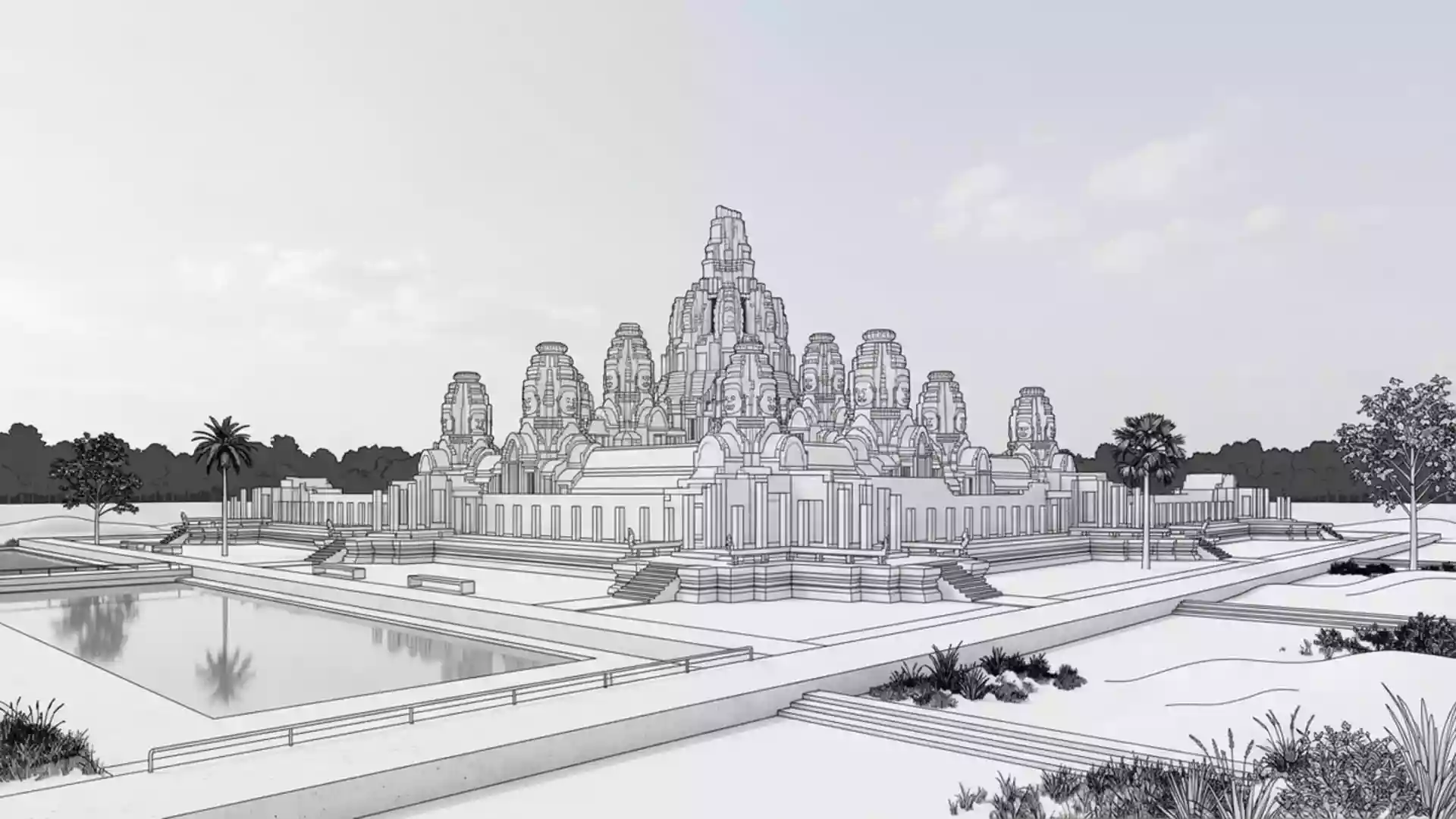
Bayon’s stone faces rise above Angkor Thom
Published on 08/09/2026 at 15:20 | Editorial responsibility: Rafael Müller, Editor-in-Chief AD HOC NEWS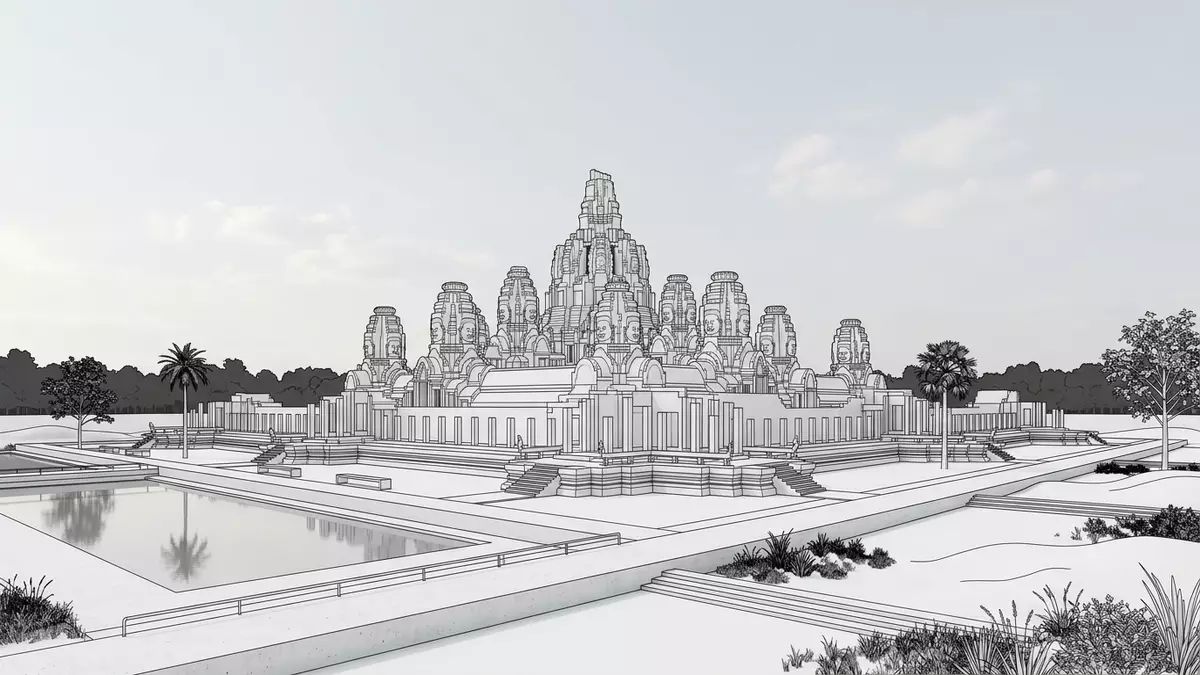
Bayon in Siem Reap is the Khmer state temple at the centre of Angkor Thom, and its most striking feature is the forest of stone faces on its towers. The temple belongs to the late 12th and early 13th centuries, under Jayavarman VII, and its upper levels rise in a dense, compact mass of galleries and towers.
Jayavarman VII’s temple in stone
Bayon sits inside Angkor Thom, the royal city associated with Jayavarman VII of the Khmer Empire. It is a Hindu-Buddhist temple in the later Angkorian style, with sandstone walls, narrow passages and multiple levels.
The monument is known for its central tower and surrounding towers, each carrying serene carved faces. These faces appear above the galleries and give the temple a recognisable silhouette when seen from different sides.
Faces, galleries and upper terraces
The lower parts of Bayon are arranged around enclosed galleries with reliefs carved into the walls. The scenes show processions, military life, markets and daily activity, along with mythological images.
Above them, the upper terraces gather the towers more tightly. The stonework, repeated faces and close passages create a temple that is read in fragments, one corridor and one level at a time.
Bayon as part of Angkor Thom
Bayon is not an isolated monument. It forms part of the larger city plan of Angkor Thom, where terraces, gates, avenues and temple enclosures create a formal royal landscape.
Its position at the heart of that complex gives it special weight, but the experience on site comes from the monument itself: carved faces, weathered sandstone and the shift from broad galleries to higher, tighter tiers.
Visiting Bayon: what travellers from Western Europe should know
- Bayon is reached from Siem Reap by road within the Angkor archaeological area.
- Admission arrangements and opening hours are set by the site's operator and change with the season; the official website is the only binding source.
- The dry season is often the clearest time for temple visiting, while early morning gives softer light on the stone surfaces.
- The site has uneven steps, worn floors and narrow passages, so sturdy footwear helps on the climbs between levels.
- Languages in the area vary, and payment is often handled in Cambodian riel or US dollars for many local services.
- Entry requirements depend on your nationality. UK travellers should check the FCDO travel advice at gov.uk/foreign-travel-advice; Irish travellers the Department of Foreign Affairs at ireland.ie; EU and EEA citizens their own national foreign ministry.
Searching for Bayon on social platforms
These links open searches for Bayon on each platform.
Frequently asked questions about Bayon
Where is Bayon?
Bayon stands in Angkor Thom near Siem Reap in Cambodia. It is one of the central monuments of the Angkor complex.
What should visitors expect?
Expect stone towers, carved faces, galleries and uneven steps between levels. The site rewards slow walking and close attention to the reliefs.
What makes Bayon distinctive?
Its most recognisable feature is the repeated faces carved on the towers. The combination of those towers with the gallery reliefs gives the temple its unusual character.