

Biomuseo: Frank Gehry’s kaleidoscope of biodiversity in Panama-Stadt
Published on 08/29/2026 at 07:41 | Editorial responsibility: Rafael Müller, Editor-in-Chief AD HOC NEWS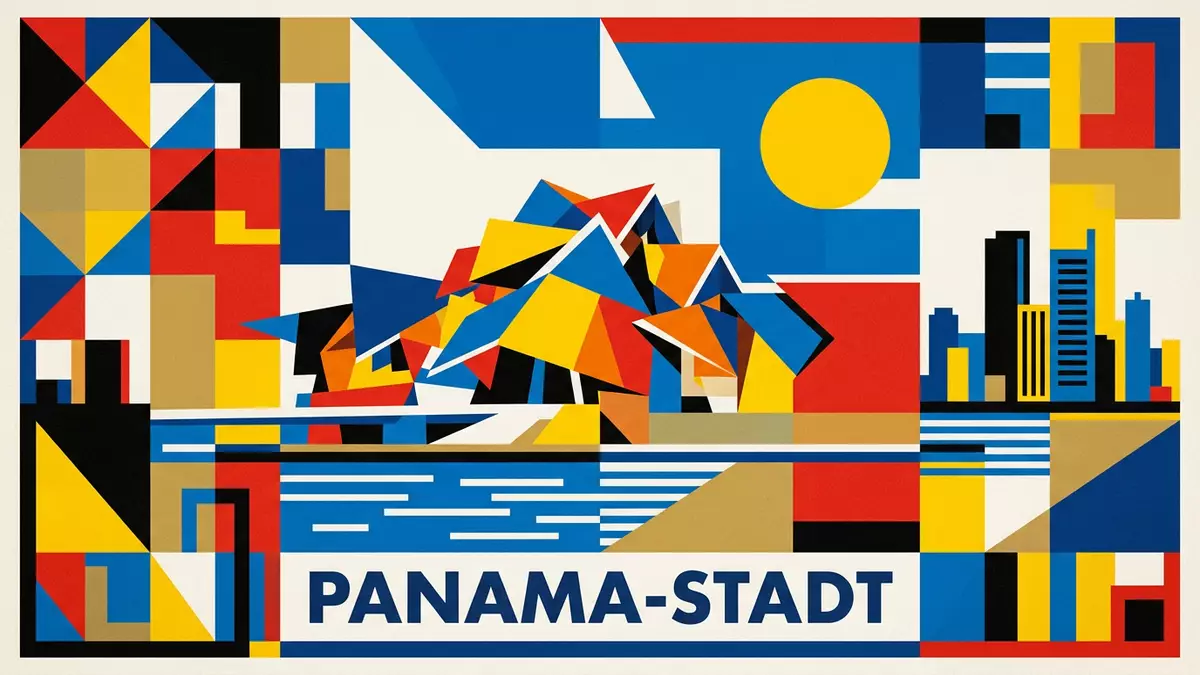
Biomuseo in Panama-Stadt is a natural history museum where Frank Gehry’s explosive geometry meets the story of how a narrow strip of land reshaped life on Earth. Completed in 2014 on the Amador Causeway at the Pacific entrance to the Panama Canal, it uses architecture and exhibition galleries together to frame Panama as a crossroads between oceans and continents.
A riot of colour on the Amador Causeway
Long before stepping inside, Biomuseo announces itself through its fractured, brightly coloured roof, a sculptural canopy that rises above the low strip of the Amador Causeway facing the Pacific Ocean.Located on the Amador Causeway in Panama City, the museum stands near the entrance to the Panama Canal where ships line up to transit between the oceans.
The building was designed by Canadian-born architect Frank Gehry, known for the Guggenheim Museum Bilbao and the Walt Disney Concert Hall in Los Angeles.The Biomuseo is Gehry’s first project in Latin America, and the metal roof planes painted in saturated reds, yellows, blues and greens give the shoreline an instantly recognisable silhouette. From a distance, the museum appears as an assemblage of overlapping roofs and exposed steel, with glazed walls and sheltered terraces beneath.
Galleries that tell the story of an isthmus
Biomuseo is dedicated to explaining how the Isthmus of Panama emerged and transformed global biodiversity by linking North and South America and dividing a large ocean basin into two seas.The permanent exhibition traces the rise of the isthmus and its ecological consequences, mixing geological narrative with biology and human history. Inside, visitors move through a sequence of eight galleries arranged around a central circulation route, each with a distinct scenography and focus.
The first five galleries opened to the public on 2 October 2014.These include the Gallery of Biodiversity, Panamarama, Building the Bridge, Worlds Collide and The Human Path, which together introduce Panama’s role as a meeting point for species. Subsequent galleries complete the permanent exhibition with further perspectives on marine environments and conservation. Large-scale models of animals, immersive projection spaces and graphic panels combine to turn scientific research into a sequence of spatial experiences.
Frank Gehry’s Latin American experiment
The commission for Biomuseo gave Gehry the opportunity to design a natural history museum on a relatively low-lying site with expansive water views, rather than in a dense city centre. Gehry Partners developed the project in collaboration with local firms and landscape architect Edwina von Gal, who shaped the surrounding gardens.The building area is listed at around 4,000 m² in architectural documentation, giving ample space for exhibition halls, circulation and outdoor terraces.
The project was conceived in 1999, ground was broken in 2005 and the museum opened in October 2014, following a long gestation and phases of construction.Architectural features include exposed structural steel and interlocking roof forms, which create deep overhangs and varied interior volumes. The galleries sit beneath these roof planes, while circulation spaces open towards the canal, giving views of shipping lanes and the islands at the end of the causeway.
Visiting Biomuseo: what travellers from Western Europe should know
- Biomuseo stands on the Amador Causeway in Panama-Stadt, overlooking the Pacific entrance to the Panama Canal and reached by road from the city’s central districts.
- The museum building is spread across several levels, with interior ramps and staircases connecting the exhibition halls and outdoor terraces.
- From the museum’s exterior platforms and gardens there are open views across the bay towards the canal entrance and the islands along the causeway.
- The official language is Spanish and the currency is the Panamanian balboa, which is used alongside the US dollar in everyday transactions.
- Entry requirements depend on your nationality; UK travellers can check the FCDO travel advice at gov.uk/foreign-travel-advice, Irish travellers the Department of Foreign Affairs at ireland.ie.
Searching for Biomuseo on social platforms
These links open searches for Biomuseo on each platform.
Frequently asked questions about Biomuseo
Where is Biomuseo located in Panama-Stadt?
Biomuseo stands on the Amador Causeway on the Pacific side of Panama-Stadt, near the entrance to the Panama Canal and reached by road from central districts.
What can visitors expect inside Biomuseo?
Inside, visitors find eight permanent galleries with large-scale models, immersive projections and displays explaining how the Isthmus of Panama shaped global biodiversity and human history.
What makes Biomuseo distinctive among museums?
Biomuseo combines Frank Gehry’s multicoloured architecture with a focused narrative about Panama’s geological role, standing as his first built work in Latin America and a landmark on the Amador Causeway.


