
Biserica Neagra, Brasov’s dark stone Gothic landmark
Published on 09/03/2026 at 06:14 | Editorial responsibility: Rafael Müller, Editor-in-Chief AD HOC NEWS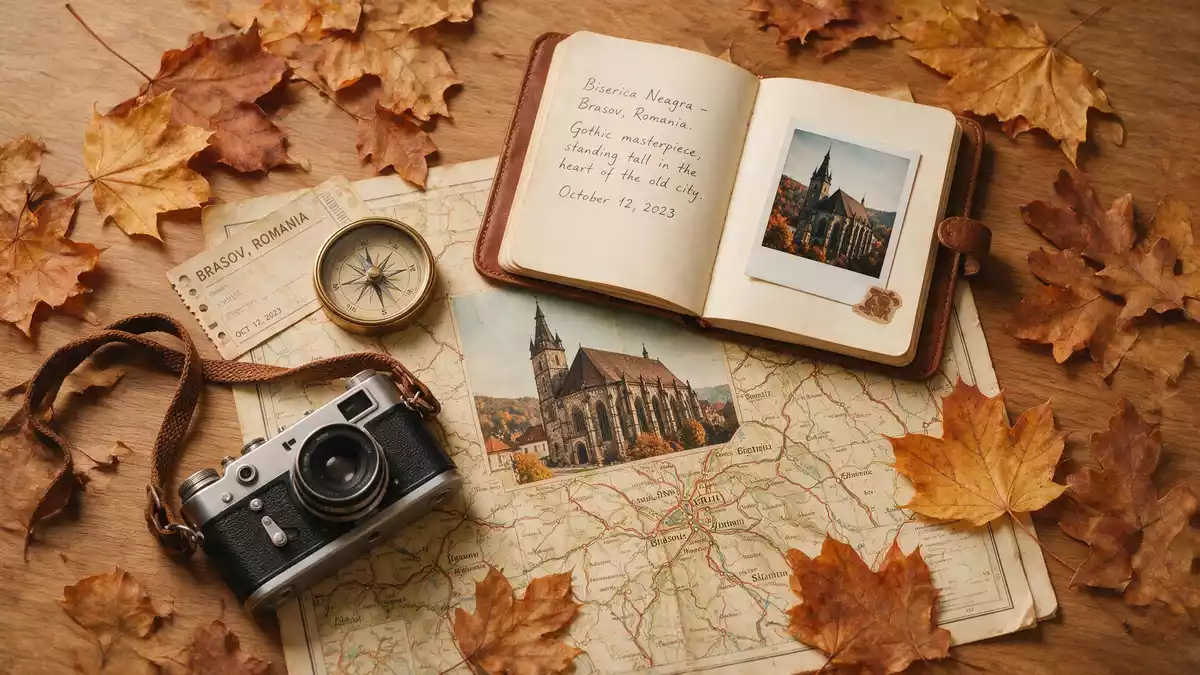
Biserica Neagra, the Black Church of Brasov, is a Gothic Lutheran hall church whose darkened stone, tall tower and cavernous interior shape the character of the old Transylvanian town. Built by the German-speaking Saxon community between the late fourteenth and fifteenth centuries, it has carried the marks of a great fire in 1689 and centuries of restoration into the centre of modern Brasov.
A darkened Gothic giant in the middle of Brasov
Biserica Neagra stands beside Brasov’s central square, in the historic core of this Transylvanian city in central Romania.The Black Church stands in Bra?ov Its masonry rises in a long, high volume with steep roofs and a single dominant tower, giving the church the presence of a fortified landmark amid the surrounding streets. The building represents one of the principal Gothic monuments in Romania, with a layout and elevation that follow the tradition of the great hall churches of Central Europe.The Black Church from Brasov is a major Gothic church
The present structure took shape between the late fourteenth century and 1477, when the main works were brought to a close.Built between 1383 and 1477 The tower and walls carry traces of later repair, with Baroque details visible in elements such as the vaulting and some of the fittings after eighteenth-century restoration campaigns.Baroque-style vaults followed later restoration
From medieval Catholic foundation to Lutheran parish
Construction of Biserica Neagra began in the fourteenth century as a church dedicated to Saint Mary, serving the Catholic Saxon community of Brasov, known in German as Kronstadt.Construction of the church started in the 14th century In the course of the sixteenth century, the impact of the Reformation in Transylvania changed its confession. In 1542 the congregation adopted Evangelical teaching and the church became a Lutheran parish, a role it maintains as part of the Evangelical Church of Augustan Confession in Romania.It is a Lutheran church of Augustan Confession
The fire of 1689 is central to the story of Biserica Neagra. Flames swept through Brasov and damaged the church, blackening its outer walls and destroying much of the roof.The name “Black Church” dates from the 1689 fire In the decades that followed, the congregation and craftsmen from regions such as Danzig rebuilt the vaults and other structural elements, leaving a visible blend of Gothic and Baroque features in the interior and exterior profiles.Restoration introduced Baroque-style vaults
Organ, carpets and the vast interior
Stepping inside Biserica Neagra reveals a tall Gothic hall, with rows of stone pillars carrying high vaults over a long nave.Visitors encounter a tall Gothic hall interior Along the walls and galleries hang historic Anatolian carpets, many dating from the seventeenth and eighteenth centuries and brought to Brasov by merchants trading with the eastern Mediterranean.Anatolian carpets hang along the walls Wooden pews with Baroque carving occupy the nave, some of them from the late seventeenth and early eighteenth centuries.Baroque wooden pews date from the 17th and 18th centuries
At the western end of the nave rises the large Romantic pipe organ, completed around 1839 by the Berlin organ builder Carl August Buchholz, with four manuals and 63 sounding stops.The organ dates from around 1839 and has 63 stops The instrument occupies a high gallery and has thousands of pipes, forming the musical centre of church services and public concerts that make use of its Romantic sound world.The Romantic organ was built by Buchholz between 1836 and 1839
Visiting Biserica Neagra: what travellers from Western Europe should know
- Biserica Neagra stands in central Brasov, in the old town close to the main square and within walking distance of other historic churches and the city’s medieval fortifications.
- The church sits on gently sloping ground with a paved forecourt; inside, visitors encounter stone floors and steps, so sturdy footwear helps when moving between the nave, side aisles and galleries.
- Brasov lies in central Romania, and the official language is Romanian and the currency is the leu (RON).
- Entry requirements depend on your nationality; UK travellers can check the FCDO travel advice at gov.uk/foreign-travel-advice, Irish travellers the Department of Foreign Affairs at ireland.ie.
Searching for Biserica Neagra on social platforms
These links open searches for Biserica Neagra on each platform.
Frequently asked questions about Biserica Neagra
Where is Biserica Neagra located?
Biserica Neagra stands in the historic centre of Brasov, a city in central Romania, beside the main square and close to medieval fortifications.
What can visitors expect inside Biserica Neagra?
Visitors find a high Gothic hall with stone pillars, Baroque-era pews, a large Romantic pipe organ and historic Anatolian carpets hanging along the walls and galleries.
What makes Biserica Neagra distinctive among churches in Romania?
Its combination of Gothic architecture, a Lutheran parish history, the dramatic fire-darkened exterior and the pairing of a Romantic organ with Anatolian carpets gives Biserica Neagra a distinctive character.


