
Blue Nile Falls: basalt cliffs and “smoking” water near Bahir Dar
Published on 09/18/2026 at 09:23 | Editorial responsibility: Rafael Müller, Editor-in-Chief AD HOC NEWS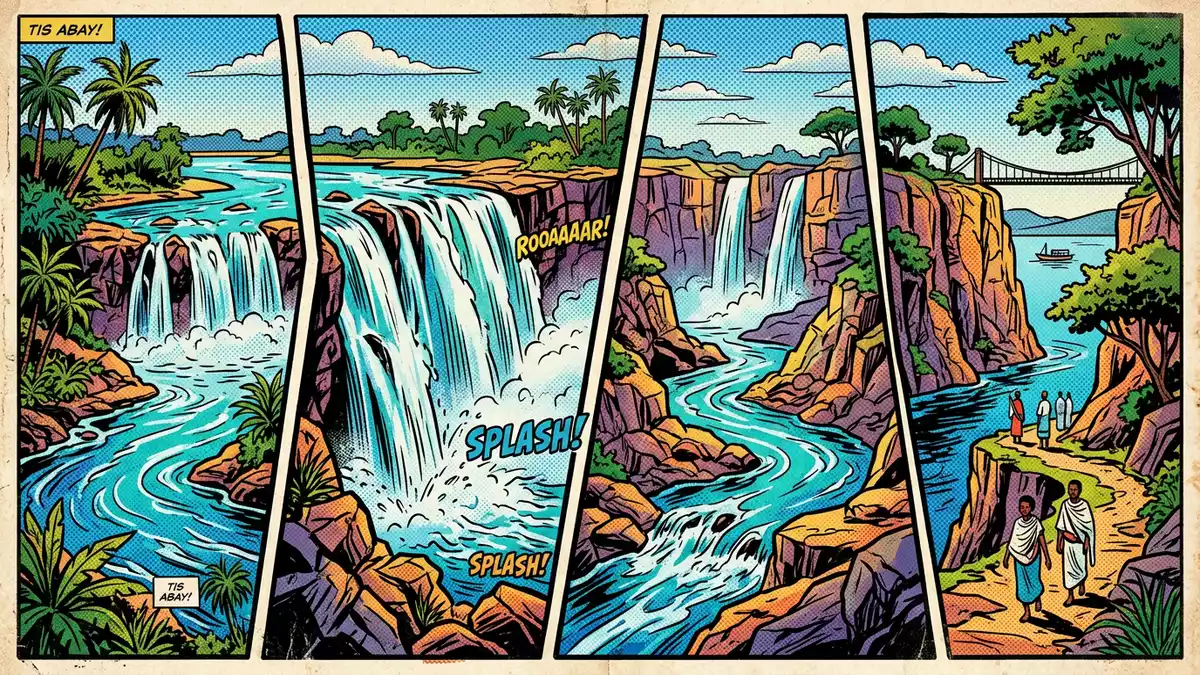
Blue Nile Falls near Bahir Dar in northern Ethiopia is where the upper Blue Nile suddenly drops over a dark basalt escarpment, turning a broad highland river into a concentrated wall of water and spray. Known in Amharic as Tis Abay or Tis Issat, “smoking water”, the waterfall sits on the Blue Nile’s upper course downstream from Lake Tana and has long been a highlight of travel in the Amhara Region.
Where the Blue Nile becomes a waterfall
Blue Nile Falls lies on the Blue Nile river in the Amhara Region of Ethiopia, on the river’s upper course as it leaves Lake Tana and flows south-east through rolling highlands.on the Blue Nile river The site is downstream from Bahir Dar, the regional city on the southern shore of Lake Tana, with the river cutting into a basalt gorge as it forms the falls.downstream from Lake Tana Travellers encounter a landscape of small villages, farm plots and open highland slopes around the river as it approaches the drop.
The fall of the water takes place over a cliff of basalt, a volcanic rock that forms the river’s edge and the walls of the gorge below.over a basalt ledge In periods of higher flow the river divides into multiple streams that spill over this edge and send spray and vapour up into the surrounding air. During drier periods the volume and width reduce, exposing more of the dark rock and revealing separate channels cut by the water. The contrast between calm stretches of river above the escarpment and the turbulent plunge at the falls is one of the defining experiences of the site.
Height, width and the “smoking water” name
Descriptions of Blue Nile Falls consistently give its drop as about 42 m (138 ft), placing it among the larger single-step waterfalls on African rivers.height 42 m Over this height the Blue Nile descends into a gorge whose sides are lined with basalt layers and vegetation adapted to the spray-filled environment.measured drop of the falls When regional rains swell the river the waterfall broadens dramatically, with travel and geographic sources describing a curtain of water that can extend towards 400 m (1,312 ft) in width.up to 400 m wide
The Amharic names associated with the site reflect this scale and atmosphere. Tis Issat, used for the waterfall itself, translates as “water that smokes” or “great smoke”, a reference to the clouds of mist that rise from the base when the river is in full flow.Tis Issat, “water that smokes” Tis Abay is used locally for the nearby town and the broader area around the falls, and the name Blue Nile Falls is widely used in English-language travel writing for the waterfall itself.locally called Tis Abay Together these names tie the site to both the river’s path from Lake Tana and to the visual effect of water and vapour over basalt rock.
River, gorge and surrounding paths
The waterfall sits within a broader river landscape in which the Blue Nile carves a gorge through the highland plateau. Downstream from the falls the river runs between steep basalt walls, with patches of vegetation on ledges and slopes that receive regular spray. upstream stretches near the approach are gentler, bordered by fields and footpaths used by local communities. This mixture of cultivated land, rocky outcrops and riverbank vegetation forms the backdrop to any visit.
Access paths around Blue Nile Falls include routes that cross the river and routes that follow its banks, and one of the best-known features of the area is a bridge traditionally dated to the seventeenth century spanning the Blue Nile a short distance downstream.seventeenth-century bridge Built by Portuguese interests and fortified, this structure is widely described as the first bridge to cross the Blue Nile, and it remains part of the network of paths and crossings used to reach viewpoints.bridge spanning the river Footpaths lead towards vantage points where visitors can see the waterfall frontally or in profile, watch the spray rise from the gorge and observe how the river narrows and drops at the escarpment.
Visiting Blue Nile Falls: what travellers from Western Europe should know
- Blue Nile Falls is reached from Bahir Dar in the Amhara Region of Ethiopia, with road access from the city towards the village areas around Tis Abay near the falls.
- Paths near the falls involve walking over uneven ground and slopes, and some routes use bridges or river crossings; sturdy footwear and readiness for steps and gradients are important.
- The waterfall lies in a rural highland setting, and visits are commonly arranged as day trips from Bahir Dar, combining road travel with walking to viewpoints around the gorge.
- The official language is Amharic and the currency is the Ethiopian birr.
- Entry requirements depend on your nationality; UK travellers can check the FCDO travel advice at gov.uk/foreign-travel-advice, Irish travellers the Department of Foreign Affairs at ireland.ie.
Searching for Blue Nile Falls on social platforms
These links open searches for Blue Nile Falls on each platform.
Frequently asked questions about Blue Nile Falls
Where is Blue Nile Falls located?
Blue Nile Falls is on the Blue Nile river in the Amhara Region of Ethiopia, downstream from Bahir Dar and Lake Tana in the country’s northern highlands.
What should visitors expect on a visit?
Visitors encounter a highland river plunging about 42 m (138 ft) over a basalt cliff into a gorge, with paths, bridges and viewpoints around the waterfall and surrounding landscape.
What makes Blue Nile Falls distinctive?
Blue Nile Falls is distinctive for its combination of basalt geology, the “smoking water” mist that gives Tis Issat its name, and the historic seventeenth-century bridge crossing the Blue Nile nearby.


