
Bob Marley Museum and the house on Hope Road
Published on 09/21/2026 at 23:40 | Editorial responsibility: Rafael Müller, Editor-in-Chief AD HOC NEWS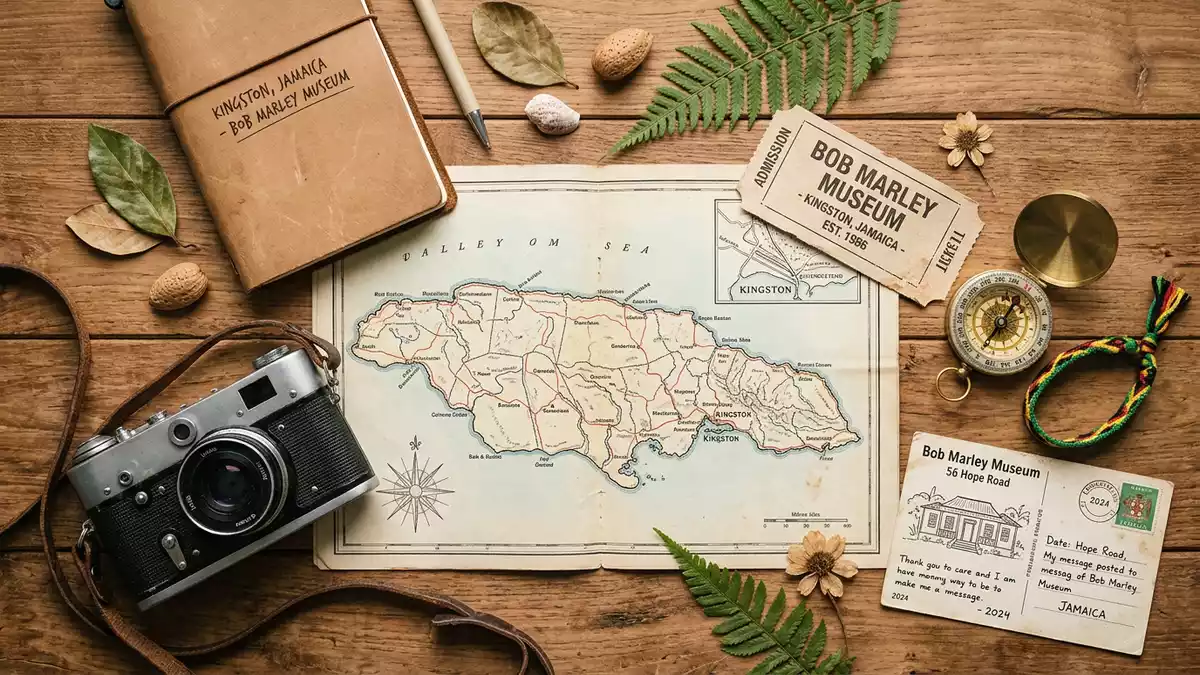
In Kingston’s Hope Road district, Bob Marley Museum occupies Bob Marley’s former home, a late nineteenth-century house where the reggae musician lived during the peak of his career and where that domestic setting has become a preserved music landmark.
The house on Hope Road as Bob Marley’s former home
Bob Marley Museum stands at 56 Hope Road in Kingston, Jamaica’s capital, in the city’s northern corridor where Hope Road runs through residential and institutional properties.56 Hope Road in Kingston The building itself is a two-storey house dating to the nineteenth century, with proportions and detailing characteristic of British-colonial residences of that era in Jamaica’s urban districts.19th-century British-colonial style building
Bob Marley purchased this house in 1975, and it became the base from which he lived and worked until his death in 1981, anchoring many of the years when his international recognition as a reggae artist was consolidating.purchased in 1975 The address retains traces of its original domestic layout, including rooms that functioned as living spaces during Marley’s lifetime, and the yard to the rear and sides of the house, where gatherings and musical exchanges once took place, now forms part of the museum precinct.
From family home to dedicated music museum
Following Bob Marley’s death in 1981, the house on Hope Road was converted into Bob Marley Museum in the mid-1980s, giving the building a second life as a historic house and music museum while preserving its association with the musician’s daily environment.established in May 1986 Rita Marley, the musician’s wife, led the transformation, ensuring that the family home became a place where visitors could encounter objects from his career within the spaces in which he had lived.converted into a museum six years later
Inside the museum, exhibits are arranged through rooms that hold personal items, music-related artefacts and photographs linked to Bob Marley’s life and work. The main museum area displays personal treasures such as instruments and stage clothing, alongside framed images that trace performances and moments in Kingston and abroad.personal treasures and photographic gallery Elsewhere on the property, an indoor theatre with seating for audiences, a photographic gallery space and a record and gift shop are housed within the same compound, continuing the site’s connection with recorded music and visual documentation of reggae culture.
Architecture, setting and atmosphere in Kingston
The architecture of Bob Marley Museum reflects the late nineteenth-century period in which the house was built, with timber and masonry elements adapted to Jamaica’s climate and colonial building practices. Verandas, overhanging roofs and shuttered openings frame views toward Hope Road and the surrounding neighbourhood, while interior spaces retain a domestic scale that distinguishes the museum from purpose-built institutional galleries.19th-century architecture
The museum sits within Kingston 6, a sector of the city where Hope Road carries traffic between crossroads and nearby attractions, including properties such as Devon House and Emancipation Park further along connecting routes.at 56 Hope Road in Kingston Within this urban setting, the compound’s yard, trees and auxiliary structures create a distinct pocket of space around the former home, and the combination of residential architecture, curated interiors and outdoor areas shapes the experience of visiting the museum as both an encounter with Marley’s biography and with Kingston’s built environment.
Visiting Bob Marley Museum: what travellers from Western Europe should know
- Bob Marley Museum is located at 56 Hope Road in Kingston 6, in Jamaica’s capital, reached by road through the city’s northern corridor and accessible from Norman Manley International Airport by taxi or other vehicles.
The address sits along Hope Road, which links to other landmarks and commercial properties in this part of Kingston. - The museum occupies a two-storey nineteenth-century house with interior rooms connected by staircases and corridors, and visitors move through domestic-scale spaces rather than large exhibition halls.
Surfaces include timber and masonry, with changes in level between the yard and the house entered by doorways and steps. - In Kingston, the official language is English and the currency is the Jamaican dollar.
Entry requirements depend on your nationality; UK travellers can check the FCDO travel advice at gov.uk/foreign-travel-advice, Irish travellers the Department of Foreign Affairs at ireland.ie.
Searching for Bob Marley Museum on social platforms
These links open searches for Bob Marley Museum on each platform.
Frequently asked questions about Bob Marley Museum
Where is Bob Marley Museum located?
Bob Marley Museum is in Kingston, Jamaica, at 56 Hope Road in the Kingston 6 area, within the city’s northern corridor.
What can visitors expect inside Bob Marley Museum?
Visitors move through rooms of Bob Marley’s former home, where exhibits display personal items, photographs, music artefacts and related memorabilia within the preserved domestic setting.
What makes Bob Marley Museum distinctive as a music site?
The museum is distinctive as a historic house museum that preserves Bob Marley’s former residence, combining nineteenth-century architecture with curated displays dedicated to his life and reggae music.


