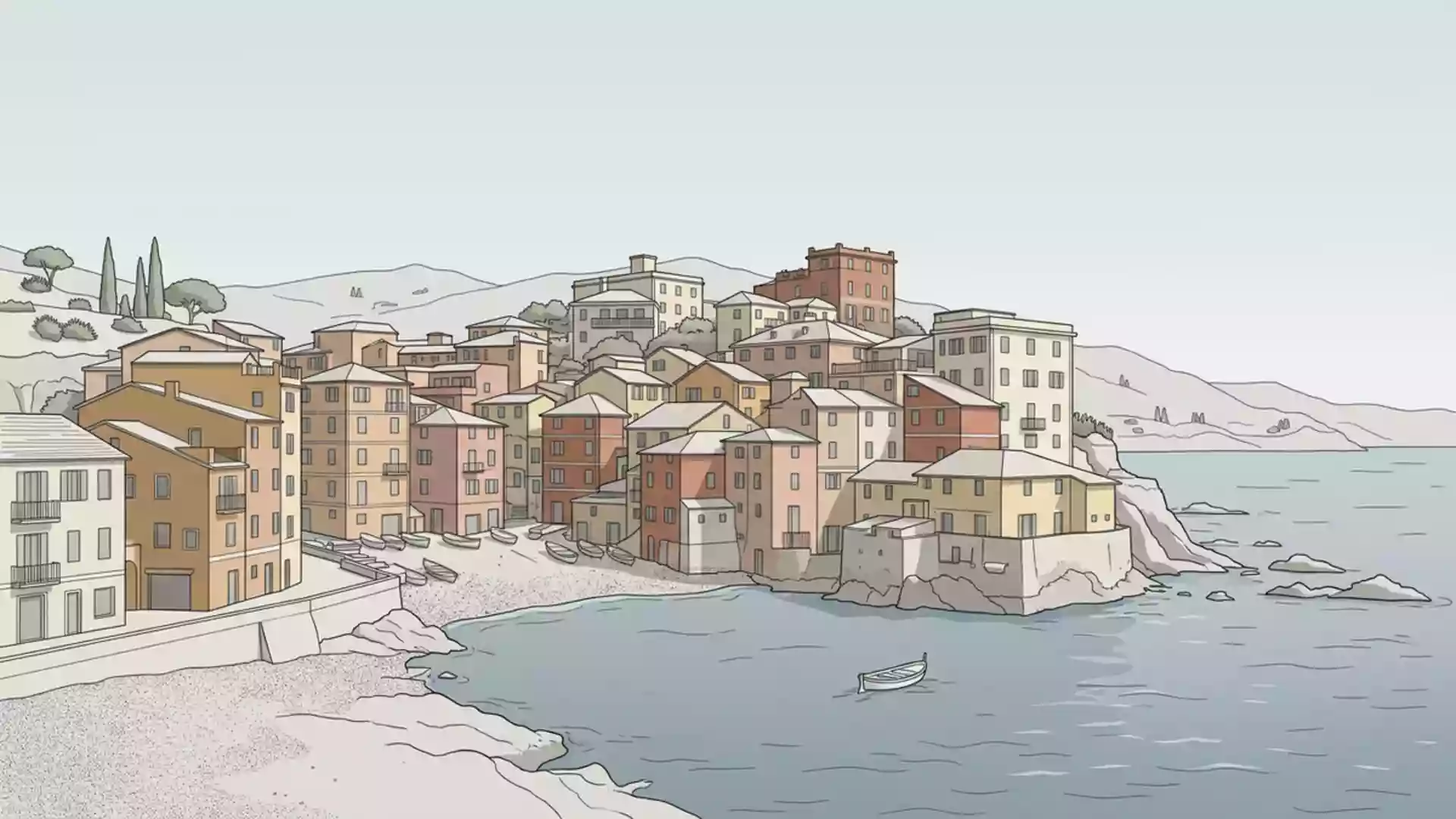
Boccadasse, a Ligurian fishing cove within the city of Genua
Published on 08/14/2026 at 14:59 | Editorial responsibility: Rafael Müller, Editor-in-Chief AD HOC NEWS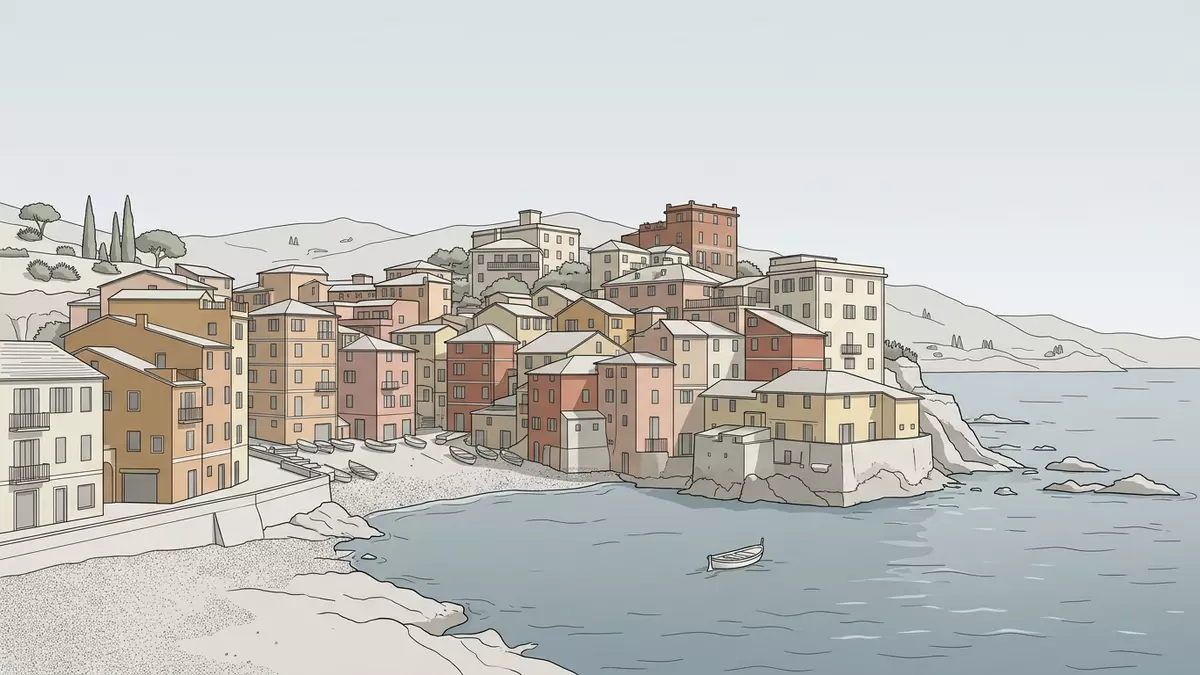
Boccadasse is a compact fishing cove on the Ligurian coast of Genua, where tall pastel houses and working boats cluster around a narrow shingle beach. Set within the Albaro district of the city, the village retains the scale and layout of an old mariners’ settlement while being surrounded by urban streets and the long seafront promenade of Corso Italia.
A mariners’ village absorbed into Genua
Boccadasse forms part of Genua’s eastern urban area and is conventionally bounded by Via Felice Cavallotti to the west, Via Caprera to the north and the headland of Capo Santa Chiara to the east, with the coastline closing the outline to the south.These boundary streets and the coastal edge mark where the dense city fabric narrows into the small harbour basin and beach. Administratively, the quarter belongs to Municipio VIII – Medio Levante, which also includes Albaro, Foce and San Martino.This status within the wider municipality of Genoa reflects how an earlier seaside hamlet became embedded within the modern city.
The name Boccadasse refers to an old mariners’ village that pre-dates the large twentieth-century works along Genua’s waterfront and that kept its compact arrangement of houses, lanes and harbour. The quarter lies between the promenade of Corso Italia and the rocky spur of Capo Santa Chiara, placing the small cove at the end of the city’s principal seafront walk.The relationship between Boccadasse and Corso Italia gives the village a double character, both neighbourhood and destination for an outing along the shore.
Pastel houses, church and shingle cove
At the centre of Boccadasse lies a small pebble cove where fishing boats are hauled onto the shore and where tall, narrow houses stand directly over the water. The beach itself is a short arc of shingle enclosed by the facades and the harbour wall, giving the impression of a protected basin within the wider Ligurian Sea.Descriptions of the beach as a pebble cove emphasise the contained nature of the shoreline here compared with longer stretches elsewhere along the coast.
The houses around the cove are painted in soft, varied colours and rise several storeys above the alleys and steps between them, creating a vertical backdrop to the small open space of the beach. Among these buildings stands the church of Sant’Antonio, placed above the harbour and visible from the shore, which gives a clear point of orientation within the village fabric.Accounts of Boccadasse’s church and little port underline how religious and maritime structures sit alongside each other in a small area. From the cove, paths and stairways lead uphill towards Cape Santa Chiara, where the coastal rock rises into a viewpoint over the sea and the city.
Landscape connections along the Ligurian coast
Boccadasse belongs to the Ligurian coastal landscape known as the Riviera di Levante, the stretch of shore extending eastwards from the centre of Genua. The bay lies a short distance east of the historic core, between the residential areas of Albaro and Sturla, and forms one of several small mariners’ villages dotted along this part of the coastline.Travel guides place the bay east of Genoa’s centre and emphasise its position between these named districts. Vernazzola, another small harbour settlement, continues beyond Capo Santa Chiara to the east and shares a related character of tight buildings and sea-facing lanes.The mention of Vernazzola in relation to Boccadasse shows how these coastal quarters form a sequence along the urban shore.
Above the sea, Corso Italia runs as a broad promenade that links Foce to Albaro and ends beside Boccadasse, providing a direct route along the water from the inner city to the village. The promenade itself dates from the early twentieth century, when it was laid out as a seafront walk and road connecting the districts along Genua’s eastern shore.Its early twentieth-century construction as a promenade created the continuous urban frontage that now frames the entrance to Boccadasse. The contrast between the wide, linear space of Corso Italia and the enclosed, irregular basin of the cove is one of the clearest spatial experiences at this part of the city.
Visiting Boccadasse: what travellers from Western Europe should know
- Boccadasse lies on the eastern side of Genua, within the Albaro district, at the end of the Corso Italia seafront promenade; buses and urban roads link it with the historic centre and Genova Brignole station.
- The village centres on a small pebble beach and harbour basin; reaching the shore involves short slopes and stairways between the houses, and paths continue uphill towards Capo Santa Chiara.
- To the east of Boccadasse, the coastal path leads towards Vernazzola and the Sturla area, while inland streets connect with the broader residential quarters of Albaro.
- The official language is Italian and the currency is the euro.
Searching for Boccadasse on social platforms
These links open searches for Boccadasse on each platform.
Frequently asked questions about Boccadasse
Where is Boccadasse within Genua?
Boccadasse is on the eastern side of Genua, within the Albaro district, between Corso Italia and Capo Santa Chiara and a short distance from the historic centre.
What should visitors expect when they arrive in Boccadasse?
Visitors find a small pebble cove surrounded by tall pastel houses, working boats on the shingle, narrow lanes and the church of Sant’Antonio overlooking the harbour.
What makes Boccadasse distinctive among Genua’s coastal quarters?
Boccadasse combines the compact form of an old mariners’ village with its setting inside the modern city, at the point where the wide Corso Italia promenade narrows into a sheltered fishing cove.