

Boudhanath, the great mandala of Kathmandu
Published on 08/15/2026 at 14:19 | Editorial responsibility: Rafael Müller, Editor-in-Chief AD HOC NEWS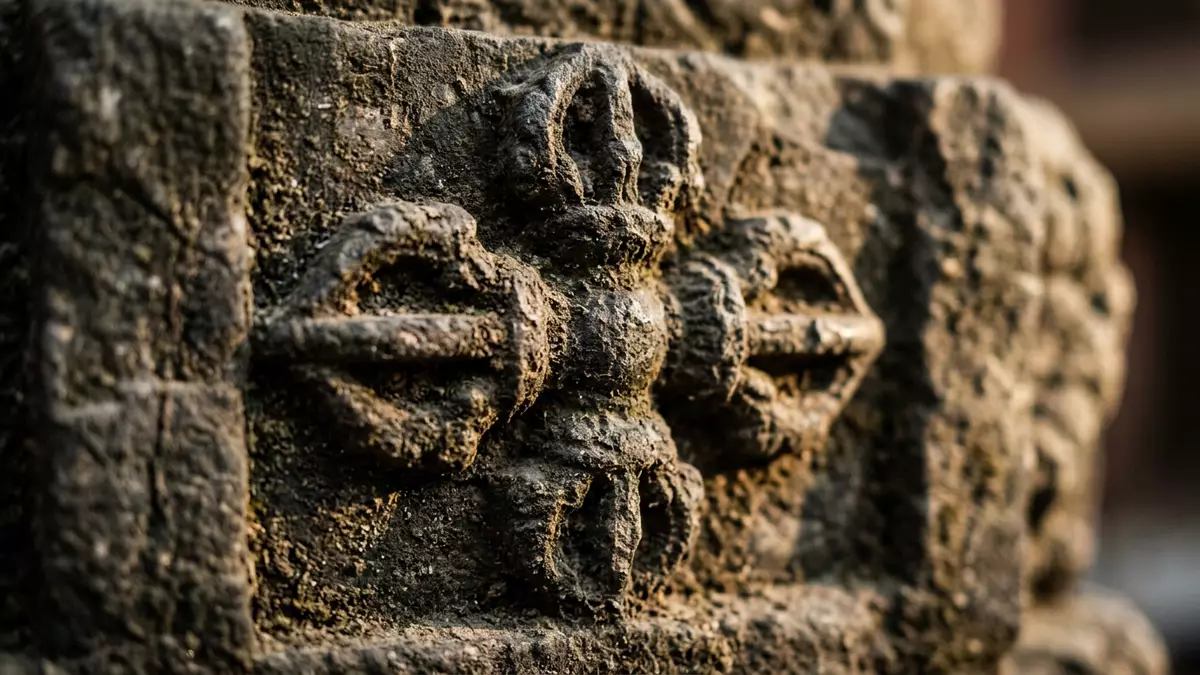
Boudhanath in Kathmandu is a vast Buddhist stupa whose white dome and tiered platforms form a geometric mandala set amid the city’s eastern suburbs. Rising to around 36 m (118 ft), it is one of the largest stupas in Nepal and has been associated with the Licchavi period in the fifth to sixth century, with the standing structure in its present form dating to about the fourteenth century.The stupa measures an impressive 36 metres Boudhanath is a major centre of Tibetan Buddhism and forms part of the Kathmandu Valley ensemble inscribed on the UNESCO World Heritage List in 1979.Kathmandu Valley was inscribed on the UNESCO World Heritage List in 1979
The great white mandala
The core of Boudhanath is an immense white dome set on three tiered platforms laid out as a mandala, the sacred diagram that structures the whole composition.The entire stupa is built according to a mandala The platforms form a multi-cornered square base, with small subsidiary stupas on the lowest level and a ring of outer walls punctuated by niches and prayer wheels. At the foot of the main dome, 108 niches contain images of Avalokiteshvara, the bodhisattva of compassion, matching a number that is auspicious in Tibetan tradition.At its base there are 108 niches with bas-reliefs of Avalokitesvara
The dome itself has been compared with an inverted bowl, its surface marked with lotus petals that emphasise its smooth curvature.The dome is about 120ft in diameter, topped with a harmika and spire Above it rises the harmika, a square block painted on each side with a pair of Buddha eyes that watch over the surrounding neighbourhood, a characteristic feature of Nepalese stupas.At the apex of the bowl there is a harmika painted with Buddha’s eyes From this square base a thirteen-tiered spire climbs towards a gilded canopy and finial, its stacked platforms representing the stages on the path to enlightenment.
Legends, Licchavi patronage and later repairs
Boudhanath carries a web of foundation stories alongside historical references, many of them pointing back to the Licchavi era in Nepal. Chronicles and modern summaries credit the original construction to a Licchavi ruler such as King Mandev in the fifth century or King Shivadeva I around 590–604, while Newar accounts mention a woman called Jadzima, a poultry keeper, as a key figure in its founding.The stupa was built by a mother, Jadzima, who looked after her chickensThe Great Stupa was built in the 5th century by a Lichhavi King, Mandev Modern architectural guides place the present standing structure in the fourteenth century, with earlier stupas on the site linked to the Licchavi period.The standing structure is dated to about the 14th century
Over the centuries the stupa has been repaired and renewed, including documented works under King Shivadeva I and the seventeenth-century ruler Pratapa Malla.Repairs were carried out by King Shivadeva I and King Pratapa Malla Legends link its early history to droughts and the gathering of dew, with older names such as Khasti Mahachaitya reflecting this association.Originally named Khasti Mahachaitya While these narratives vary in detail, they place Boudhanath firmly within the fabric of Kathmandu’s early Buddhist landscape and the wider story of Buddhism moving along Himalayan trade routes.
A living Tibetan Buddhist quarter
Beyond its geometry, Boudhanath is a lived religious space surrounded by monasteries, shops and homes associated with Tibetan Buddhism. The area around the stupa became a major focus for Tibetan culture in Kathmandu, particularly after large numbers of refugees settled near it in the second half of the twentieth century.It is the center of Tibetan culture in KathmanduThousands of Tibetan refugees settled in the Boudha area after 1959 Around the circular base, outer walls carry 147 niches set with 735 prayer wheels, so that circuits of the stupa combine walking with the rhythmic turning of metal drums engraved with mantras.The outermost walls contain 147 niches and 735 prayer wheels
Within sight of the dome stand monasteries aligned with different Tibetan Buddhist traditions, their façades and halls echoing the stupa’s colours and motifs. The spatial relationship between the central monument and its surrounding buildings turns the neighbourhood into a kind of three-dimensional mandala, with the stupa as the axis and the monasteries as orbital points in a religious landscape. For travellers, the visible layering of Nepali and Tibetan elements — the Buddha eyes on the harmika, the prayer flags stretching from the spire, the Tibetan script on shopfronts and temple walls — makes Boudhanath a place where Buddhist symbolism and urban life meet in a single, compact ensemble.
Visiting Boudhanath: what travellers from Western Europe should know
- Boudhanath stands in the eastern part of Kathmandu, a short distance north of the main road to Tribhuvan International Airport, and is reached by the city’s road network and local taxis.
- The stupa complex is set on a broad paved plinth with steps between levels; walking circuits on the surrounding lanes involve gentle gradients rather than steep climbs.
- The neighbourhood around the stupa is densely built, with monasteries, shops and small courtyards clustered close together, so navigation relies on landmarks such as the dome and the main gateways.
- The official language is Nepali and the currency is the Nepalese rupee.
- Entry requirements depend on your nationality; UK travellers can check the FCDO travel advice at gov.uk/foreign-travel-advice, Irish travellers the Department of Foreign Affairs at ireland.ie.
Searching for Boudhanath on social platforms
These links open searches for Boudhanath on each platform.Frequently asked questions about Boudhanath
Where is Boudhanath located?
Boudhanath is a Buddhist stupa in the eastern part of Kathmandu, Nepal, on a historic route that once linked the city with trade and pilgrimage paths towards Tibet.It lies on an ancient trade road from Tibet to Nepal
What should travellers expect when visiting?
Travellers encounter a large white stupa on tiered platforms, encircled by lanes and outer walls with prayer wheels, and a surrounding quarter of Tibetan Buddhist monasteries, shops and cafés.
What makes Boudhanath distinctive among Buddhist sites?
Boudhanath stands out for its combination of monumental scale, mandala-based architecture with a 36 m (118 ft) dome, and its role as a central focus of Tibetan Buddhist life within Kathmandu’s urban fabric.The stupa is one of the largest in South Asia


