Brandenburger Tor and its limestone presence in Berlin
Published on 08/11/2026 at 15:19 | Editorial responsibility: Rafael Müller, Editor-in-Chief AD HOC NEWS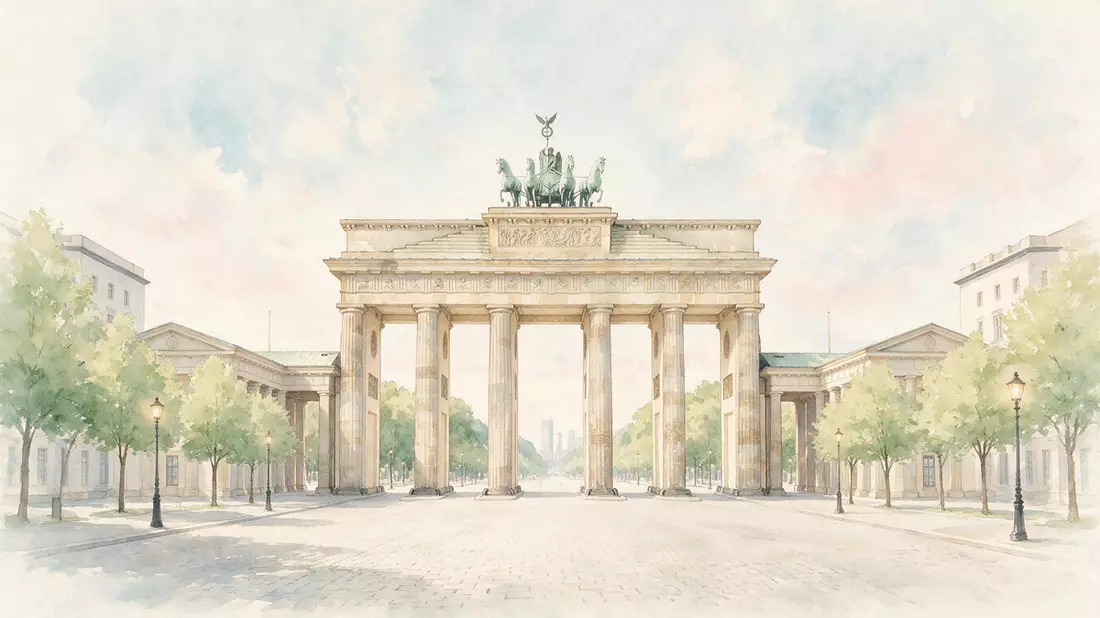
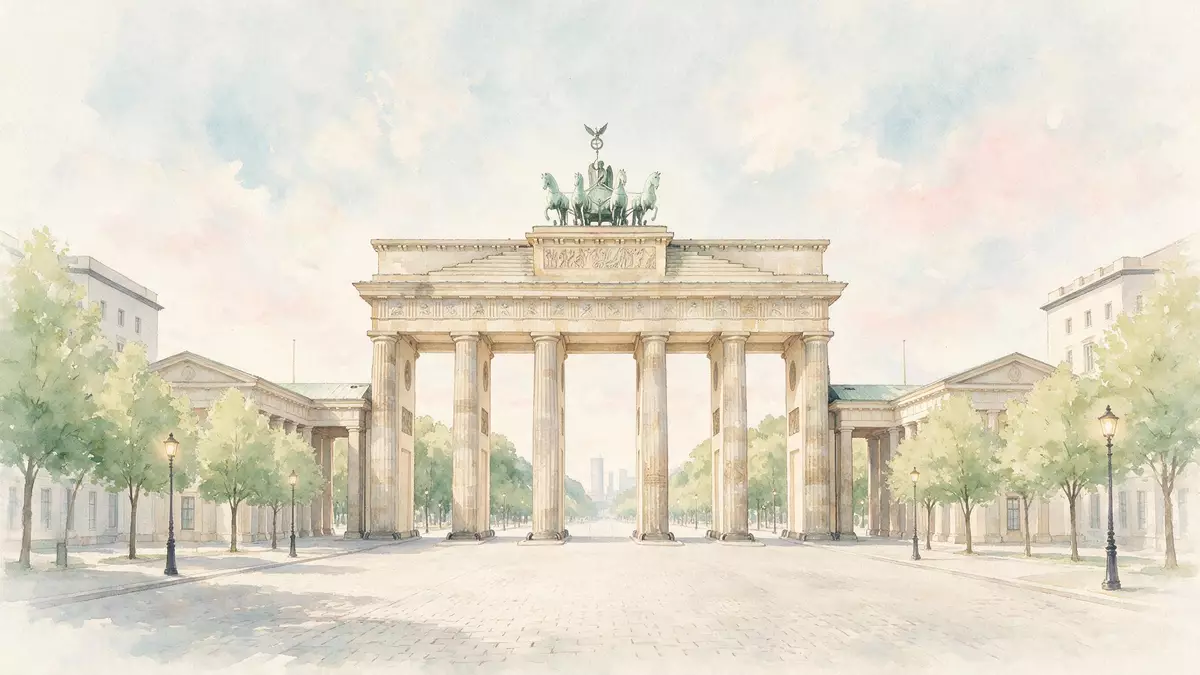
Brandenburger Tor in Berlin is a neoclassical city gate with a calm, monumental front and a clear royal pedigree. It was commissioned by Friedrich Wilhelm II of Prussia and completed in 1791, and its sandstone columns and paired wings still define Pariser Platz.
The Prussian gate on Pariser Platz
The structure rises as a triumphal arch with Doric columns and a central passage flanked by smaller side openings. The proportions are severe and balanced, with a classical vocabulary that places it firmly in the late eighteenth century.
Its most familiar feature is the quadriga above the attic, a four-horse chariot driven by Victoria. That sculpture links the gate to Prussian state imagery, and its position gives the whole monument a strong vertical finish.
From city boundary to ceremonial backdrop
Brandenburger Tor was first part of the customs and entrance system of Berlin. Its present use is ceremonial and civic, with the gate acting as a marker for public gatherings and state occasions.
The surrounding square is open and formal, which leaves the monument readable from several angles. The stone surfaces, repeated columns and sculptural top create a composition that can be taken in from close range or from across the plaza.
Classical detail and later history
The gate follows the language of classical antiquity more than the military architecture often associated with frontier structures. That choice gives it a measured appearance: fluted shafts, an entablature, an attic and the sculptural crown above.
Its later history is tied to Berlin itself, including periods of division and reunion that made the monument a political symbol as well as an architectural one. The gate remains readable as a piece of Prussian neoclassicism and as a meeting point in the city.
Visiting Brandenburger Tor: what travellers from Western Europe should know
- Brandenburger Tor stands in central Berlin, near the western end of Unter den Linden and close to the Tiergarten.
- Admission arrangements and opening hours are set by the site's operator and change with the season; the official website is the only binding source.
- The best atmosphere comes in the early morning or after dusk, when the sandstone and sculpture sit against the open square.
- The area is flat, paved and easy to reach on foot, though the plaza can be busy and exposed to wind.
- Language is not a barrier for most visitors, and card payment is widely accepted in central Berlin, though some smaller vendors may prefer cash.
- Entry requirements depend on your nationality. UK travellers should check the FCDO travel advice at gov.uk/foreign-travel-advice; Irish travellers the Department of Foreign Affairs at ireland.ie; EU and EEA citizens their own national foreign ministry.
Searching for Brandenburger Tor on social platforms
These links open searches for Brandenburger Tor on each platform.
Frequently asked questions about Brandenburger Tor
Where is Brandenburger Tor?
It stands in central Berlin, at Pariser Platz near the route of Unter den Linden. The setting places it between the city’s museum and government quarters.
What should visitors expect?
Expect a large open square, a stone monument and a good view of the quadriga above the gate. The area works well for a short stop, a walk through the centre, or a longer look at the architecture.
What makes it distinctive?
Its mix of strict neoclassical design, Prussian royal association and later political symbolism gives it a layered presence. The gate is immediately legible as architecture, but it also works as a civic landmark.