
Bryggen in Bergen, where timber and trade remain visible
Published on 09/18/2026 at 14:34 | Editorial responsibility: Rafael Müller, Editor-in-Chief AD HOC NEWS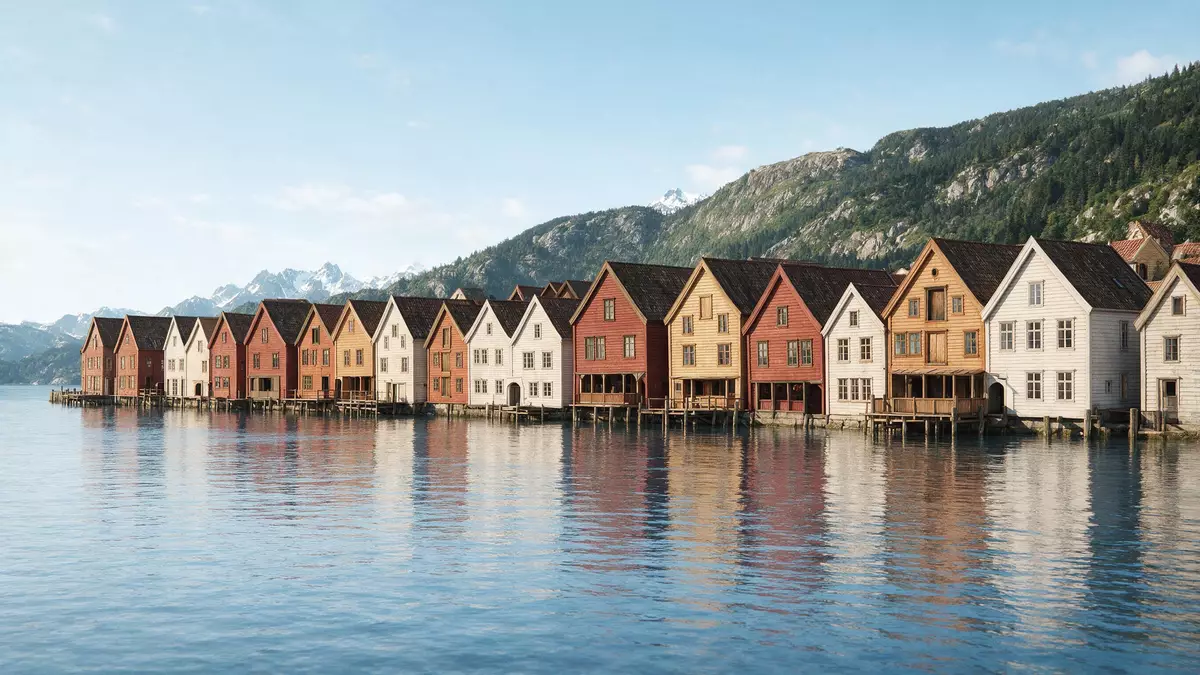
Bryggen in Bergen is the old wharf along Vågen, where timber buildings stand in a tight line beside the harbour. Its survival as a Hanseatic trading quarter gives the place its force, and its form remains clear at street level and from the water. It was inscribed on the UNESCO World Heritage List in 1979.
Bryggen’s timber wharf and Hanseatic setting
Bryggen is the eastern side of Bergen’s old harbour front, with narrow wooden ranges and long, shallow fronts facing the water. The quarter reflects the Hanseatic trading world that shaped Bergen from the fourteenth century to the mid-sixteenth century.
The surviving buildings sit within a historic urban strip rather than a single monument. The UNESCO World Heritage listing identifies Bryggen as the old wharf of Bergen and records its inscription in 1979.
Wood, fire and rebuilding at Bryggen
The wharf is known for timber construction, with rows of wooden buildings forming the familiar profile seen today. That appearance belongs to a long sequence of damage and rebuilding, and the present layout preserves the memory of an older mercantile quarter.
The quarter’s history is tied to the Hanseatic League and to Bergen’s role as a North European port city. A municipal heritage page describes Bryggen as part of the World Heritage Site inscribed in 1979, while the UNESCO page places it within the Hanseatic trading empire of the fourteenth to mid-sixteenth centuries.
Bryggen as a preserved urban quarter
Bryggen is more than a row of photogenic façades. Behind the harbour front, the quarter keeps the sense of a working merchant district, with a compact plan and buildings that line up close to one another.
The World Heritage record also links Bryggen to the broader history of Bergen as a centre of trade by the twelfth century. The wharf’s value lies in that urban continuity: a wooden commercial district still legible as a historic waterfront ensemble.
Visiting Bryggen: what travellers from Western Europe should know
- Bryggen stands on the eastern side of Vågen in Bergen, close to the inner harbour. It is reached on foot from the city centre and by local transport into the waterfront area.
- The quarter is level in the main public spaces, with narrow passages between timber ranges and uneven paving in places. The buildings sit close together, so the scale feels compact.
- The official language is Norwegian and the currency is the Norwegian krone.
- Entry requirements depend on your nationality; UK travellers can check the FCDO travel advice at gov.uk/foreign-travel-advice, Irish travellers the Department of Foreign Affairs at ireland.ie.
Searching for Bryggen on social platforms
These links open searches for Bryggen on each platform.
Frequently asked questions about Bryggen
Where is Bryggen?
Bryggen is on the harbour front in Bergen, on the west coast of Norway. It runs along the eastern side of Vågen, facing the inner water.
What does a visit feel like?
The place is a compact waterfront quarter of timber buildings, narrow gaps and old mercantile fronts. The main impression comes from the density of the wooden ranges and the relation between street and harbour.
What makes Bryggen distinctive?
Bryggen keeps the form of a Hanseatic trading district and carries UNESCO World Heritage status from 1979. Its significance lies in the surviving timber urban fabric and the history attached to Bergen’s port.


