
Budai Var, the royal palace crowning Castle Hill in Budapest
Published on 09/18/2026 at 22:59 | Editorial responsibility: Rafael Müller, Editor-in-Chief AD HOC NEWS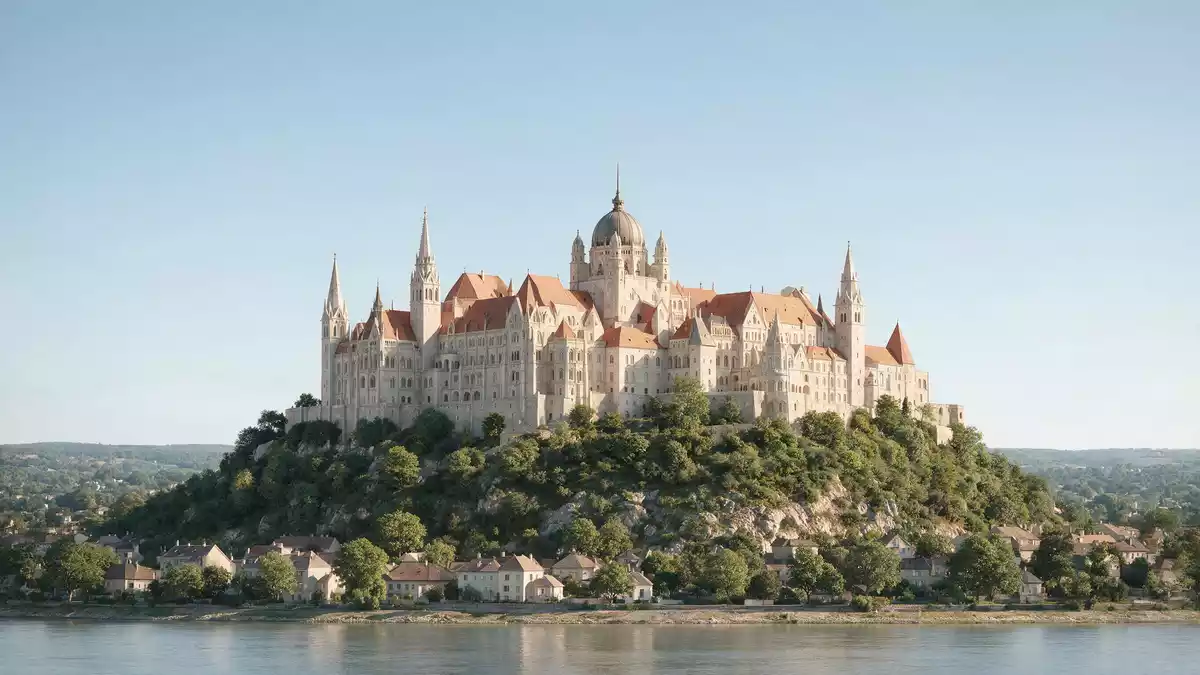
Budai Var is the historic royal palace and castle complex on Castle Hill in Budapest, occupying the southern end of the ridge above the Danube and forming a continuous ensemble of façades, courtyards and streets linked to Hungary’s royal past.historic royal palace and castle complex The first fortress on this height dates to the thirteenth century, when King Béla IV responded to the Mongol invasion by ordering stone castles across the kingdom and establishing a royal stronghold in Buda.King Béla IV In 1987 the Castle Quarter, together with the banks of the Danube and Andrássy Avenue, was inscribed on the UNESCO World Heritage List as part of the group “Budapest, including the Banks of the Danube, the Buda Castle Quarter and Andrássy Avenue”.UNESCO World Heritage List
Castle Hill and the shape of Budai Var
Budai Var stands on Castle Hill in Budapest’s District I, forming the southern crown of the long ridge on the Buda side of the Danube.Castle Hill in Budapest’s District I The palace fronts line the edge of the hill above the river, with wings and courtyards stepping back towards the interior of the plateau.
The complex takes a largely Baroque and Neo-Baroque form, reflecting eighteenth-century rebuilding over earlier medieval and Renaissance structures and later reconstructions after heavy damage in the Second World War.Baroque and Neo-Baroque form Broad terraces, monumental staircases and long palace ranges define the silhouette, while the surrounding Castle Quarter gathers houses, public buildings and churches from the seventeenth and eighteenth centuries into a compact urban district.seventeenth and eighteenth centuries
From medieval fortress to royal palace and museums
The origins of Budai Var lie in the thirteenth century fortress created after the Mongol invasion of 1241–1242, when stone walls and a royal house were raised on this height to consolidate the kingdom’s defence.stone walls and a royal house Over the fourteenth and fifteenth centuries the complex expanded into a major royal residence, with Gothic and later Renaissance elements associated with rulers such as Sigismund of Luxembourg and Matthias Corvinus.Sigismund of Luxembourg and Matthias Corvinus
After the Ottoman conquest of Buda in the sixteenth century and the liberation of the city in 1686, Budai Var underwent extensive Baroque rebuilding under Habsburg rule in the eighteenth century, creating much of the palace fabric visible along the hill today.Baroque rebuilding under Habsburg rule Heavy destruction during the Siege of Budapest in 1944–1945 led to further reconstruction in the later twentieth century, and the complex now houses national cultural institutions including the Hungarian National Gallery, the Budapest History Museum and the National Széchenyi Library inside the palace ranges.Hungarian National Gallery
Budai Var within Budapest’s World Heritage landscape
Budai Var forms part of a broader World Heritage landscape that links the Castle Quarter with the banks of the Danube and Andrássy Avenue, recognised together for their concentration of historical architecture and urban design.Budai Var forms part of a broader World Heritage landscape From the palace terraces the riverfront of Pest and the bridges crossing the Danube are visible, tying the castle visually to the wider fabric of Budapest.
Within the Castle Quarter, monuments from the medieval period stand alongside houses and public buildings from the seventeenth and eighteenth centuries, together shaping a quarter where royal, ecclesiastical and civic architecture share the hill.monuments from the medieval period Churches such as the Matthias Church, historically associated with coronations, rise nearby, and museums devoted to Budapest’s history and Hungary’s military past occupy several buildings within walking distance of the palace courtyards.Matthias Church
Visiting Budai Var: what travellers from Western Europe should know
- Budai Var stands on Castle Hill on the Buda side of the Danube in District I of Budapest and is reached on foot, by public transport or by road from the riverfront.
- The approaches to the palace and quarter involve uphill streets, terraces and flights of steps on the slope and within the courtyards.
- Budapest lies in Hungary; the official language is Hungarian and the currency is the forint.
- The Castle Quarter lies close to river crossings such as the Széchenyi Chain Bridge, placing Budai Var within easy reach of central Pest.
Searching for Budai Var on social platforms
These links open searches for Budai Var on each platform.Frequently asked questions about Budai Var
Where is Budai Var located within Budapest?
Budai Var occupies the southern end of Castle Hill in District I on the Buda side of the Danube, above the river and opposite central Pest.
What can visitors expect when exploring Budai Var?
Visitors encounter palace façades, courtyards, terraces and museums housed within the former royal complex, along with historic streets and churches in the surrounding Castle Quarter.
What makes Budai Var distinctive among Budapest’s landmarks?
Budai Var combines a royal palace, multiple architectural periods from the thirteenth century onwards and national cultural institutions within a World Heritage-listed hilltop quarter.


