
Carthage and the layered ruins beside the Gulf of Tunis
Published on 09/24/2026 at 05:28 | Editorial responsibility: Rafael Müller, Editor-in-Chief AD HOC NEWS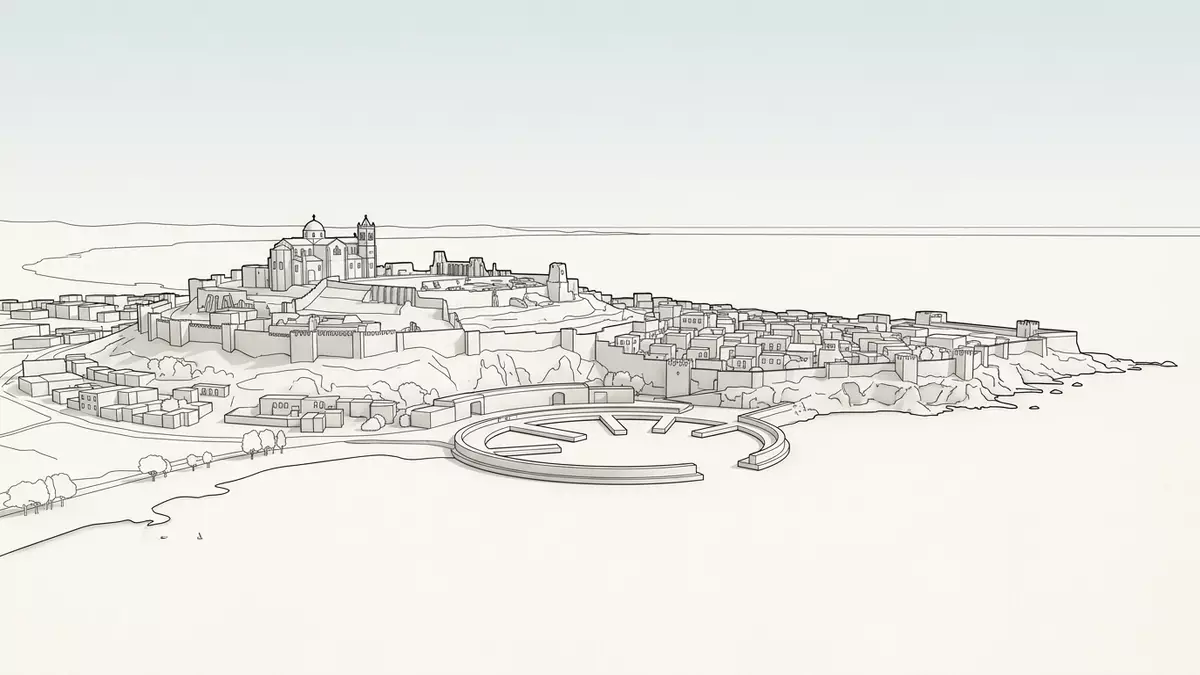
Carthage spreads across the coast beside the Gulf of Tunis, where Punic, Roman and Byzantine remains share the same archaeological landscape. Founded by Phoenicians in the ninth century BC, the city was destroyed by Rome in 146 BC and rebuilt as a Roman metropolis.
Carthage begins with the Punic city
The earliest Carthage belonged to the Phoenician world of the eastern Mediterranean. Its position on the Gulf of Tunis connected the settlement with maritime routes, while its harbours supported trade across North Africa and the wider Mediterranean.
From the sixth century BC, Carthage developed into the centre of Punic civilisation in Africa. The city’s influence reached across coastal territories, and its history became closely linked with the rivalry between Carthage and Rome. The name Hannibal belongs to this period, recalling the Carthaginian general whose campaigns carried the conflict into Italy.
Ports, hills and the remains of Roman Carthage
The archaeological site is dispersed through the modern city of Carthage. Its remains include the Punic ports, the hill of Byrsa, the Tophet, Roman theatres, an amphitheatre and the Antonine Baths.
The Archaeological Site of Carthage entered the UNESCO World Heritage List in 1979. The designation covers a cultural landscape rather than a single surviving monument, so separate ruins reveal different periods and functions.
From Punic power to Roman Africa
Rome destroyed Carthage in 146 BC after the Third Punic War. A Roman city was established on the ruins, and Carthage became the capital of the Roman province of Africa.
The Roman layer is visible in monumental baths, theatres, roads, cisterns and civic buildings. The Antonine Baths occupied the shoreline, while Byrsa Hill preserves the setting of the ancient acropolis and later Christian remains. The coastal ancient city is also part of the residential suburb of Tunis.
Carthage did not end with Rome. Vandal and Byzantine periods added further layers, and the site’s surviving fragments combine Punic foundations, Roman construction and Christian architecture. The result is a scattered city read through materials, plans and changes of use.
Visiting Carthage: what travellers from Western Europe should know
- Carthage lies north-east of central Tunis on the Gulf of Tunis. The TGM railway serves Carthage through stations including Carthage Hannibal and Carthage Dermech.
- The archaeological remains are spread across several parts of the modern city. A visit involves walking between separate sites, including Byrsa Hill, the Punic ports and the Antonine Baths.
- The shoreline sites and elevated Byrsa area present different ground levels. Stone surfaces, exposed foundations and uneven archaeological remains form part of the setting.
- The official language is Arabic and the currency is the Tunisian dinar.
- Entry requirements depend on your nationality; UK travellers can check the FCDO travel advice at gov.uk/foreign-travel-advice, Irish travellers the Department of Foreign Affairs at ireland.ie.
Searching for Carthage on social platforms
These links open searches for Carthage on each platform.
Frequently asked questions about Carthage
Where is Carthage?
Carthage is on the Gulf of Tunis, north-east of central Tunis in Tunisia. The archaeological remains lie within the modern city of Carthage.
What can visitors see at Carthage?
The site includes Punic harbours, Byrsa Hill, the Tophet, Roman theatres, an amphitheatre, cisterns and the Antonine Baths.
What makes Carthage distinctive?
Carthage preserves several historical layers in one coastal archaeological landscape. Phoenician, Punic, Roman, Byzantine and Christian remains appear across the site.


