
Casa Batllo, Gaudi’s living façade on Passeig de Gràcia
Published on 08/29/2026 at 23:18 | Editorial responsibility: Rafael Müller, Editor-in-Chief AD HOC NEWS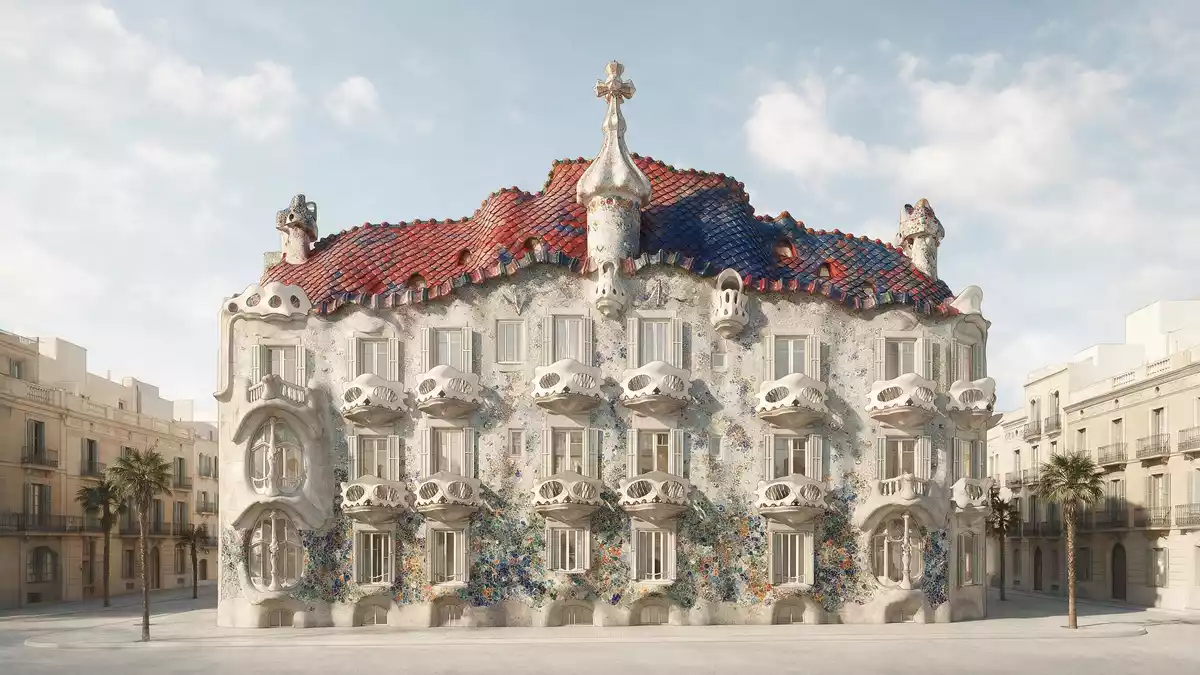
Casa Batllo in Barcelona is a townhouse transformed by Antoni Gaudi into a flowing façade of colour and sculpted surfaces along Passeig de Gràcia in the Eixample district. Built in the late nineteenth century and reimagined between 1904 and 1906, it stands today as one of Gaudi’s key works and forms part of the UNESCO-listed ensemble of his architecture in Catalonia.
A townhouse turned into a sculpted façade
Casa Batllo occupies number 43 Passeig de Gràcia, on a stretch of the avenue known locally as the Block of Discord for its sequence of striking modernist buildings by different architects.number 43 Passeig de Gràcia The original building on this plot was completed in 1877 to a relatively conventional design by Emili Sala Cortés, one of Gaudi’s teachers, before the later remodelling made the house visually stand out from its neighbours.completed in 1877
When textile industrialist Josep Batlló i Casanovas acquired the property in 1903, he commissioned Gaudi to undertake a complete renovation rather than demolishing and rebuilding, giving the architect scope to rethink the façade, interiors and roofline.commissioned Gaudi in 1903 Between 1904 and 1906, the townhouse gained its undulating street front, expressive balconies and sculpted attic and roof, turning an earlier, austere structure into one of the clearest statements of Catalan modernism on the avenue.1904–1906 renovation
Gaudi’s mature modernism in stone, ceramics and glass
The façade of Casa Batllo is a study in surface and colour, with a masonry base, projecting balconies and upper levels clad in a mosaic of ceramic and glass pieces that catch the light along Passeig de Gràcia.a marvel of ornamental design The way the floors are expressed gives the impression of a continuous, rippling skin across the front of the house, contrasting with the more rectilinear neighbours on the Block of Discord.
Inside, Gaudi’s reworking extended from the entrance hall to the main floor and roof structures, using curved timber elements, stained glass and crafted ironwork to maintain a sense of organic geometry through the staircases and principal rooms.organic geometry and urban transformation The house has become one of the best-known examples of his mature period, showing how a traditional urban plot could be turned into an experiment in light, colour and free-form structure while remaining a functioning residence.
From family home to protected heritage
Casa Batllo remained in the hands of the Batlló family until the mid-twentieth century, after which it passed through several owners before the Bernat family, known for founding the Chupa Chups confectionery brand, undertook full restoration works in the 1990s.Batlló and Bernat family ownership In 1969 it was declared a Historic-Artistic Monument within Catalonia, recognising its architectural and artistic importance for the city and the wider region.Historic-Artistic Monument designation
Gaudi’s townhouse gained international recognition when it was added in 2005 to the UNESCO World Heritage List as part of the group “Works of Antoni Gaudí”, alongside Park Güell, Casa Milà and other key buildings.added in 2005 to the UNESCO World Heritage List UNESCO highlighted Casa Batllo as an outstanding contribution to the development of architecture and construction techniques at the turn of the twentieth century, emphasising its role as a complete rehabilitation of an existing city building rather than an entirely new structure.
Visiting Casa Batllo: what travellers from Western Europe should know
- Casa Batllo stands on Passeig de Gràcia in the Eixample district of Barcelona, a central avenue that is easily reached by city metro and suburban rail services serving the surrounding streets.
- The building is arranged over several floors, with staircases and internal routes that include narrow flights of steps and changes in level, so access across the house involves walking and climbing within a historic interior.
- Nearby, other modernist townhouses such as Casa Amatller and Casa Lleó Morera line the same stretch of Passeig de Gràcia, making this part of the avenue a concentrated showcase of early twentieth-century architecture.
- The official language is Spanish and Catalan and the currency is the euro.
Searching for Casa Batllo on social platforms
These links open searches for Casa Batllo on each platform.
Frequently asked questions about Casa Batllo
Where is Casa Batllo in Barcelona?
Casa Batllo stands at number 43 Passeig de Gràcia in the Eixample district of Barcelona, on the stretch of the avenue known as the Block of Discord.
What should a visitor expect inside Casa Batllo?
Visitors encounter a historic townhouse reworked by Gaudi, with sculpted interiors, stained glass, crafted timber and ironwork, and circulation routes across several floors and staircases.
What makes Casa Batllo distinctive among Gaudi’s works?
Casa Batllo is distinctive as a complete renovation of an existing urban house, turning a conventional nineteenth-century structure into a colourful, organic façade that helped earn its UNESCO World Heritage inscription.


