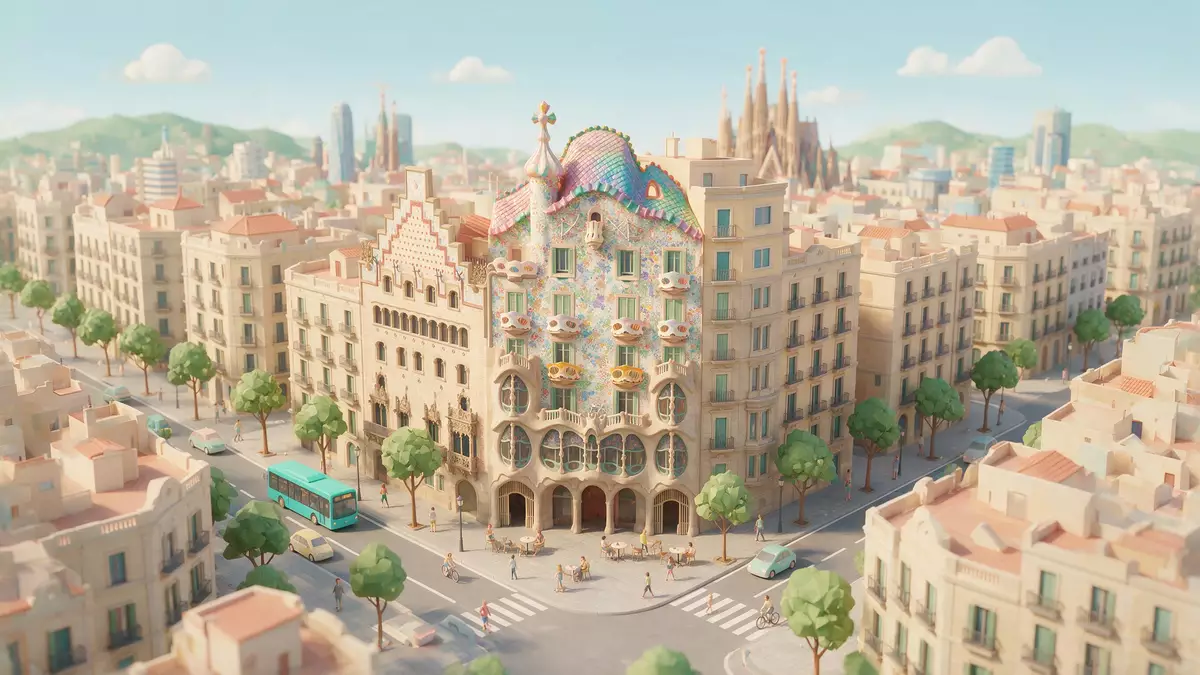
Casa Batllo’s flowing stone facade in Barcelona
Published on 08/09/2026 at 15:13 | Editorial responsibility: Rafael Müller, Editor-in-Chief AD HOC NEWS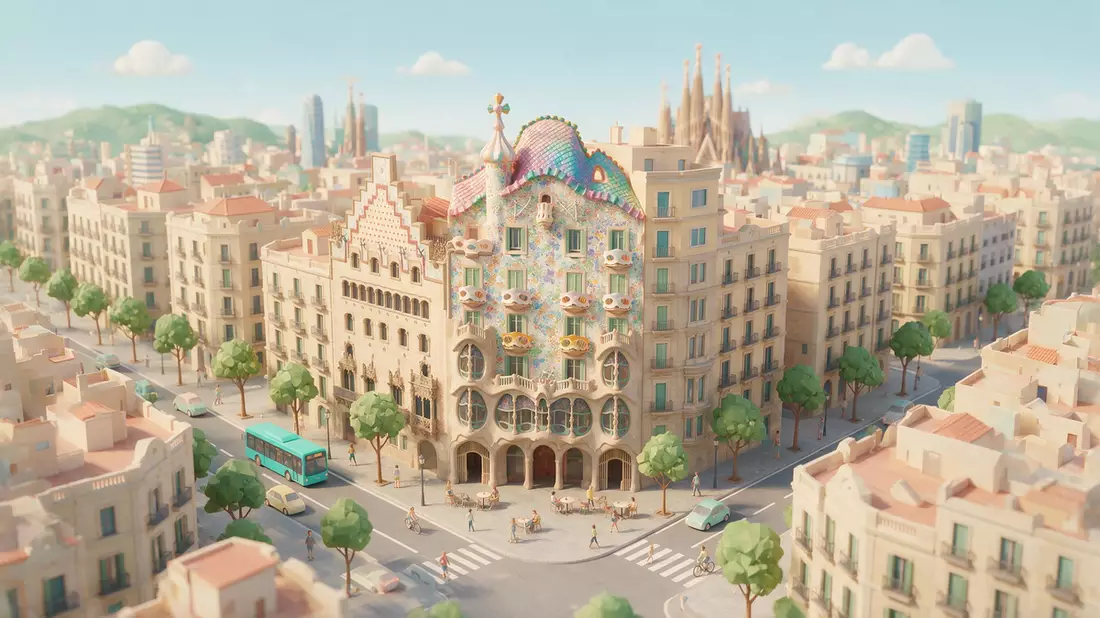
Casa Batllo in Barcelona is a late-19th-century urban house by Antoni Gaudí, and its street facade turns Passeig de Gràcia into a theatre of stone, iron and colour. The building is best read as a surface in motion, with balconies, mosaics and curves that change as you move along the pavement.
Gaudí’s 1904 transformation on Passeig de Gràcia
Antoni Gaudí transformed the building in 1904 for the Batlló family. The result is one of Barcelona’s clearest examples of Catalan Modernisme, with craftsmanship visible in almost every part of the exterior.
The facade combines broken ceramic, shaped stone and wrought iron, and the roofline rises in a ridge of coloured tiles. The house sits among the grand apartment blocks of the Eixample, where its restless frontage is impossible to miss.
The facade, balconies and roofline
The street front is the part most people recognise first. Its stone surface curves in soft waves, while the balconies look like masks or shell fragments rather than conventional railings.
Above them, the roofline recalls the back of a dragon, an association that has become closely linked with the house’s visual identity. Even without that reading, the tiled crest and the sculpted chimney stacks give the roof a distinctive silhouette against the Barcelona skyline.
Interior rooms and the central lightwell
Inside, the house is organised around a central lightwell lined with tiles that shift from pale tones above to deeper blues below. The staircases, doors and ceilings continue the same attention to surface and proportion found outside.
Several rooms preserve the atmosphere of a grand early-20th-century city residence, with timber, glass and ceramic details set against sinuous plasterwork. The roof terrace completes the visit with chimneys and vents that form a cluster of sculptural forms rather than simple utility pieces.
Visiting Casa Batllo: what travellers from Western Europe should know
- Casa Batllo is on Passeig de Gràcia in Barcelona and is reached by metro, bus and on foot from the city centre.
- Admission arrangements and opening hours are set by the site's operator and change with the season; the official website is the only binding source.
- Late afternoon and the quieter parts of the day often suit visitors who want more time to look at the facade and interiors.
- The visit involves stairs, indoor rooms and rooftop surfaces, so comfortable shoes make sense.
- Barcelona is a major tourist city, so card payment is widely accepted and Catalan and Spanish are the main local languages.
- Entry requirements depend on your nationality. UK travellers should check the FCDO travel advice at gov.uk/foreign-travel-advice; Irish travellers the Department of Foreign Affairs at ireland.ie; EU and EEA citizens their own national foreign ministry.
Searching for Casa Batllo on social platforms
These links open searches for Casa Batllo on each platform.
Frequently asked questions about Casa Batllo
Where is Casa Batllo?
Casa Batllo is on Passeig de Gràcia in central Barcelona, in the Eixample district. It sits among other landmark apartment buildings from the city’s modernist period.
What should I expect on a visit?
Expect a house with a dramatic facade, interior rooms, a central lightwell and a roof terrace. The route includes stairs and several changes of level.
What makes Casa Batllo distinctive?
Its combination of a flowing facade, tiled roofline and carefully worked interior surfaces sets it apart within Barcelona’s architecture. Antoni Gaudí’s 1904 redesign gives the house its strongest identity.