Castel Gandolfo and the hilltop papal town
Published on 08/11/2026 at 15:05 | Editorial responsibility: Rafael Müller, Editor-in-Chief AD HOC NEWS
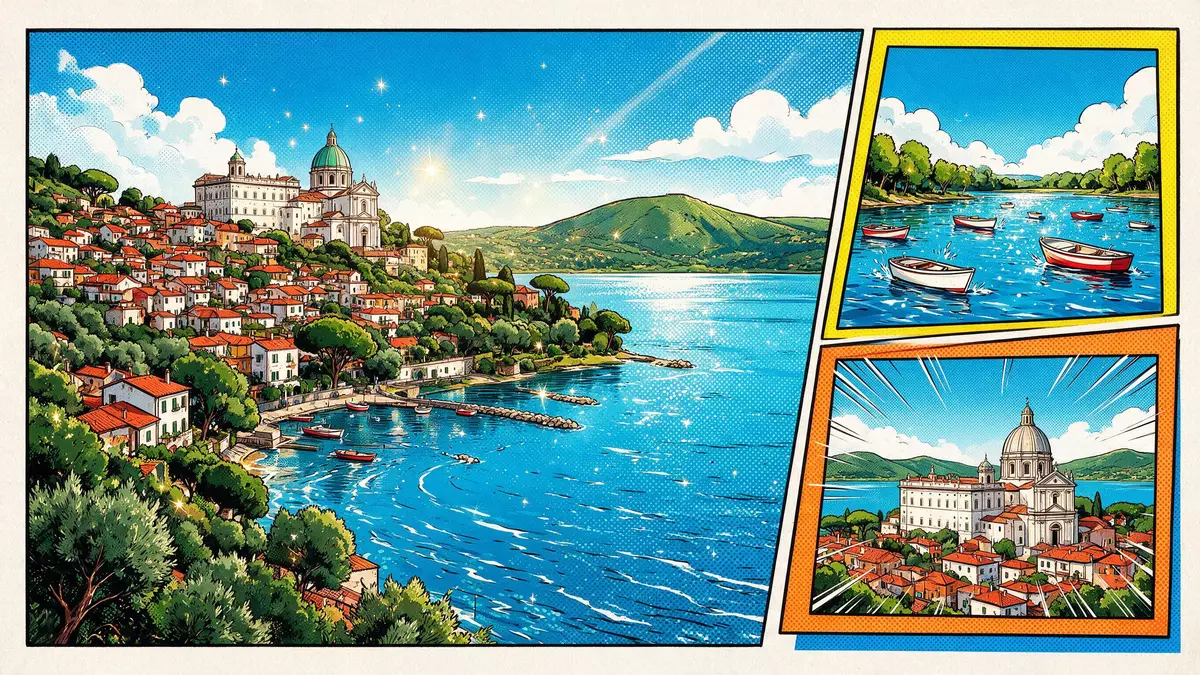
Castel Gandolfo sits above Lake Albano in the Alban Hills, with a compact historic centre shaped by the long presence of the papacy and the Barberini family. The town’s layered streets, palace fronts and lake views make its hilltop form the main attraction.
Papal layers above Lake Albano
The town is best known for the Papal Palace, long used as a summer residence by the popes. The complex stands beside formal gardens and overlooks the volcanic basin below, linking the town’s ceremonial past with its setting.
Barberini connections run through the centre as well, especially in the 17th-century fabric around the main streets and squares. The result is a place where ecclesiastical history and aristocratic patronage appear side by side.
A compact centre of stone, steps and views
Castel Gandolfo is small enough to read as a single ensemble, with narrow lanes, steep approaches and terraces opening towards the lake. The streets rise and fall with the terrain, and the town’s stone buildings keep the focus on mass, level changes and framed outlooks.
The lake lies below in a deep volcanic crater, while the town crowns the rim above it. That relationship gives the place a strong physical identity without needing much embellishment.
From palace town to day-trip destination
The same setting that once supported papal retreat now shapes a visit centred on walking, viewpoints and the historic core. The palace, the lake edge and the old streets can all be understood within a short circuit on foot.
Castel Gandolfo rewards slow looking rather than hurried sightseeing. Its value lies in the contrast between formal architecture, living townscape and the broad sweep of the Alban Hills.
Visiting Castel Gandolfo: what travellers from Western Europe should know
- It is reached from Rome by road and rail, with the town sitting above Lake Albano in the Alban Hills.
- Admission arrangements and opening hours are set by the site's operator and change with the season; the official website is the only binding source.
- Late spring and early autumn suit walking the hill streets and looking out over the lake.
- Expect slopes, steps and uneven paving in the historic centre, plus a steady climb through the town.
- Italian is the local language, and card payments are widely accepted in the town’s visitor-facing businesses.
- Entry requirements depend on your nationality. UK travellers should check the FCDO travel advice at gov.uk/foreign-travel-advice; Irish travellers the Department of Foreign Affairs at ireland.ie; EU and EEA citizens their own national foreign ministry.
Searching for Castel Gandolfo on social platforms
These links open searches for Castel Gandolfo on each platform.Frequently asked questions about Castel Gandolfo
Where is Castel Gandolfo?
It is a hill town in the Alban Hills, south-east of Rome, overlooking Lake Albano. Its position gives it a strong relationship with both the crater lake and the wider Roman countryside.
What should visitors expect?
Expect a compact historic centre, sloping streets and a strong papal presence in the architecture. The visit works best as a walk through a town rather than a single monument stop.
What makes it distinctive?
The combination of papal residence, Barberini-era urban fabric and the lake-view setting gives the town its character. The landscape and the built centre belong together in a way that is visible at once.