
Castel Sant'Angelo as Rome’s stone time capsule
Published on 08/25/2026 at 21:48 | Editorial responsibility: Rafael Müller, Editor-in-Chief AD HOC NEWS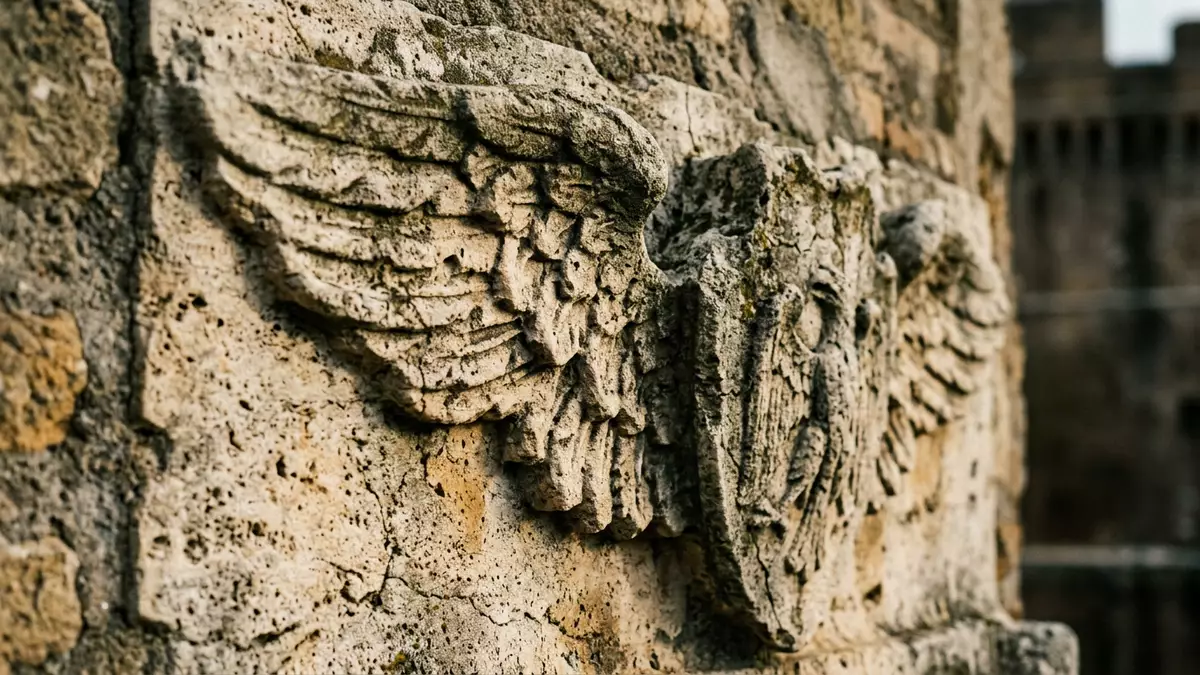
Castel Sant'Angelo on the right bank of the Tiber in Rom gathers almost two millennia of Roman history into a single massive cylinder, from imperial mausoleum to museum. Conceived under Emperor Hadrian in the second century and reshaped across the Middle Ages and Renaissance, it shows in one structure how Rome recycled its own monuments for new powers and purposes.
From Hadrian’s mausoleum to a riverside stronghold
The story of Castel Sant'Angelo begins with the Roman emperor Hadrian, who ordered a monumental tomb for himself and his family beside the Tiber in the second century AD. Construction took place in the reigns of Hadrian and his successor Antoninus Pius, with Hadrian’s remains placed here in 139 AD.built in ad 135–139 The original mausoleum rose just outside the ancient city, aligned with a bridge now known as Ponte Sant'Angelo.
In its first phase the building served as a dynastic tomb for several Antonine emperors, forming a pendant on the Tiber to Augustus’s earlier mausoleum on the Campus Martius.monumental tomb for himself and his family The core was a great drum of masonry faced in stone, planted on a high base and once crowned by a gardened superstructure, giving it a layered profile above the river embankment.
Fortress, papal residence and prison
By the late imperial period the mausoleum stood close to the line of the Aurelian Walls, the defensive circuit built in the 270s under Emperor Aurelian.Aurelian Walls constructed In the early Middle Ages it was absorbed into Rome’s defences, its cylindrical core wrapped in successive rings of ramparts and bastions that turned the tomb into a compact fortress.
Papal control became decisive from the late thirteenth century, when Pope Nicholas III in 1277 secured Castel Sant'Angelo and ordered a fortified corridor linking it to the Vatican palaces.the monument has a history stretching back This passage, known as the Passetto di Borgo, runs above the streets and gave the popes a protected route between palace and stronghold in times of attack.
A layered interior of stone, fresco and memory
Walking through Castel Sant'Angelo reveals how later fortification and residence wrapped itself around the ancient core rather than replacing it. Deep within the structure, corridors and burial chambers from Hadrian’s mausoleum still form a spine, encased in later brick and stone walls laid out as defensive platforms and gun positions.Imperial mausoleum, fortress, papal residence and prison Above, successive papal apartments introduced loggias and halls, some with Renaissance fresco cycles commissioned in the sixteenth century.
The outer form visible from the river today combines the stout cylindrical base of the Roman tomb with a compact crown of later fortifications and terraces. On the summit stands a statue of the Archangel Michael, recalling the legend of Pope Gregory the Great’s vision in 590, when the angel appeared above the monument as a sign that a plague was ending.the Pope Gregory I had a vision of Saint Michael Taken together, the layers of stone, decoration and armoury turn the building into a compact record of how Rom repurposed a tomb into a stronghold, a residence and eventually a national museum.
Visiting Castel Sant'Angelo: what travellers from Western Europe should know
- Castel Sant'Angelo stands on the right bank of the Tiber, opposite the historic centre of Rom, close to the Ponte Sant'Angelo bridge and within walking distance of the Vatican area.
- The approach from the riverside involves broad exterior ramps and interior stairways, some of which are steep and narrow as they follow the ancient and medieval circulation routes.
- Higher terraces and the upper courtyard sit well above street level, and visiting them involves climbing several levels inside the fortress before emerging onto the open platforms.
- The official language is Italian and the currency is the euro.
- Entry requirements depend on your nationality; UK travellers can check the FCDO travel advice at gov.uk/foreign-travel-advice, Irish travellers the Department of Foreign Affairs at ireland.ie.
Searching for Castel Sant'Angelo on social platforms
These links open searches for Castel Sant'Angelo on each platform.
Frequently asked questions about Castel Sant'Angelo
Where is Castel Sant'Angelo in Rom?
Castel Sant'Angelo stands on the right bank of the Tiber in Rom, beside the historic Ponte Sant'Angelo and a short walk from the Vatican district.
What should visitors expect inside Castel Sant'Angelo?
Visitors move through thick-walled corridors, stairways and courtyards that encase the former mausoleum, then reach upper terraces and papal apartments with views over the river and city.
What makes Castel Sant'Angelo distinctive among Roman monuments?
Castel Sant'Angelo is distinctive because one compact structure combines Hadrian’s second-century mausoleum, a medieval and Renaissance fortress, papal residence rooms, prison spaces and a modern museum layout.


