
Castel Sant'Angelo, from Hadrian’s tomb to fortified symbol of Rom
Published on 09/18/2026 at 20:09 | Editorial responsibility: Rafael Müller, Editor-in-Chief AD HOC NEWS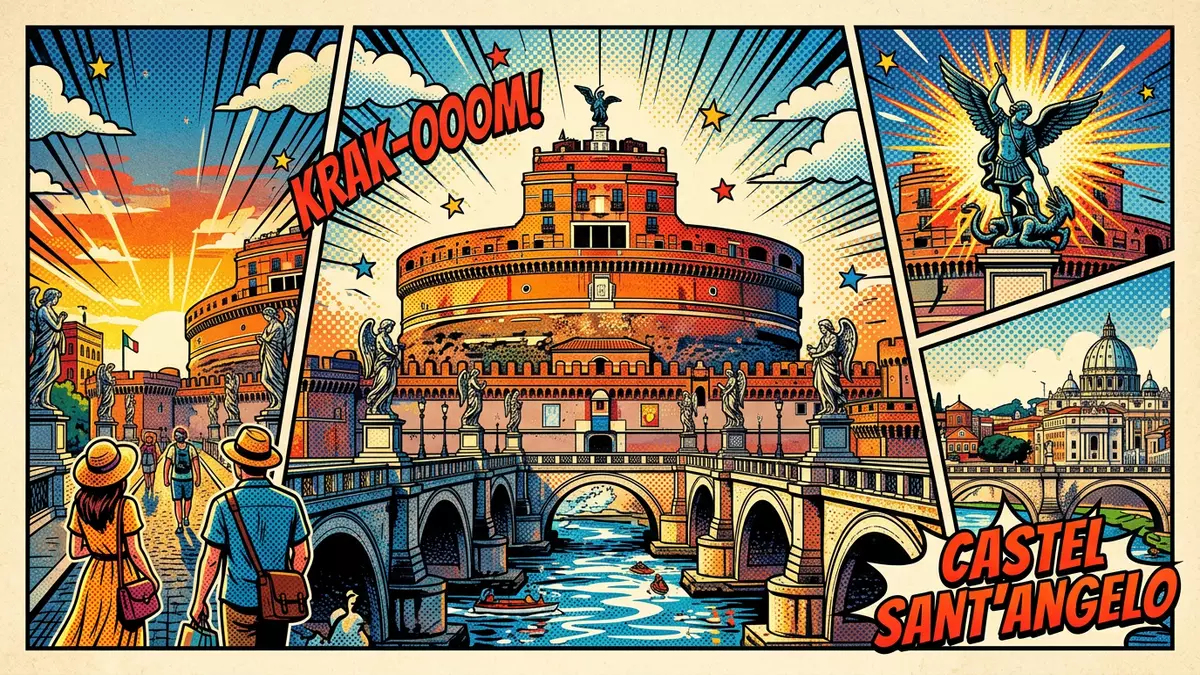
Castel Sant'Angelo on the right bank of the Tiber in Rom is a rare building where nearly two millennia of Roman and papal history are physically stacked in stone. Built as the mausoleum of Emperor Hadrian in the second century AD and later transformed into a fortress, papal residence and prison, it now serves as a national museum inside the former imperial tomb.
From Hadrian’s mausoleum to a castle above the Tiber
The story of Castel Sant'Angelo begins with Emperor Hadrian, who ordered an imposing funerary monument for himself and his family in the second century AD, in a then suburban area known as Ager Vaticanus.Built in the second century AD by the Roman emperor Hadrian The monument took the form of a grand circular mausoleum raised on a powerful base, creating a massive volume facing the river.originally the mausoleum of the Roman emperor Hadrian
From the outset, the mausoleum was linked directly to the city by a dedicated bridge over the Tiber, known in antiquity as Pons Aelius and today as Ponte Sant'Angelo, so that the tomb formed a pair with its river crossing.connected to the city through Ponte Sant'Angelo Over the centuries, the monument lost its purely funerary character as Rome’s rulers enclosed it within the city’s defensive lines and began reshaping it as a fortified stronghold guarding one of the principal ancient bridges across the Tiber.it stands on the right bank of the Tiber River and guards the Ponte Sant’Angelo
A layered fortress of emperors and popes
Castel Sant'Angelo’s masonry records major shifts in power. After serving as the burial place of Hadrian and other emperors of the Antonine dynasty up to Caracalla, the tomb was absorbed into the late Roman fortification system and began operating as a defensive bastion on the river.burial place of the Antonine emperors until Caracalla In the early Middle Ages, thick walls, battlements and courtyards altered the profile of the original mausoleum, turning a circular tomb into a compact citadel anchoring the approach to the Vatican area.fortified the mausoleum to control the river crossing and protect the Vatican area
From the fourteenth century, the building passed into permanent papal hands and became both fortress and residence, equipped with ramparts, bastions and richly decorated apartments for pontiffs such as Paul III Farnese.its fate was inseparably linked to that of the Church when the keys of the building were handed over to Pope Urban V in 1367 Within this compact volume lie halls, chapels, courtyards and former prison cells, organised across several levels, reflecting its multiple functions as imperial tomb, medieval fortress, papal refuge and later as a political prison.containing halls, chapels, apartments, courtyard, and prison cells
Architecture, legend and museum galleries
Architecturally, Castel Sant'Angelo combines a central circular core with a squarer outer envelope, a form that grew as successive fortification campaigns added angular defences around the original cylinder.in plan, the fort is a circle surrounded by a square Inside, later popes fitted ceremonial rooms with frescoes and stuccoes, while ramparts and terraces offer close views of the Tiber, Ponte Sant'Angelo and the skyline of Rom.
The name Castel Sant'Angelo derives from a legend of Pope Gregory the Great, who is said to have seen the archangel Michael sheathing his sword atop the monument during a plague in the late sixth century, an image that gave the former mausoleum its association with protection.it took on the name of sancti Angeli thanks to a legend according to which, in 590, Pope Gregory the Great had a vision of the archangel Michael here In the twentieth century, after serving as a military prison and barracks, the building was formally established as a National Museum, presenting sculpture, paintings, weaponry and historic interiors inside one of Rom’s most layered monuments.opened as a national museum in the early 1900s
Visiting Castel Sant'Angelo: what travellers from Western Europe should know
- Castel Sant'Angelo rises on the right bank of the Tiber in Rom, close to the Vatican, and is linked to the historic centre by Ponte Sant'Angelo across the river.
- Inside the fortress, stairways, corridors and ramparts involve substantial walking over stone surfaces, with several sequences of steps between the lower levels and the upper terraces.
- The monument stands within the urban fabric of Rom, with the riverside, Ponte Sant'Angelo and views towards St Peter’s Basilica forming an immediate surrounding landscape.
- Italy’s official language is Italian and the currency is the euro.
Searching for Castel Sant'Angelo on social platforms
These links open searches for Castel Sant'Angelo on each platform.
Frequently asked questions about Castel Sant'Angelo
Where is Castel Sant'Angelo located?
Castel Sant'Angelo stands on the right bank of the Tiber in Rom, close to the Vatican area and connected to the historic centre by Ponte Sant'Angelo.
What can visitors expect inside Castel Sant'Angelo?
Inside the former mausoleum and fortress, visitors move through stone corridors, courtyards, frescoed rooms, historic prison spaces and terraces with views over the river and city.
What makes Castel Sant'Angelo distinctive among Rom’s monuments?
The monument’s distinctiveness lies in its layered identity as an imperial tomb transformed into a fortified papal residence and later a museum, all contained within one compact riverside structure.


