
Cataratas do Iguacu, a basalt-framed curtain of water
Published on 09/21/2026 at 07:07 | Editorial responsibility: Rafael Müller, Editor-in-Chief AD HOC NEWS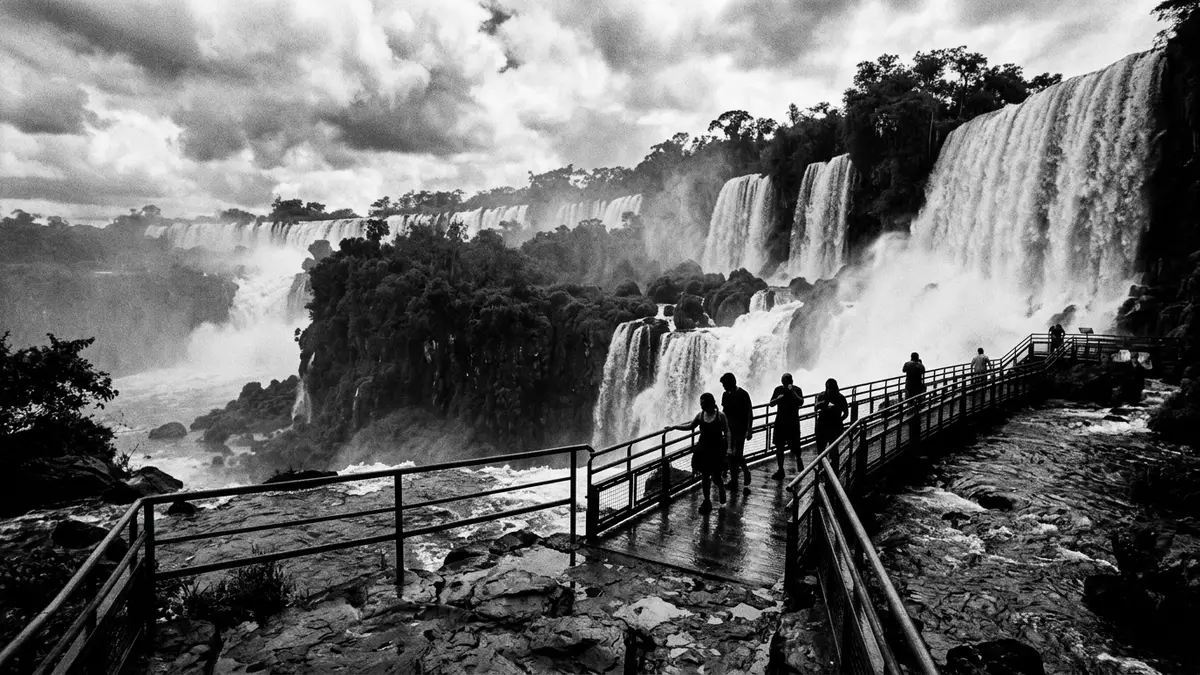
Cataratas do Iguacu, known in English as Iguazu Falls, form a sweeping curtain of waterfalls on the Iguacu River at the frontier between Brazil and Argentina near Foz do Iguacu in the Brazilian state of Parana. The cascades are protected inside Iguaçu National Park on the Brazilian side and Iguazú National Park in Argentina, both recognised as UNESCO World Heritage Sites from the 1980s, and they drop from a dark basalt plateau into a narrow canyon that carries the river towards the Parana basin.
A waterfall arc on the Brazil–Argentina border
Cataratas do Iguacu occupy a stretch of the Iguacu River where it marks the boundary between Brazil’s Parana State and Argentina’s Misiones Province, close to the tri-border region with Paraguay. The waterfall system is made up of hundreds of individual cascades that extend for roughly 2,700 m (8,860 ft) along the river, forming an amphitheatre-like arc where water spills from the plateau into the gorge below.series of cataracts On the Brazilian bank, walkways and viewpoints give broad panoramas of the fall-front, while on the Argentine side paths and platforms approach closer to individual cataracts.
The Iguacu River rises in the Serra do Mar mountains near Curitiba in Parana and flows for more than 1,000 km (621 mi) before reaching the falls and dropping over the edge of the basalt plateau.Parana Plateau basalt Downstream from Cataratas do Iguacu, the river runs through a confined gorge and meets the larger Parana River near the point where Brazil, Argentina and Paraguay share a common frontier, tying the landscape of the falls to one of South America’s key border zones.
Basalt cliffs, Devil’s Throat and the scale of the falls
The cliff that carries Cataratas do Iguacu is formed from thick layers of Paraná basalt, a volcanic rock emplaced during the Lower Cretaceous between roughly 125 and 115 million years ago.fissural basaltic rocks Erosion along fractures in this rock has carved a canyon where the river drops in multiple stages, producing several hundred separate falls with an average height around 75 m (246 ft). In places the water drops in isolated columns; in others it forms broad curtains that merge into a continuous wall of spray.
At the heart of Cataratas do Iguacu lies Garganta do Diabo, or Devil’s Throat, a U-shaped chasm where the river pours into a deep cleft lined by basalt cliffs. The feature is around 150 m (492 ft) across and roughly 700 m (2,297 ft) long, and it forms one of the most visually striking points of the system as water converges from several directions into the canyon.U-shaped Devil’s Throat Boardwalks and viewing platforms approach the brink from both Brazil and Argentina, giving changing perspectives on the basalt walls, the plunge of the river and the fine mist that rises from the chasm.
National parks, wildlife and the gateway city of Foz do Iguacu
On the Brazilian side, Cataratas do Iguacu lie within Iguaçu National Park, a protected area that extends over a large tract of Atlantic Forest and forms part of a wider conservation mosaic along the border.Parque Nacional do Iguaçu Across the river in Argentina, Iguazú National Park protects the counterpart landscape of forest, cliffs and river islands, and together the two parks were added to the UNESCO World Heritage List in 1984 and 1986 for their scenery and biodiversity.World Heritage inscription
The Brazilian gateway to Cataratas do Iguacu is Foz do Iguacu, a city in western Parana near the frontiers with Argentina and Paraguay where roads lead towards the entrance of Iguaçu National Park. Within the protected area, maintained paths and boardwalks run across forested slopes and along the river gorge, connecting viewpoints over different sections of the waterfall arc and over the wider basalt landscape. Wildlife in the surrounding forest includes species such as toucans, coatis and butterflies, and the combination of cliffs, spray and vegetation underlines the sense that Cataratas do Iguacu is as much a forest reserve as a waterfall panorama.
Visiting Cataratas do Iguacu: what travellers from Western Europe should know
- Cataratas do Iguacu lie near Foz do Iguacu in southern Brazil’s Parana State, with road links from the city leading towards the entrance of Iguaçu National Park on the Brazilian side.
- The Brazilian viewpoints are reached along paved paths and boardwalks that include stretches of steps and sections exposed above the river gorge, so walking on firm surfaces near drops is involved.
- The surrounding landscape is subtropical, with high humidity near the falls and forested terrain in the national parks, so conditions range from open cliff-edge viewpoints to shaded paths beneath trees.
- Portuguese is the official language in Brazil and the currency is the Brazilian real.
- Entry requirements depend on your nationality; UK travellers can check the FCDO travel advice at gov.uk/foreign-travel-advice, Irish travellers the Department of Foreign Affairs at ireland.ie.
Searching for Cataratas do Iguacu on social platforms
These links open searches for Cataratas do Iguacu on each platform.
Frequently asked questions about Cataratas do Iguacu
Where are Cataratas do Iguacu?
Cataratas do Iguacu are on the Iguacu River at the border between Brazil’s Parana State and Argentina’s Misiones Province, near the Brazilian city of Foz do Iguacu.
What should visitors expect on a first visit?
Visitors encounter a long front of waterfalls dropping from a basalt plateau into a river gorge, with maintained paths and viewpoints across forested slopes on both sides of the border.
What makes Cataratas do Iguacu distinctive among great waterfalls?
The combination of hundreds of separate falls arranged in a broad arc, the deep basalt canyon of Garganta do Diabo and the twin national parks in Brazil and Argentina gives Cataratas do Iguacu a rare mix of scale, geology and protected forest landscape.


