
Cataratas do Iguacu, where the Iguazu River breaks into hundreds of falls
Published on 08/15/2026 at 15:00 | Editorial responsibility: Rafael Müller, Editor-in-Chief AD HOC NEWS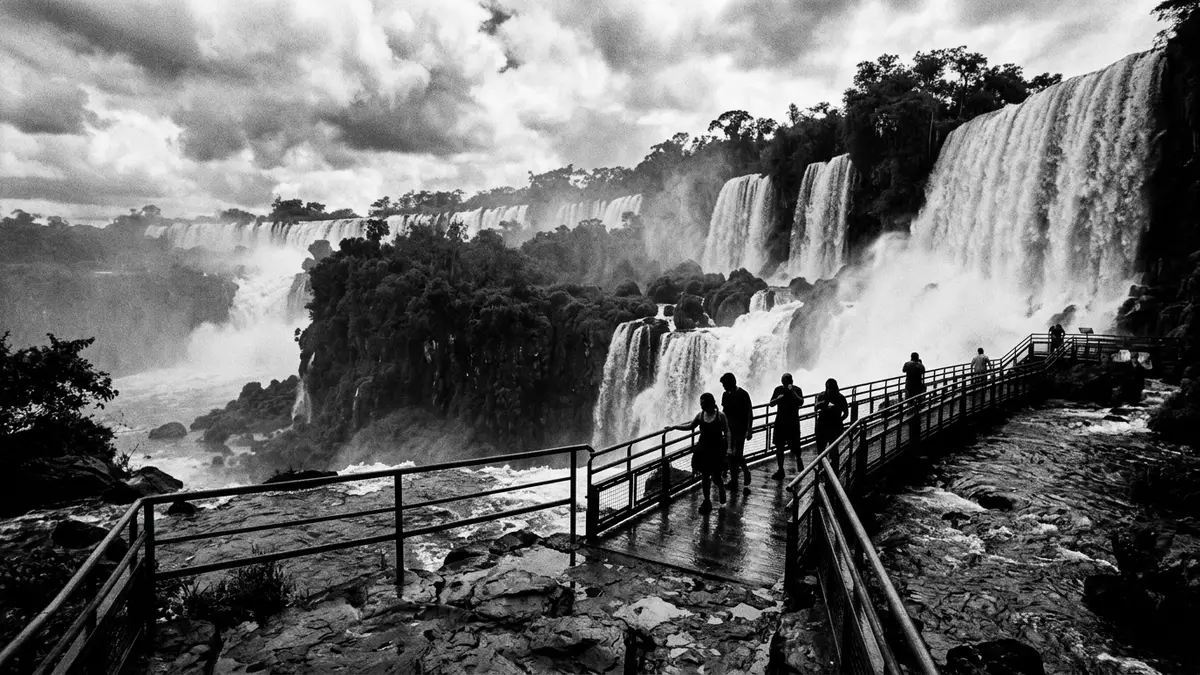
Cataratas do Iguacu is a vast chain of waterfalls on the Iguazu River, stretching across the border between Brazil’s state of Paraná and Argentina’s province of Misiones. The falls drop from a basalt plateau into the valley of the Paraná River, forming one of South America’s major natural landmarks and anchoring both Iguaçu National Park in Brazil and Iguazú National Park in Argentina.Iguazu River waterfalls
Water on the edge of a basalt plateau
The defining experience at Cataratas do Iguacu is the sight of the Iguazu River breaking over the rim of a dark volcanic plateau in hundreds of separate cascades. The river flows west across southern Brazil and then suddenly drops around 80 m (262 ft) into a lower valley, its water splitting around islands and rock outcrops into a wide curtain of falls that extends for roughly 2.7 km (1.7 mi) along the rim.waterfall extending over some 2,700 m
On the Brazilian side the panorama opens across the main semicircular bend of the river, where the largest concentration of water crashes into a narrow gorge known as the Garganta do Diabo, or Devil’s Throat. Here a U-shaped chasm focuses much of the flow into a single plunge, with water dropping around 80 m into the gorge below,central horseshoe cataract 72 m high and 2,700 m long while clouds of spray rise back up to the plateau.
Subtropical forest and protected parks
Although the waterfalls dominate the view, Cataratas do Iguacu sits inside a much larger belt of protected subtropical forest. On the Brazilian side, Iguaçu National Park covers more than 160,000 hectares of Atlantic Forest, and on the Argentine side Iguazú National Park protects further forest and river corridor.Iguaçu National Park World Heritage property This mosaic of protected land shelters thousands of plant species and wildlife ranging from monkeys and tapirs to jaguars and caimans.subtropical rainforest with over 2,000 plant species
UNESCO recognised Iguazú National Park in Argentina as a World Heritage Site in 1984 and Iguaçu National Park in Brazil in 1986, under criteria that highlight superlative natural phenomena and biodiversity conservation.Iguazu National Park inscription in 1984 Together the twin parks form a single cross-border landscape in which the waterfalls, forest and rivers are all protected as part of a shared natural heritage.
Walkways, viewpoints and river perspectives
The Brazilian approach to Cataratas do Iguacu is organised around walkways and viewpoints that frame the river and falls from different angles. From near Foz do Iguacu, a road leads through forest to the park entrance; from there, visitors follow paths that descend gradually from higher viewpoints down towards the river, with platforms projecting towards the edge of the canyon. These platforms are set so that the main sightlines follow the curve of the waterfalls, revealing separate stretches of the rim and different groups of cascades.
Where the path reaches river level, metal walkways extend out over the water towards the base of the main falls. At this point the experience shifts from distant panorama to close contact with spray and sound, with the huge semicircular wall of cataracts surrounding the walkway on three sides. Other walkways and viewpoints stay higher above the gorge, looking across towards the Argentine side, where additional chains of falls and forested islands are visible.
Visiting Cataratas do Iguacu: what travellers from Western Europe should know
- Cataratas do Iguacu lies south-west of central Foz do Iguacu in Brazil, reached by road towards the entrance of Iguaçu National Park, with Foz do Iguacu/Cataratas International Airport serving the city.
- Within the Brazilian park, the main trails to the viewpoints include sections on hard-surfaced paths and elevated walkways, and approaches to lower viewpoints involve staircases that descend towards river level.
- The site sits in lowland subtropical forest beside the Iguazu River, with humid conditions common around the falls because of the spray rising from the main cataracts.
- Foz do Iguacu faces the twin town of Puerto Iguazú across the river in Argentina, and Ciudad del Este in Paraguay lies further along the Paraná River, forming a tri-border region around the wider river landscape.
- The official language on the Brazilian side is Portuguese and the currency is the Brazilian real; entry requirements depend on your nationality, UK travellers can check the FCDO travel advice at gov.uk/foreign-travel-advice, Irish travellers the Department of Foreign Affairs at ireland.ie.
Searching for Cataratas do Iguacu on social platforms
These links open searches for Cataratas do Iguacu on each platform.
Frequently asked questions about Cataratas do Iguacu
Where are Cataratas do Iguacu located?
Cataratas do Iguacu are on the Iguazu River at the border between Brazil’s state of Paraná and Argentina’s Misiones province, near the city of Foz do Iguacu in Brazil.border of Misiones and Paraná
What should a visit to Cataratas do Iguacu feel like?
A visit brings views over a long wall of waterfalls broken into separate cascades by islands and rocks, together with forest paths and walkways that lead towards the river and the gorge.
What makes Cataratas do Iguacu distinctive among waterfalls?
The combination of a semicircular waterfall front around 2.7 km long, dropping about 80 m from a basalt plateau, and the surrounding protected subtropical forest makes it one of the most striking waterfall landscapes in South America.semicircular waterfall some 80 m high and 2,700 m in diameter


