
Catedral de Mallorca’s soaring nave above Palma’s waterfront
Published on 09/21/2026 at 16:54 | Editorial responsibility: Rafael Müller, Editor-in-Chief AD HOC NEWS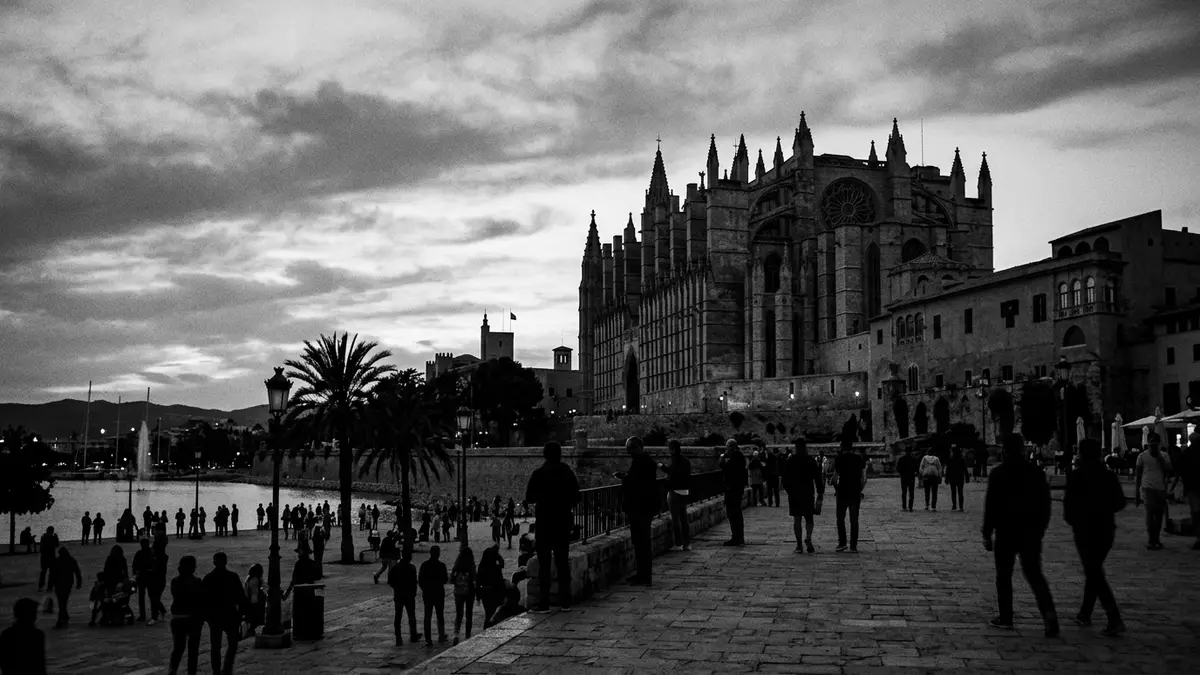
Catedral de Mallorca, also known as the Cathedral of Santa Maria of Palma or La Seu, dominates Palma’s waterfront with a Gothic nave that lifts high above the old city walls. Begun under King Jaume I of Aragon after his conquest of Mallorca in 1229 and completed in the early seventeenth century, it brings Catalan Gothic architecture to the harbour edge in stone, glass and light.Begun after the 1229 conquest and completed in 1601
A Gothic ship of stone facing the sea
The core of Catedral de Mallorca is a Mediterranean Gothic structure with a long plan and high vaults running parallel to the bay. Its three main naves and apses form a single, continuous interior volume that stretches along the line of the former city defences, with flying buttresses and pinnacles rising above the seafront promenade.A Mediterranean Gothic cathedral aligned with the old walls
The cathedral stands alongside the Royal Palace of La Almudaina, creating a pair of monumental landmarks between the old town and the sea. Both buildings sit on the trace of earlier fortifications, so from the Parc de la Mar the cathedral appears elevated above a broad platform of masonry. The exterior stonework in warm tones catches the Mediterranean light, while the buttressed walls are punctuated by large traceried windows set between the structural piers.A Gothic cathedral beside the Royal Palace and city walls
Centuries of construction and change
Construction of Catedral de Mallorca started in the thirteenth century and continued into the seventeenth century, drawing on generations of master masons and sculptors.Built between the thirteenth and seventeenth centuries Work began soon after 1229 under King Jaume I and developed through the reigns of his successors, with stages that included the Royal Chapel at the eastern end, the side chapels and the soaring central nave.
By 1601 the major historical construction campaign was declared complete, although the cathedral’s appearance continued to evolve. After an earthquake in 1851 the west front was rebuilt in a neo-Gothic style, reshaping the façade that faces the city’s streets.Earthquake damage in 1851 and a nineteenth-century façade In the early twentieth century Antoni Gaudí led a programme of liturgical and spatial reordering that included moving the choir towards the sanctuary and installing a hanging baldachin over the high altar, and in the early twenty-first century artist Miquel Barceló added a large ceramic mural in the Chapel of the Blessed Sacrament.
Interior light, height and modern interventions
Stepping inside Catedral de Mallorca reveals a central nave that rises to around 44 m (144 ft), supported by slender octagonal columns and ribbed vaults that draw the eye upwards along the length of the church.A central Gothic nave around 44 metres high The wide span creates an interior often described as a single unified hall, where the structural rhythm of the columns sets the pace of the space from entrance to apse.
The interior is notable for its stained glass and the amount of daylight that enters through the large windows and the main rose window high in the eastern end.A cathedral famed for its rose window and interior volume Gaudí’s early twentieth-century interventions are visible in the reordered choir, the metalwork suspended above the altar and elements of furniture and lighting, while Barceló’s ceramic work introduces a contemporary layer in one of the chapels, depicting biblical scenes with textured relief set against the Gothic stone.
Visiting Catedral de Mallorca: what travellers from Western Europe should know
- Catedral de Mallorca stands on the southern edge of Palma’s historic centre, above the Parc de la Mar and close to the Royal Palace of La Almudaina. It is reached on foot from the streets of the old town or by road along the waterfront.
- The approach from the sea-facing side involves ascending broad exterior steps built into the old city walls. Inside, visitors encounter stone floors and chapels that may require short walks between seating and viewing areas.
- The official language is Spanish and the currency is the euro.
Searching for Catedral de Mallorca on social platforms
These links open searches for Catedral de Mallorca on each platform.
Frequently asked questions about Catedral de Mallorca
Where is Catedral de Mallorca located?
Catedral de Mallorca stands in Palma on the island of Mallorca in Spain, beside the Royal Palace of La Almudaina and above the Parc de la Mar along the waterfront.
What can visitors expect inside Catedral de Mallorca?
Visitors encounter a high Gothic nave supported by slender columns, large stained-glass windows including a prominent rose window and chapels combining historical and contemporary artworks.
What makes Catedral de Mallorca distinctive among cathedrals?
Its combination of a seafront setting on former city walls, a very tall Mediterranean Gothic nave and later interventions by Antoni Gaudí and Miquel Barceló gives it a layered character.


